
The Treasury will issue its formal announcement Thursday, but it’s clear the May 23 auction will be a reissue of CUSIP 912828UH1, which first auctioned in January with a coupon rate of 0.125% and a yield to maturity of -0.630%.
Update: Here is the Treasury announcement.
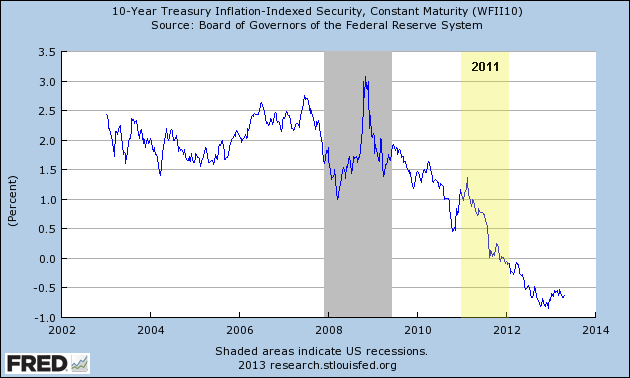
This one is worth watching. TIPS yields have been rising this year – not drastically but enough to make TIPS interesting again. CUSIP 912828UH1 is now trading on the secondary market with a yield of -0.461%, 17 basis points above the January auction price. Next Thursday’s rate could be even higher, possibly in the -0.410% range.
Although I’ve been writing about TIPS for two years, I haven’t actually bought an issue since June 2011, a 30-year TIPS with a yield of 1.774%. Now I am seriously considering buying this upcoming 10-year reissue, and here’s why:
- Nominal Treasury rates are beginning to rise. The 10-year Treasury closed Monday at 1.92%, 26 basis points above where it stood on May 1.
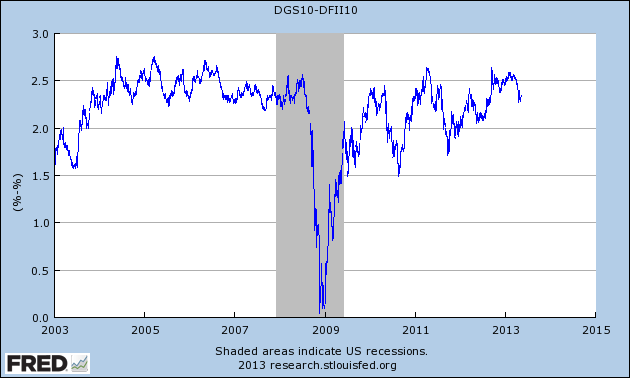
- At the same time, TIPS inflation breakeven rates have been easing. Using that -0.41% yield, the current 10-year breakeven rate is 2.37%, down from 2.51% on the day CUSIP 912828UH1 was issued. This is still high, but better than January. Here is a chart of historic 10-year breakeven rates, showing the recent decline:
- As buy-and-hold investment, this 10-year TIPS basically ‘parks’ my money for 10 years, with little income guaranteed but with protection against inflation. The stock market is hitting all-time highs, housing prices are rising, unemployment is declining. Can inflation be far behind?
- On a personal note, I have two TIPS maturing this year and I need to bolster the super-safe portion of my asset allocation. A yield of -0.410% (plus inflation) isn’t really attractive, but it will park that money in a safe place.
- Although I hold TIPS that will go down in value if yields rise, I am cheering for higher TIPS yields. I want to be a net buyer of TIPS. Since I am holding to maturity, I don’t care what happens on the secondary market.
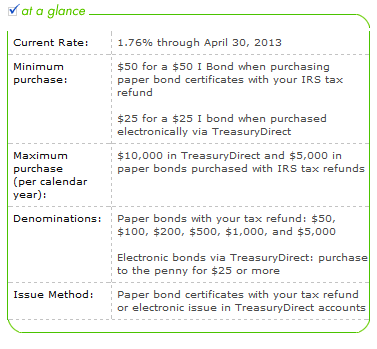
- And of course, a purchase of TIPS only follows an annual maximum purchase of I Bonds ($10,000 per person at TreasuryDirect). I Bonds remain the superior investment when TIPS have a negative real return.

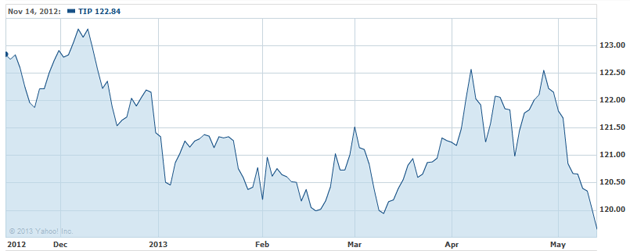
It was interesting to see the TIP ETF finally break through the 120 level this week, closing at 119.65 on Monday. This six-month chart of TIP shows how it has been teasing a decline, then rising. The recent decline looks more forceful however.
Next week’s auction will definitely be worth watching. If yields continue to rise, it will become a definite buy.




He will have to double the subscription fee.