TreasuryDirect sends another clear message: Changes are coming

By David Enna, Tipswatch.com

A helpful reader alerted me last week that TreasuryDirect was asking investors to clear out their Zero-Interest Certificates of Indebtedness (C of I) holdings. Based on the wording of the email, I’d call it a “warning,” a little more urgent than the “please pay attention” message sent earlier in October about delivering all sets of gift-box I Bonds.

Read about the gift-box messaging here: “TreasuryDirect email is an omen of coming changes.”

What is a C of I?

Basically, it is a lousy deal and probably a throw-back to days when investors didn’t have low-cost brokerage accounts to fund transactions at TreasuryDirect. It is a holding security that pays zero interest. Maybe in the days when your bank was paying 0.05% interest it made sense to use C of I, but today it is only useful for a one- or two-day investment holding, preparing for another purchase.

TreasuryDirect’s User Guide used to encourage use of the C of I:

The Zero-Percent Certificate of Indebtedness (Zero-Percent C of I or simply, C of I) is a Treasury security that does not earn any interest. It is intended to be used as a source of funds for purchasing eligible interest-bearing securities. …

Need one less worry about your security payments? If payments to your bank are returned to us for any reason, the returned funds will be automatically deposited in your C of I. You’re then able to use the deposited funds to purchase additional securities in your account or redeem all or part of them to your bank. It’s your choice.

Unexpected changes in your plans? Choose the option to redeem your C of I, and the amount you enter is redeemed from your C of I and deposited into your designated bank account.

All C of I purchase and redemption activity is conveniently recorded in your C of I History.

But honestly, C of I was literally a worthless and undesirable investment any time your deposits could earn daily interest, such as in a brokerage’s money market account. The email TreasuryDirect sent out last week fully admits this:

Zero-Percent C of I is designed to temporarily hold funds for purchasing other securities. It does not earn interest, so leaving money in this account limits its growth potential. By cashing your C of I or using it to purchase interest-bearing securities, you can put your funds to work immediately! Start taking advantage of investment opportunities and avoid leaving money idle in a non-interest-bearing account.

Here is the full text of the email:

The real message

TreasuryDirect again is clearly telling us that changes — and probably big changes — are coming to its investment process, which will affect both savings bonds and purchases of Treasury bills, notes and bonds. It says:

Please note, there may be changes to Zero-Percent C of I to help streamline the process of investing with the Treasury, so cashing your C of I now will help you prepare. Stay tuned as more information becomes available on how we’re enhancing the TreasuryDirect customer experience.

TreasuryDirect also created an FAQ to reassure investors that the email was legit and to explain why action is needed.

How is Treasury enhancing the experience of TreasuryDirect customers?

We are always looking to improve your experience. Future enhancements are still being determined but we will share information on changes as it becomes available.

Is Zero-Interest C of I changing?

Payroll C of I has already been eliminated. For C of I you currently hold, we are continually evaluating ways to streamline the process of investing with the US Treasury and there may be changes to C of I in the future. We will proactively send communications as more information becomes available.

Is there a deadline for cashing C of I?

Redeeming C of I proactively prepares you for upcoming enhancements while also enabling you to make the most of your investment.You don’t earn any interest on money you keep in your C of I.

Is redeeming my C of I mandatory?

You are encouraged to cash C of I now to ensure you are prepared for coming enhancements and so you can make the most of your investment.

Take action

I suspect that very few Tipswatch readers actively use C of I, but I know a few do to ease rollover transactions. It’s time to get the money out of there and into your bank or brokerage account. Also, make sure all future maturities will be directed to those accounts instead of to C of I.

An anecdote: I have a friend who changed cities and changed bank accounts to link to TreasuryDirect for maturities. She wasn’t a frequent user of TreasuryDirect. She tried to establish a new connected account and somehow failed.

When her sizable investment matured, the entire amount went into C of I. And then when she tried to remedy this situation, she messed up her login (or security questions) and was locked out of TreasuryDirect. This was during a high-call-in period of I Bond mania and it took her more than a week to get this resolved.

Harry Sit, creator of TheFinanceBuff.com, wrote about a similar — and more serious — problem in September 2023. The article title: “Stay Away from Zero-Percent C of I in TreasuryDirect.”

You would think this Zero-Percent C of I is useless because drawing from and sending to the bank account works just fine and you can at least earn some interest while the money is in your bank account, but some people decide to use Zero-Percent C of I to hold cash in TreasuryDirect.

Sit tells the story of an investor whose account was flagged by Risk Management and placed on “hard lock.” The investor was asked to fill out a notarized FS Form 5444 and was told the time for processing this form was “20 weeks minimum.”

A Boglehead forum member related a similar issue this month:

I got an email from Treasury Direct (2 months ago) saying my account is locked and I will no longer be getting any interest payments and they are holding my interest payments in a non interest bearing account. I had to get my signature notarized which I did and Treasury Direct received my documentation on August 18th. They said it would take 2 weeks to open account. Now they are saying there is no timeframe and the account is still locked.

Sit concludes:

Treat TreasuryDirect as a delicate object. Do as little as possible with it. Stay on the beaten path. Buy your I Bonds. Sell your I Bonds. Use your linked bank account to transact. Don’t use the browser’s back button. Remember your password and your answers to the security questions. Be extra careful not to get your account locked. Use your brokerage account when you buy regular Treasuries. Stay away from Zero-Percent C of I in TreasuryDirect.

Changes are coming

We don’t know what is coming, and if you call and ask you won’t get an answer. But TreasuryDirect is now stepping up the pace of changes:

  • In September 2024 it ended issuance of paper I Bonds in lieu of a federal tax refund.
  • In October 2024 it sent investors an email encouraging them to deliver gift-box sets of savings bonds “as soon as possible.” This set off much confusion.
  • In December 2024 it ended its Payroll Savings Plan for automatic investments in savings bonds. This program dated back to 1942.
  • In January 2025 it sent out a survey on the use of the gift-box loophole for adding to purchases of savings bonds.
  • In October 2025 it sent an email strongly encouraging investors to empty out gift-box holdings by delivering them to recipients.
  • And now, in October 2025 it is encouraging investors to empty out C of I holdings.

I know that several readers are going to comment that they will never use TreasuryDirect and don’t trust it. I do use it, and after a decade-plus of regular use, I trust it. But I am a very experienced user. I still use TreasuryDirect to purchase I Bonds and to roll-over T-bill investments. Those two processes work well for me.

I wonder if the Treasury is considering outsourcing some of the management of TreasuryDirect accounts. I have no basis for this idea, but it looks like TD is trying to simplify its operations and … er … improve the investor experience? At this point, we are all just guessing.

My advice, though … get money out of that C of I account.

—————————

Donate? This site is free and I plan to keep it that way. Some readers have suggested having a way to contribute. I would welcome donations. Any amount, or skip it, your choice. This is completely optional.

PayPal link / Venmo link

—————————

Follow Tipswatch on X for updates on daily Treasury auctions and real yield trends (when I am not traveling).

Feel free to post comments or questions below. If it is your first-ever comment, it will have to wait for moderation. After that, your comments will automatically appear. Please stay on topic and avoid political tirades. NOTE: Comment threads can only be three responses deep. If you see that you cannot respond, create a new comment and reference the topic.

David Enna is a financial journalist, not a financial adviser. He is not selling or profiting from any investment discussed. I Bonds and TIPS are not “get rich” investments; they are best used for capital preservation and inflation protection. They can be purchased through the Treasury or other providers without fees, commissions or carrying charges. Please do your own research before investing.

Posted in Cash alternatives, EE Bonds, I Bond, Savings Bond, Treasury Bills, TreasuryDirect | 54 Comments

September inflation report sets I Bond variable rate at 3.12%; Social Security COLA will be 2.8%

By David Enna, Tipswatch.com

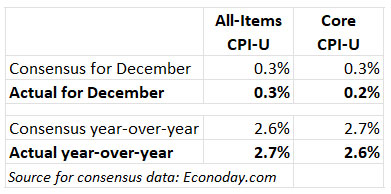
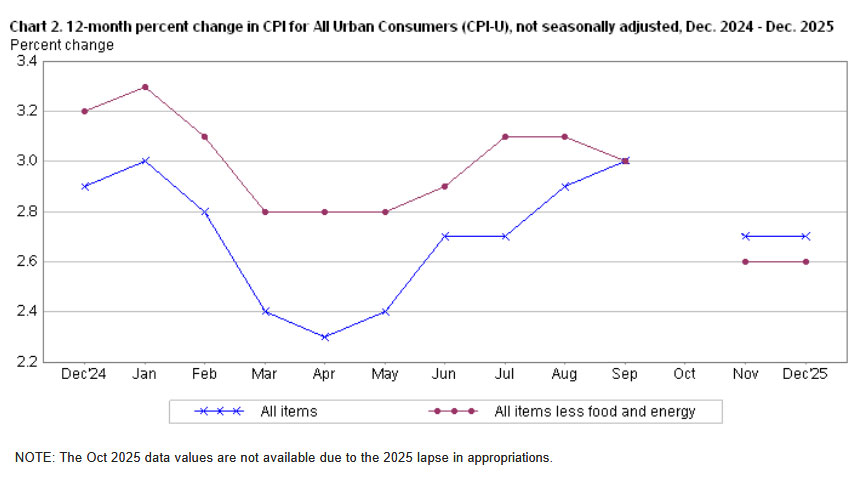
Welcome to the most important (and most delayed) inflation report of the year: For September, seasonally adjusted U.S. inflation increased 0.3% and the annual rate ticked up from 2.9% to 3.0%, the beleaguered Bureau of Labor Statistics reported today.

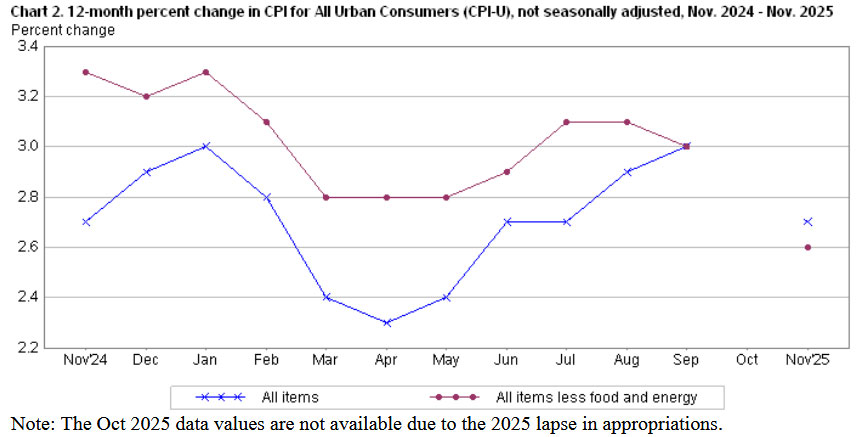
While 3.0% is a too-high rate of inflation, this report will be seen as relatively benign because it came in lower than expectations. Core inflation increased 0.2% for the month and held steady at 3.0%. All the numbers were lower than expected.

This is a very important report because it sets in stone the new variable rate for U.S. Series I Savings Bonds and also sets the Social Security cost-of-living adjustment for payments in 2026. So let’s dive in.

I Bond variable rate

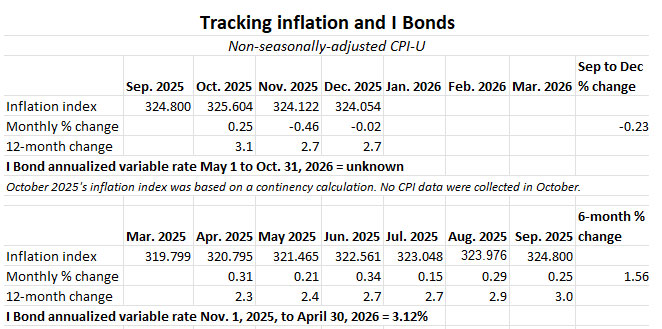
I Bond investors are interested in non-seasonally adjusted inflation, which is used to set future interest rates for I Bonds and also inflation accruals for Treasury Inflation-Protected Securities. The BLS set the September inflation index at 324.800, an increase of 0.25% over the August number.

That was the final piece needed to set the I Bond’s new variable rate, which will eventually roll into effect for all I Bonds, no matter when they were issued.

The new six-month, annualized variable rate will be 3.12%, up from the current 2.86%. Here are the data:

View historical data on my Inflation and I Bonds page.

The I Bond’s permanent fixed rate will also update November 1, but we can’t say for certain what that rate will be. My projection, based on the 0.65 ratio formula that has worked for a decade, is that the fixed rate will fall to 0.90% from the current 1.10%.

If the fixed rate does drop to 0.9%, the new composite rate for purchases from November 2025 to April 2026 will be 4.03%, higher than the current 3.98%

What does this mean for investors? Although the variable rate will rise for November purchases, it is a better move to make investments in October (no later than Oct. 28) to lock in the fixed rate of 1.10%, which is permanent. You’d get 3.98% for six months and then 4.23% for the next six months.

For TIPS. The September inflation report means that principal balances for all TIPS will increase 0.25% in November, after rising 0.29% in October. Here are the new November Inflation Indexes for all TIPS.

Social Security COLA

The September inflation report was the third of three — for July to September — that determine the Social Security Administration’s cost-of-living adjustment for payments in 2026. The SSA uses a three-month average of a different index, the Consumer Price Index for Urban Wage Earners and Clerical Workers (CPI-W), to set its COLA.

For September, the BLS set CPI-W at 318.139, which produced a three-month average of 317.265, an increase of 2.8% over the same average for 2024. That means the Social Security COLA will be 2.8% for payments beginning in January. The numbers:

Note that the COLA increase of 2.8% lags the official annual rate of inflation at 3.0%. That’s disappointing, but it is not uncommon.

The COLA increase will boost the average Social Security payment by about $56 to an average monthly benefit of $2,071, starting in January. However, we are likely to see larger increases in Medicare costs, to be announced in November.

And, yes, I will pat myself on the back for this July 18 post: Forecast: Social Security COLA for 2026 should be around 2.8%

The inflation report

And now, much-delayed news from the BLS, which because of the shutdown assembled a skeleton staff to create this September inflation report. It reassured us with this: “Note that September CPI data collection was completed before the lapse in appropriations.” But that won’t be true for the October report.

No price data have been collected this month. The White House today announced that the October inflation report is not likely to be released because of the lack of data.

For September, the BLS noted that a 4.1% increase in gasoline prices was the largest factor in monthly inflation. But gasoline prices remain down 0.5% year over year. More from the report:

  • Food at home costs increased 0.3% for the month and are up 2.7% year over year.
  • The meats, poultry, fish, and eggs index rose 0.3% in September and 5.2% over the last 12 months.
  • Shelter costs were up a relatively mild 0.2% after rising 0.4% in August. The annual increase was 3.6%.
  • Costs of new vehicles rose 0.2% for the month and just 0.8% for the year.
  • Costs of used cars and trucks fell 0.4% for the month but are up 5.1% for the year.
  • Airline fares rose a sharp 2.7% for the month and are up 3.2% for the year.
  • Motor vehicle insurance costs fell 0.4% for the month (finally!) but remain up 3.1% for the year.

It’s hard to quickly spot price increases related to tariffs, but apparel costs rose 0.7% in September. Meat costs were up 1.3% for the month and 8.5% for the year. Fresh vegetable costs rose 2.6% for the month.

Here is the annual trend for all-items and core inflation, showing the “not beautiful” alignment at 3.0%:

What this means for interest rates

So we got a “plus” that inflation was a bit lower than expected, along with a “minus” that 3.0% annual inflation is too high to sustain. (And it will probably go higher in coming months.)

The Federal Reserve at this point seems focused on a weakening U.S. labor market, so today’s relatively OK inflation report should allow it to continue its rate-cutting cycle. We can assume a 25-basis-point rate cut is coming next week, but without October inflation data the Fed will be flying blind into its December meeting.

From today’s Bloomberg report:

The lower-than-expected reading is a welcome surprise, especially for several Fed officials who are leery of cutting rates further. While the central bank was already widely expected to lower borrowing costs at its meeting next week, the report may help convince policymakers that they can do so again in December — especially in the absence of other official reports should the shutdown continue.

For the good of the nation, let’s hope this government shutdown ends soon and we can again see normal data flow. This is extremely important for creating trust in the stock and bond markets.

—————————

Donate? This site is free and I plan to keep it that way. Some readers have suggested having a way to contribute. I would welcome donations. Any amount, or skip it, your choice. This is completely optional.

PayPal link / Venmo link

—————————

Follow Tipswatch on X for updates on daily Treasury auctions and real yield trends (when I am not traveling).

Feel free to post comments or questions below. If it is your first-ever comment, it will have to wait for moderation. After that, your comments will automatically appear. Please stay on topic and avoid political tirades. NOTE: Comment threads can only be three responses deep. If you see that you cannot respond, create a new comment and reference the topic.

David Enna is a financial journalist, not a financial adviser. He is not selling or profiting from any investment discussed. I Bonds and TIPS are not “get rich” investments; they are best used for capital preservation and inflation protection. They can be purchased through the Treasury or other providers without fees, commissions or carrying charges. Please do your own research before investing.
Posted in Cash alternatives, Federal Reserve, I Bond, Inflation, Social Security, Treasury Bills | 31 Comments

New 5-year TIPS gets real yield of 1.182%

Investor demand appeared to be lukewarm.

By David Enna, Tipswatch.com

The U.S. Treasury’s auction offering of $26 billion of a new 5-year Treasury Inflation-Protected Security — CUSIP 91282CPH8 — generated a real yield to maturity of 1.182%, down a whopping 52 basis points from a similar auction in April.

The result looked on target, but demand appeared a bit weak. At the auction’s close, the “when-issued” prediction was for a real yield of 1.17%. The result of 1.182% shows investors were not diving in. However, the bid-to-cover ratio was 2.51, a routine number for this term of TIPS.

Real yields, especially for shorter-maturity TIPS, have been declining as the Federal Reserve rolls out a wave of cuts to short-term interest rates. The next cut could come next week. Here is the trend in the 5-year real yield over the last two years, showing the substantial fall from the October 2023 highs:

Click on image for larger version.

The real yield managed to remain 8 basis points above the current fixed rate of the Series I Savings Bond, which has a fixed rate of 1.10% for purchases through the end of this month. For many investors, the I Bond is a more attractive investment at these rates, given the advantages of tax deferral, flexible maturity, and solid deflation protection.

Pricing

This is a new TIPS, which means the coupon rate was set at 1.125%, to the 1/8th percentage point below the real yield of 1.182%. That resulted in an unadjusted price of 99.726133, a slight discount. In addition, this TIPS will carry an inflation index of 1.00148 on the settlement date of Oct. 31. With that information, we can calculate the exact cost of a $10,000 par-value investment:

  • Par value: $10,000
  • Actual principal purchased: $10,000 x 1.00148 = $10,014.80
  • Cost of investment: $10,014.80 x 0.99726133 = $9,987.37
  • + accrued interest of $4.95 (to be returned at first coupon payment)

In summary, an investor paid $9,987.37 for $10,014.80 of principal at the settlement date of Oct. 31. From that point on, the investor will earn accruals to principal matching inflation plus an annual coupon rate of 1.125%, applied to inflation-adjusted principal.

Side note for nerds: This is the first time in the history of the 5-year TIPS, dating back to July 1997, that the coupon rate has been set at 1.125%.

Inflation breakeven rate

At the auction’s close, the nominal 5-year Treasury note was trading at 3.59%, setting up an inflation breakeven rate of 2.41% for this TIPS, a bit higher than recent results. This means CUSIP 91282CPH8 will out-perform the nominal 5-year if inflation averages more than 2.41% over the next five years.

That seems like a pretty even bet, but I’ll note that inflation over the last 5 years, ending in August, has averaged 4.5%. I’d prefer the TIPS until we see evidence that inflation is actually declining.

Here is the trend in the 5-year inflation breakeven rate over the last two years:

Click on image for larger version.

Thoughts

Although the real yield came in 1 basis point higher than the when-issued prediction, this looks like a fairly routine auction with a fair result. The U.S. Treasury’s 5-year real yield estimate closed Wednesday at 1.24%, but a yield that high never seemed likely, as I explained here. I’d say 1.182% was a good result for investors.

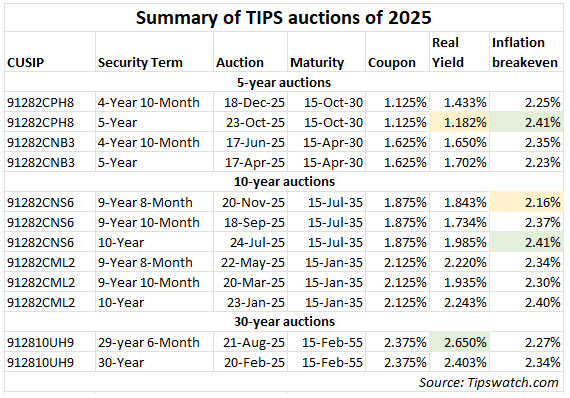
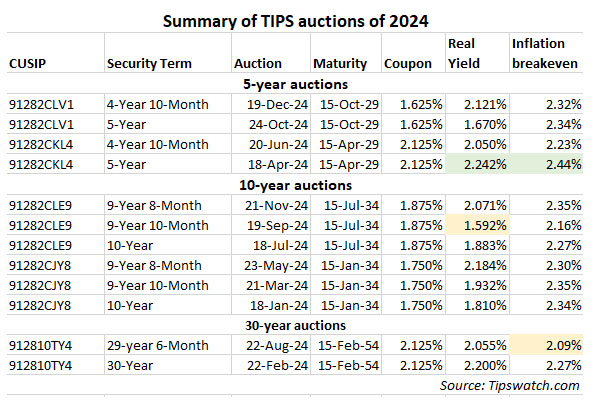
Here are auction results for 4- to 5-year TIPS over the last five years:

Now is an ideal time to build a TIPS ladder

Confused by TIPS? Read my Q&A on TIPS

TIPS in depth: Understand the language

TIPS on the secondary market: Things to consider

TIPS investor: Don’t over-think the threat of deflation

Upcoming schedule of TIPS auctions

—————————

Donate? This site is free and I plan to keep it that way. Some readers have suggested having a way to contribute. I would welcome donations. Any amount, or skip it, your choice. This is completely optional.

PayPal link / Venmo link

—————————

Follow Tipswatch on X for updates on daily Treasury auctions and real yield trends (when I am not traveling).

Feel free to post comments or questions below. If it is your first-ever comment, it will have to wait for moderation. After that, your comments will automatically appear. Please stay on topic and avoid political tirades. NOTE: Comment threads can only be three responses deep. If you see that you cannot respond, create a new comment and reference the topic.

David Enna is a financial journalist, not a financial adviser. He is not selling or profiting from any investment discussed. I Bonds and TIPS are not “get rich” investments; they are best used for capital preservation and inflation protection. They can be purchased through the Treasury or other providers without fees, commissions or carrying charges. Please do your own research before investing.
Posted in Federal Reserve, I Bond, Inflation, Investing in TIPS | Tagged , , | 16 Comments

This week’s 5-year TIPS auction will be hard to predict

AI-generated image for “investor aiming at confusing target.” Source: Perchance.org

Oct. 23 update: New 5-year TIPS gets real yield of 1.182%

By David Enna, Tipswatch.com

Auctions for new 5-year Treasury Inflation-Protected Securities happen twice a year, in April and October. Because of the relatively short term, and the different inflationary conditions leading up to each maturity date, the 5-year TIPS auction is hard to predict.

I got caught by this phenomenon in October 2023, when a new 5-year TIPS (CUSIP 91282CJH5) auctioned with a real yield of 2.440%, well below the “market” yield of about 2.55% or higher. I was surprised. But I shouldn’t have been.

I wrote about this in an Oct. 20, 2023, article with the subtitle “There is an explanation for everything, right?” The basic lessons are these: 1) The October TIPS auction will get a real yield less than the apparent market rate, and 2) The April TIPS auction will get a real yield higher than market.

The reason is a bit esoteric: Non-seasonally adjusted inflation has a strong seasonal pattern, generally running higher than headline CPI from January to June and lower from July to December. The closing value of the April TIPS (reflecting inflation through mid-February) is much more likely to be exposed to end-of-the-year deflation, and therefore the April TIPS gets a higher real yield than “market.”

I created a chart last year to prove the point — the April 5-year TIPS gets a higher real yield than the October version:

Also see: ‘Inflation Guy’ explains seasonal adjustment (or lack thereof)

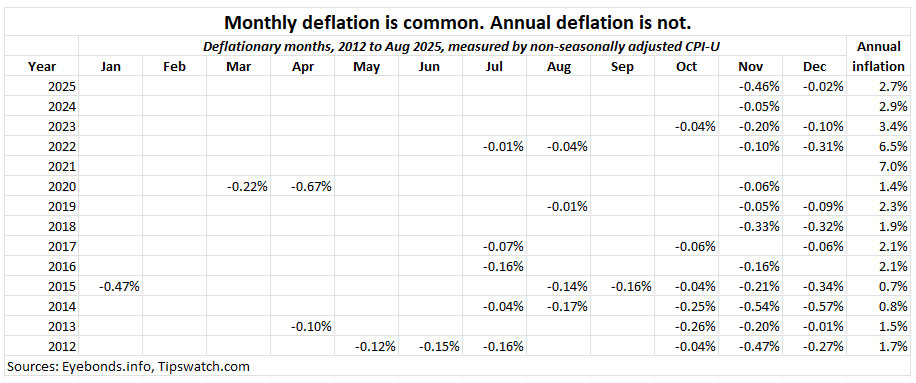
Here’s another chart that shows how deflationary months are quite common in the last three months of the year, which would reduce the maturing value of an April-issued TIPS:

Click on image for larger version.

What does this all mean?

On Thursday, Treasury will auction $26 billion in a new 5-year TIPS (CUSIP 91282CPH8). That will be the largest auction-size ever for this term, up from $25 billion in April and $24 billion in October 2024.

You can track the real yield of the April TIPS in real time on Bloomberg’s Current Yields page, which shows a Friday closing real yield of 1.23%. The U.S. Treasury also provides a daily estimate of the real yield of a full-term 5-year TIPS, which closed Friday at 1.30%.

Saturday morning, Vanguard’s bond-trading site was showing an “indicative yield” of 1.235% for the upcoming auction, obviously based on current trading in the April TIPS.

Conclusion: All of these indicators are wrong. At this point in time (things will change by Thursday) I’d predict this TIPS would get a real yield of 1.15% or lower. Past results show us the real yield will be lower than the 1.23% “market” created by the April TIPS. In other words, be prepared to be surprised.

Definition: The “real yield to maturity” of a TIPS is its yield above official future U.S. inflation, over the term of the TIPS. So a real yield of 1.15% means an investment in this TIPS would provide a return that exceeds U.S. inflation by 1.15% for 5 years.

Real yields will rise and fall next week in the days leading up to the auction. But it will be interesting to see how close this 5-year TIPS gets to the 1.10% fixed rate on the current Series I Savings Bond, available through the end of this month.

Here is the trend in the 5-year real yield over the last 15 years:

Click on image for larger version.

Side note: Remember that 5-year TIPS auction of Oct. 19, 2023, when the real yield was a “disappointing” 2.440%? Turns out that the auction came within a whisker of the 15-year high real yield of 2.49%, set a few days later.

Pricing

Because this is a new TIPS, the coupon rate will be set to the 1/8th percentage point below the auctioned real yield. That means the TIPS will have an unadjusted price slightly below par value. It will carry a minimal inflation index of 1.00148 on the settlement date of Oct. 31. The end result will be a price slightly below par. In other words, a $10,000 investment in this TIPS should cost very close to $10,000.

Inflation breakeven rate

Using the U.S. Treasury estimates of 1.30% for a five-year TIPS (probably too high) and 3.59% for a 5-year Treasury note (probably accurate) you get an inflation breakeven rate of 2.29%, a bit below recent trends. If you adjust the likely yield to 1.15% the breakeven rate rises to 2.44%, higher than recent trends. My conclusion: Who knows?

Here is the trend in the 5-year inflation breakeven rate over the last 15 years:

Click on image for larger version.

Thoughts

I often note that the 5-year TIPS is most sensitive to the Fed’s short-term rate cuts, and that has proven accurate in 2025. The 5-year real yield has fallen about 67 basis points since January 1, compared to 48 for the 10-year and only 8 for the 30 year.

Is a real yield around 1.15% to 1.20% still attractive for a 5-year TIPS? Yes, but it depends on your investment needs. As the yield approaches the now-current 1.10% fixed rate on the I Bond, the savings bond becomes more attractive, given its tax-deferral, deflation protection and flexible maturity. (The I Bond’s fixed rate is likely to fall to 0.9% at the November 1 reset, but 1.10% is available through the month of October.)

I suspect their won’t be much demand for this auction from small-scale investors. If you are jumping aboard, let me know your thoughts in the comments section.

This TIPS auction closes Thursday at 1 p.m. ET. Non-competitive bids at TreasuryDirect must be placed by noon Thursday. If you are putting an order in through a brokerage, make sure to place your order Wednesday or very early Thursday, because brokers cut off auction orders before the noon deadline.

I will be posting the auction results soon after the close on Thursday. Here is a history of auction results for this term over the last 5 years:

Now is an ideal time to build a TIPS ladder

Confused by TIPS? Read my Q&A on TIPS

TIPS in depth: Understand the language

TIPS on the secondary market: Things to consider

TIPS investor: Don’t over-think the threat of deflation

Upcoming schedule of TIPS auctions

—————————

Donate? This site is free and I plan to keep it that way. Some readers have suggested having a way to contribute. I would welcome donations. Any amount, or skip it, your choice. This is completely optional.

PayPal link / Venmo link

—————————

Follow Tipswatch on X for updates on daily Treasury auctions and real yield trends (when I am not traveling).

Feel free to post comments or questions below. If it is your first-ever comment, it will have to wait for moderation. After that, your comments will automatically appear. Please stay on topic and avoid political tirades. NOTE: Comment threads can only be three responses deep. If you see that you cannot respond, create a new comment and reference the topic.

David Enna is a financial journalist, not a financial adviser. He is not selling or profiting from any investment discussed. I Bonds and TIPS are not “get rich” investments; they are best used for capital preservation and inflation protection. They can be purchased through the Treasury or other providers without fees, commissions or carrying charges. Please do your own research before investing.
Posted in Federal Reserve, I Bond, Inflation, Investing in TIPS, Savings Bond, TreasuryDirect | Tagged , , | 32 Comments

A 5-year TIPS is maturing today. How did it do as an investment?

An awful auction. A decent result.

By David Enna, Tipswatch.com

Back on October 22, 2020, a new 5-year Treasury Inflation-Protected Security — CUSIP 91282CAQ4 — auctioned with a depressingly low real yield to maturity of -1.320%, which at the time was the second-lowest real yield ever recorded for a 5-year TIPS at auction.

Think back: Just five years ago, investors were willing to accept a real yield that was guaranteed to under-perform inflation by 1.320% for five years. Seems mind-boggling today. But that was the investment reality in 2020, as the Federal Reserve ramped up bond-buying quantitative easing at the height of the COVID-19 pandemic. At one point, the Fed held more than one-fifth of total TIPS outstanding.

It is therefore amazing that this TIPS ended up being a decent investment, especially if you compare it to a nominal 5-year Treasury note at the time, which was yielding an insanely low 0.37%. That created an inflation breakeven rate of 1.69%. (At the time U.S. inflation was running at 1.2%.)

In my preview article for this auction, I noted the seriously ugly real yield still offered appeal versus the nominal Treasury:

In the current environment of ultra-low interest rates for safe investments, this TIPS should be considered “above average.” Why? Because it provides a hedge against unexpected future inflation. The Federal Reserve has openly committed to forcing annual U.S. inflation higher than 2% a year, for an extended period of time, as long as the labor market remains weak.

I also pointed out that the Series I Savings Bond was a much better investment with a fixed rate of 0.0%, more than 120 basis points higher than the 5-year TIPS:

I Bonds are better than TIPS, across the entire maturity spectrum.

How did this TIPS do?

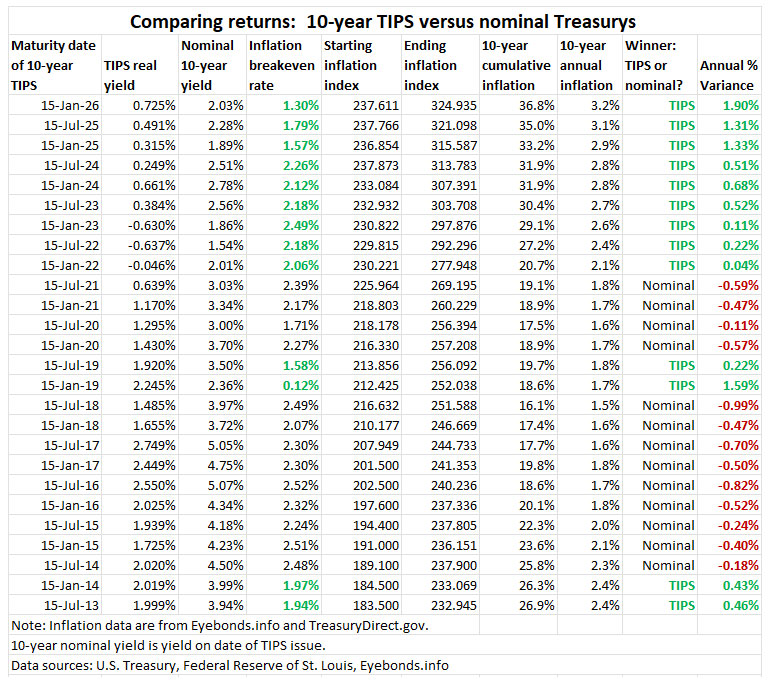
As it turned out, inflation over the last 5 years averaged 4.5%, well above the auction’s inflation breakeven rate of 1.69%. So CUSIP 91282CAQ4 outperformed the nominal 5-year Treasury by a whopping 2.81% a year. It ended up producing a nominal return of 3.117%, versus the 5-year Treasury note’s 0.37%.

This result continues a five-year string of out-performance of TIPS over nominal Treasurys, thanks to the 40-year-high surge in inflation that peaked in June 2022 at 9.1%. Inflation continues today at 2.9%, well above the expectation of 1.69% in October 2020.

Click on image for larger version. View more data on my TIPS vs Nominals page.

I Bond was the winner

Obviously, an I Bond with a 0.0% fixed rate (which is equivalent to its real yield) is going to out-perform a TIPS with a negative real yield. If you purchased an I Bond in October 2020 with a fixed rate of 0.0%, it will have created a nominal yield of 4.03% through April 2026, about 91 basis points better than the TIPS (Source: Eyebonds.info).

And bond funds?

Vanguard’s Total Bond Fund ETF (BND) has had a total annual return of -0.33% over the last five years, according to Morningstar. That poor performance was caused by the beating it took in 2022, when its annual return was -13.1%.

Vanguard’s Short-Term TIPS ETF (VTIP) has had a total annual return of 3.71% over the last 5 years, a bit better than CUSIP 91282CAQ4’s performance. It benefits from a shorter duration and counter-acting gains from higher inflation.

The iShares TIPS ETF (TIP), which holds the full range of maturities, has had a total annual return of 1.32% over the last five years, under-performing CUSIP 91282CAQ4.

Moral of the story

Two very important takeaways: 1) An I Bond with a fixed rate of 0.0% will be a very attractive investment any time the Federal Reserve decides to repress interest rates through quantitative easing. (Let’s hope we don’t see that again.) And 2) Even a TIPS with a negative real yield can be “relatively” attractive if the inflation breakeven rate is lower than seems likely.

Notes and qualifications

My TIPS vs. Nominals chart is an estimate of performance.

Keep in mind that interest on a nominal Treasury and the TIPS coupon rate is paid out as current-year income and not reinvested. So in the case of a nominal Treasury, the interest earned could be reinvested elsewhere, which would potentially boost the gain. For certain, we don’t know what the investor could have earned precisely on an investment after re-investments.

In the case of a TIPS, the inflation adjustment compounds over time, and that will give TIPS a slight boost in return that isn’t reflected in the “average inflation” numbers presented in the chart.

Confused by TIPS? Read my Q&A on TIPS

TIPS in depth: Understand the language

TIPS on the secondary market: Things to consider

TIPS investor: Don’t over-think the threat of deflation

Upcoming schedule of TIPS auctions

—————————

Donate? This site is free and I plan to keep it that way. Some readers have suggested having a way to contribute. I would welcome donations. Any amount, or skip it, your choice. This is completely optional.

PayPal link / Venmo link

—————————

Follow Tipswatch on X for updates on daily Treasury auctions and real yield trends (when I am not traveling).

Feel free to post comments or questions below. If it is your first-ever comment, it will have to wait for moderation. After that, your comments will automatically appear. Please stay on topic and avoid political tirades. NOTE: Comment threads can only be three responses deep. If you see that you cannot respond, create a new comment and reference the topic.

David Enna is a financial journalist, not a financial adviser. He is not selling or profiting from any investment discussed. I Bonds and TIPS are not “get rich” investments; they are best used for capital preservation and inflation protection. They can be purchased through the Treasury or other providers without fees, commissions or carrying charges. Please do your own research before investing.
Posted in ETFs, Federal Reserve, I Bond, Inflation, Investing in TIPS, Savings Bond | Tagged , | 25 Comments