Up next: 5-year TIPS reissue will auction Thursday, Aug. 22, 2013

This auction is two weeks away, so I thought I’d take a preliminary peek at it. This will be a reissue of CUSIP 912828UX6, which first auctioned on April 18 with a yield to maturity of -1.311%. This 4-year, 8-month reissue will carry the existing coupon rate of 0.125%.

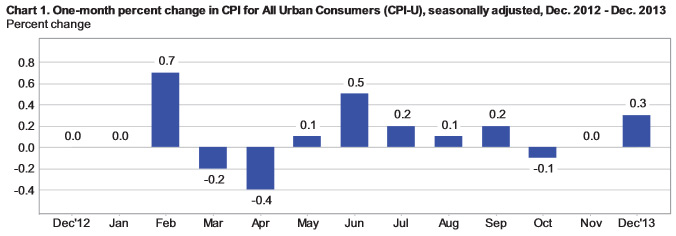
If you liked it in April … Obviously, a lot has happened since April, with TIPS yields rising dramatically for two reasons: 1) the Federal Reserve’s announced plan to begin tapering its Treasury-buying program if the economy continues improving, and 2) a trend of sluggish U.S. inflation, which makes TIPS less attractive to investors.

Here’s a recap of 5-year TIPS yields in 2013, demonstrating that even as nominal Treasury rates rose, and even after a recent decline in TIPS yields, TIPS have become less expensive compared to a traditional Treasury:

Date 5-year TIPS 5-year Treasury Inflation Breakeven
2-Jan-13 -1.36 0.76 2.12
1-Feb-13 -1.46 0.88 2.34
1-Mar-13 -1.45 0.75 2.20
1-Apr-13 -1.47 0.76 2.23
1-May-13 -1.33 0.65 1.98
3-Jun-13 -0.86 1.03 1.89
1-Jul-13 -0.41 1.39 1.80
1-Aug-13 -0.45 1.49 1.94
7-Aug-13 -0.55 1.38 1.93

Although you see negative yields in this list for the TIPS, that negative rate is offset by inflation. The base principal of a TIPS increases with inflation until maturity. That is why the breakeven rate is so important. Right now, a 5-year TIPS will outperform a 5-year Treasury if inflation averages more than 1.93% over the next 5 years.

Inflation over the last five years has averaged 1.3%, but that was only the second time it has been under 2.0% in a five-year period in the last 50 years. See a chart.

As of Wednesday,  CUSIP 912828UX6 was trading on the secondary market at -0.670%, a little worse than the Treasury estimate listed above for a full 5-year TIPS.

Because it carries a coupon rate of 0.125%, buyers will be ‘paying up’ to get the resulting negative yield. My guess currently is about $10,325 for $10,000 of value, down from about $10,782 when the TIPS was first auctioned.

Danger in paying up. While your principal is guaranteed at maturity, the amount you pay up is not guaranteed. If we see 5 years of deflation, a buyer paying $10,325 this month will get $10,000 back at maturity, along with earning 01.25%. I consider this highly unlikely, but it is worth noting.

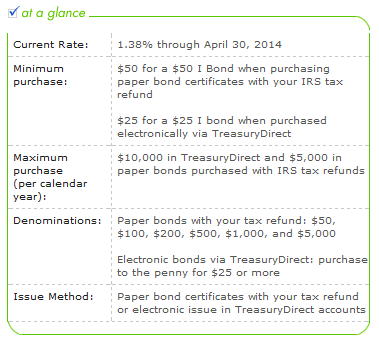
Alternatives? There is no doubt that the US Savings I Bond is superior to a 5-year TIPS. It pays the rate of inflation, minus nothing, has rock-solid deflation protection and is tax-deferred until maturity, which can be anywhere (without penalty) from 5 years to 30 years. The hitch is that you can buy only $10,000 per person per year. (You can also get additional paper I Bonds in lieu of income tax refund.)

What about insured bank CDs? My local credit union is paying 1.30% on 5-year CD, less than a 5-year Treasury. You can shop around and find better rates, possibly up to 2.0%, which would push the breakeven rate up to 2.55%. A bank CD with a high rate is pretty competitive, if you can find those ‘lofty’ rates.

Trend is working against buyers. The 5-year TIPS yield has dropped 10 basis points since Aug. 1, and 28 basis points since July 5. It’s a trend worth watching. While I would like to add this TIPS to my bond ladder, I am going to keep an eye on that yield.

A lot can happen in two weeks.

Posted in Investing in TIPS | 5 Comments

Nice upswing today in TIPS, Treasury yields

I guess the Ben Bernanke euphoria wore off overnight, but just for bonds. The stock market took off, with both the Dow average and S&P 500 index setting record highs. (NOT adjusted for inflation, as my frequent reader Ed will certainly note.)

TIPS and the overall Treasury market took a minor beating. The 10-year nominal Treasury closed at 2.74%, up 14 basis points in a day and setting the highest yield of the year. The 10-year TIPS closed at 0.48%, up 10 basis points from Wednesday, but still off the year’s high of 0.66%. The 10-year inflation breakeven point nudged up to 2.26%, which I guess qualifies as ‘neutral’ on the expensive/inexpensive meter.

So what happened? The biggest news of the day was the report on unemployment claims, which was good news. From the Reuters report:

Data on weekly U.S. initial jobless claims and national manufacturing came in better than expected. The Institute for Supply Management index of national factory activity for July rose to its highest level since June 2011.

“The talk we’ve been hearing that the second half is going to be better than the first. We saw some follow-through on that … ,” said Brian Amidei, managing director at HighTower Advisors in Palm Desert, California.

The Federal Reserve has two data points it is watching to determine whether to continue its bond buying, which suppresses TIPS yields: 1) the U.S. inflation rate, and 2) the U.S. unemployment rate. If the unemployment rate falls below 7% and inflation rises above 2%, the Fed has a open door to shut down bond buying.

Both 1 and 2 appear likely in coming months. The stock market loves an improving economy and can deal with rising interest rates (to a point). The Treasury bond market has no fear of a bad economy, but gets very freaked out by rising interest rates.

Good news in the economy is going to cause TIPS yields to rise.

Update on this month’s 5-year TIPS reissue. The 5-year TIPS closed today at -0.45%, still well below its high for the year of -0.27%. We could see some movement toward that -0.27% ahead of the auction Thursday, Aug. 22, but right now I am guessing  we won’t go higher.

Posted in Investing in TIPS | 5 Comments

Today’s ‘shocker’: Fed will continue bond-buying program

No surprises here. The Federal Reserve noted that the economy is growing slowly and its strategy of near-zero interest rates and monthly bond buying will continue. I’ll just quote today’s Federal Reserve statement on the most predictable news of the week:

  • Evidence of slight improvement. (E)conomic activity expanded at a modest pace during the first half of the year. Labor market conditions have shown further improvement in recent months, on balance, but the unemployment rate remains elevated. … The Committee expects that, with appropriate policy accommodation, economic growth will pick up from its recent pace and the unemployment rate will gradually decline …
  • Inflation remains too low. Partly reflecting transitory influences, inflation has been running below the Committee’s longer-run objective, but longer-term inflation expectations have remained stable. … The Committee recognizes that inflation persistently below its 2 percent objective could pose risks to economic performance, but it anticipates that inflation will move back toward its objective over the medium term.
  • Congress, you dogs. (F)iscal policy is restraining economic growth.
  • The result, stay the course. To support a stronger economic recovery and to help ensure that inflation, over time, is at the rate most consistent with its dual mandate, the Committee decided to continue purchasing additional agency mortgage-backed securities at a pace of $40 billion per month and longer-term Treasury securities at a pace of $45 billion per month.
  • The not-so-secret strategy. Taken together, these actions should maintain downward pressure on longer-term interest rates, support mortgage markets, and help to make broader financial conditions more accommodative.
  • But, just in case you wondered … The Committee is prepared to increase or reduce the pace of its purchases to maintain appropriate policy accommodation as the outlook for the labor market or inflation changes.

What it means. 

  1. The Federal Reserve desperately wants the U.S. inflation rate to rise above 2% (it is currently running at 1.8%). It is practically guaranteeing inflation higher than 2%.
  2. The Fed isn’t pleased by the currently slow rate of economic growth (it again took a swipe at Congress for tight fiscal policy). Second-quarter GDP came in today at 1.7%,  better than expectations. Not enough, says the Fed.
  3. Most importantly, after having spooked both the stock and bond markets with talk of ‘tapering’ its bond buying in early July, the Fed is going to continue sweet-talking the markets that bond buying will continue, until some possibly unreachable date in the future. The Fed wants stock prices higher and bond yields lower. Period.

And for TIPS?

Today’s chart for the TIP ETF says it all (the Federal Reserve statement was announced at 2 pm EDT):

July 31 TIP ETFWhile TIPS yields have reached ‘barely tolerable’ levels in recent weeks, buyers have also been fighting the Fed, which seems determined to keep yields very low. But I do think the Fed really doesn’t want a bond bubble, so it has set off a bit of confusion about where rates are headed. That may be able to keep rates positive, at least for a 10-year TIPS.

Not that much really happened today, no big deal. I’d keep an eye on the 10-year nominal Treasury, which closed today at 2.60%. Where it goes, the 10-year TIPS, which closed the day at 0.38%, will follow.

Remember … Eternal quantitative easing drives TIPS yields down, and prices up. The 10-year TIPS breakeven rate widened out today to 2.22%, up from yesterday’s 2.14%. That makes TIPS more expensive.


Posted in Investing in TIPS | 2 Comments

Honey, there’s a hole in our TIPS ladder!

Treasury Inflation-Protected Securities are almost entirely risk free when bought and held to maturity. Default risk? As close to zero as you can get. Inflation risk? Covered. Duration risk? Hold to maturity and forget it. Downgrade risk? We’ve been through this and it actually caused TIPS values to rise. Liquidity risk? Hold to maturity and forget it.

But there is this one nagging thing: Reinvestment risk.

The risk resulting from the fact that interest or dividends earned from an investment may not be able to be reinvested in such a way that they earn the same rate of return as the invested funds that generated them. For example, falling interest rates may prevent bond coupon payments from earning the same rate of return as the original bond. – Investorwords.com

One way to minimize reinvestment risk is to build a ladder of bonds with maturities stretching out many years. Each year, as a bond matures, you buy another of a set maturity. My preference is to build the ladder with 10-year TIPS purchased at auction, because the 10-year maturity seems to be the ‘sweet spot’ for yield and term. I worry about the negative cash flow of taxable 30-year TIPS.

Reinvestment risk is something that longtime TIPS holders are facing right now. Each year, we have TIPS maturing with real yields of 1.5% to 2.5%. For most of the last two years, we faced replacing these with TIPS paying yields negative to inflation. That is a 200 to 300 basis point drop in return.

Depressing. My reaction was to stop buying TIPS from July 2011 to May 2013, but I continued buying I Bonds, which have an open-ended maturity date, up to 30 years. So here is what my TIPS ladder looks like right now:

Holdings Maturity Coupon Rate
912828BW9 15-Jan-2014 2.000
912828KM1 15-Apr-2014 1.250
912828ET3 15-Jan-2016 2.000
912828QD5 15-Apr-2016 0.125
912828FL9 15-Jul-2016 2.500
912828GX2 15-Jul-2017 2.625
912828JX9 15-Jan-2019 2.125
912828MF4 15-Jan-2020 1.709
912828PP9 15-Jan-2021 1.125
912828UH1 15-Jan-2023 0.125
912828VM9 15-Jul-2023 0.375
912810FH6 15-Apr-2029 3.875
912810QP6 15-Feb-2041 2.125

My ladder actually remains pretty intact, with TIPS maturing in 2014, 2016, 2017, 2019, 2020, 2021, 2023, and then jumping out to 2029 and 2041.

But notice that I have ladder rungs missing in 2015 and 2018. I can’t do anything about 2015, but I can fill the 2018 spot with August’s reissue of a 5-year TIPS. Normally, I wouldn’t get too excited about a 5-year TIPS with a yield of about -0.47%, but I think this would a good investment to fill the gap.

It won’t return much, but it will set aside money for me to reinvest in 2018, probably into a TIPS maturing in 2028. When that matures, I will be 75 years old. I will have punted money forward to my 75-year-old self.

Posted in Investing in TIPS | 11 Comments

Why the breakeven rate is important: A TIPS versus Treasury example

I had a 10-year TIPS mature in July and I thought it would be interesting to look at how that Treasury Inflation-Protected Security performed against a traditional 10-year Treasury. Did it outperform? By how much?

So here are the basic details: The TIPS was CUSIP 912828BD1 and it was auctioned on July 9, 2003, with a coupon rate of 1.875% and a yield to maturity of 1.999%. That means this TIPS was sold at a discount to par, $98.881 for each $100 of value.

On the same day – July, 9, 2003 – the 10-year Treasury closed at 3.73%. This established an inflation breakeven rate of 1.731%. (3.73 minus 1.999 = 1.731%). I didn’t know it in 2003, but this was an excellent breakeven rate. It meant that if inflation averaged more than 1.731% over the next 10 years, this TIPS would outperform the nominal Treasury.

So, what happened? It turned out that the next 10 years were a period of extremely low inflation, averaging 2.4%, the lowest of any 10-year period in 50 years. There was a two-year period, from 2009 to 2010, when inflation was actually negative, falling -0.2%. (You can find detailed inflation data on eyebonds.info, a site that is loaded with data about TIPS and I Bonds.)

And yet, despite that weak inflation, this TIPS greatly outperformed the Treasury.

The lesson? The inflation breakeven rate does matter. When it falls below 2%, TIPS are cheap relative to Treasurys. When it rises above 2.5%, TIPS are expensive. (This assumes long-term inflation trends continue, we can never be sure.)

In September 2012, the 10-year breakeven rate rose above 2.6% and earlier this year  above 2.5%, a rate that’s higher than the last 10 years of inflation. After weeks of turmoil in the bond markets, it has settled in about 2.21% after recently dipping below 2%.

Back in 2003, when the economy was still in shock from the Internet crash, investors were pricing in very low inflation (1.731%). That was fortunate for buyers of CUSIP 912828BD1.

And here are the numbers:

$10,000 investment 10-year Treasury 10-year TIPS
15-Jul-13 Matured Security 10,000.00 12,670.80
15-Jul-13 Interest Payment 186.50 118.79
15-Jan-13 Interest Payment 186.50 117.82
16-Jul-12 Interest Payment 186.50 117.38
17-Jan-12 Interest Payment 186.50 115.53
15-Jul-11 Interest Payment 186.50 115.05
18-Jan-11 Interest Payment 186.50 111.66
15-Jul-10 Interest Payment 186.50 111.32
15-Jan-10 Interest Payment 186.50 110.38
15-Jul-09 Interest Payment 186.50 108.99
15-Jan-09 Interest Payment 186.50 109.59
15-Jul-08 Interest Payment 186.50 110.07
15-Jan-08 Interest Payment 186.50 106.94
16-Jul-07 Interest Payment 186.50 105.79
16-Jan-07 Interest Payment 186.50 102.94
17-Jul-06 Interest Payment 186.50 103.08
15-Jan-06 Interest Payment 186.50 101.31
15-Jul-05 Interest Payment 186.50 99.29
15-Jan-05 Interest Payment 186.50 97.46
15-Jul-04 Interest Payment 186.50 96.22
15-Jan-04 Interest Payment 186.50 94.31
15-Jul-03 Purchase discount 0.00 111.90
Total interest paid 3,730.00 4,936.62
Actual yield to maturity 3.73% 4.43%

Note: The 10-year Treasury in this example is theoretical, since there wasn’t a 10-year Treasury auction on July 9, 2003. The TIPS numbers are the actual interest payments from a $10,000 investment in CUSIP 912828BD1, reconstructed with data from eyebonds.info.

Posted in Investing in TIPS | 9 Comments