Looking back at my longest-held stocks

By David Enna, Tipswatch.com

After writing my memorial to financial guru Bob Brinker last week, I thought it would be interesting to look back at my individual stock investments over the years, or at least the ones I am still holding.

Back in 1999, I will admit to being caught up in the stock-trading mania of the time, purchasing stocks like Oracle, AT&T Corp., Broadcom, 3M, Waste Management, Gillette, Phillip Morris, Eli Lilly, etc., etc. I no longer hold any of those stocks. I made profits on some, lost money on some. Trading that often was a bad idea.

After the year 2000, and especially after I retired in 2016, I started to concentrate my holdings in low-cost, quality index ETFs, such as Vanguard Total Stock Market (VTI), Vanguard Total International (VXUS), Vanguard Dividend Appreciation (VIG) and Vanguard Small-Cap Value (VBR). When stocks I held went down enough to minimize capital gains, I sold them and reallocated to these funds.

So today my wife and I own very few individual stocks. Most of the remaining holdings have high capital gains and would best be donated to charity or simply held to … whenever. But how well have these stocks actually performed? That was the question I wanted to answer.

This chart shows every individual stock we currently own, with one exception. The only new holding is Element Solutions Inc. (ESI) which I bought (for some reason) in July 2024. Right now it is down slightly from the purchase price.

The key thing to note here is that the Vanguard Total Stock Market ETF has had an annual total return of 13.63% over the last 15 years, which is better than every one of my longer-term holdings other than Lowe’s Corp., which has returned 18.36%.

On the other hand, my two shorter-term holdings, NVDA and UNH, have done better than the total stock market’s return of 13.72% over the last 5 years.

Why Nvidia?

I am a big fan of computer video games (mostly ones involving dragons) and back in late 2018 Nvidia was producing the highest-quality graphic processing units (GPUs) for gaming. Its stock was tumbling at the time so I bought some. I didn’t pay much attention to the stock until …. 1) the cryptocurrency craze of 2020, when Nvidia chips were highly coveted for crypto mining, and then 2) this year’s artificial intelligence craze, which we are still enduring.

So today the stock is up a ridiculous 3,100%, despite declining sharply in recent weeks. In the past couple years I have sold off about 4 times my original investment, so I am comfortable just holding. NVDA is not my typical investment. There is only one thing to say: I got lucky. Thank the dragons.

The bigger lesson

The stocks I currently own are my “winners” with large capital gains and therefore not attractive to sell. Across the years, there have been plenty of losers and mediocre holdings I’ve sold and then moved proceeds into index funds.

The easy conclusion is that I would have been much better off investing in the total stock market instead of making bets on individual stocks, even with the happy accident of buying Nvidia at just the right time.

Bob Brinker would agree.

* * *

Follow Tipswatch on X (Twitter) for updates on daily Treasury auctions and real yield trends (when I am not traveling).

Feel free to post comments or questions below. If it is your first-ever comment, it will have to wait for moderation. After that, your comments will automatically appear. Please stay on topic and avoid political tirades. NOTE: Comment threads can only be three responses deep or the display breaks on the mobile site. If you see that you cannot respond, create a new comment and reference the topic.

David Enna is a financial journalist, not a financial adviser. He is not selling or profiting from any investment discussed. I Bonds and TIPS are not “get rich” investments; they are best used for capital preservation and inflation protection. They can be purchased through the Treasury or other providers without fees, commissions or carrying charges. Please do your own research before investing.


Posted in Investing in TIPS | Tagged , , , , | 13 Comments

Remembering Bob Brinker … and his life-changing advice

By David Enna, Tipswatch.com

January 26, 1986, was a big day in my life. The Chicago Bears, my longtime favorite team, were playing in the Super Bowl. That afternoon, I was driving with my future wife to a Super Bowl party of Chicago-area folks now living in Charlotte.

Bob Brinker: Oct. 1, 1941 – Aug. 18, 2024

We were listening to WBT-AM radio, because I liked to hear talk and there were no sports-talk radio stations in Charlotte back then. At 4 p.m., on came a new show, “Bob Brinker’s MoneyTalk.” OK, let’s give this guy a try.

I swear, within 15 minutes I turned to my future (and still) wife and said, “This guy is good.” There were other financial guys on the radio back then, but they were usually selling something, probably disastrous. Bob Brinker was just doling out excellent advice: 1) invest in low-cost index mutual funds, 2) favor quality companies like Vanguard, 3) commit to the plan, 4) and aim for “critical mass.”

By the way, the Bears won that Super Bowl, 46-10. And I got married in May 1986. It was a very good year.

From that day on, I tried really hard to listen to Brinker’s radio show, which aired from 4 to 7 p.m. ET on Saturdays and Sundays. I’d carve out part of my weekend to try to hear at least some of what he had to say. In later years, the show got preempted on some Sundays by Carolina Panthers post-game shows (my new favorite team), but I’d try to catch the replay later that night.

Here is Brinker in 2011 criticizing the “sharks” circling investors and the do-it-yourself approach to reaching “critical mass”:

Bob Brinker was financial comfort food. His advice was rock solid because it focused on a do-it-yourself approach emphasizing index funds and low-cost investing. In the late 1990s he began talking — often — about newly minted investments called Treasury Inflation-Protected Securities and U.S. Series I Savings Bonds. I had never heard of them. But I did some research and liked what I saw.

Through the year 2001 — triggered by Bob’s advice — I bought TIPS and I Bonds with real yields of 3.0% and higher. At the time, I didn’t realize how great these yields were. I still hold all the I Bonds and one of the TIPS (all the others have matured) with an above-inflation coupon rate of 3.875%, very close to day’s nominal return of 4.2% on a 30-year Treasury bond. It will mature in April 2029.

He also had an occasional segment where he recommended investment books, all solid choices. I read quite a few of them. Here is a top 10 list compiled by his son.

Brinker published a newsletter called “Marketimer,” which I subscribed to for a few months. The title was a misnomer because Brinker rarely advised trading. He just presented model portfolios for various risk levels, and not much changed.

His one big call

While Brinker very rarely made timing calls, he did look at factors like the state of the economy, monetary policy, valuations and investor sentiment. In January 2000 he advised his newsletter readers to switch to a 60% cash reserve after years of high market gains. The radio listeners got that call a few weeks later.

One thing to keep in mind is that the U.S. stock market was soaring after the greatest bull market of our lifetimes. The S&P 500 net asset value increased every year except one from 1982 to 1999. Baby boomers who were investing created a lot of wealth in those years.

I can remember hearing this caution while driving somewhere in the North Carolina mountains. I also remember I owned a Janus mutual fund that had gained 100% over the last year. So when I got home, I sold that fund and moved a bit more to cash. Or, more probably, I bought Vanguard’s GNMA fund, which Brinker was often recommending. It had a total return of 11.2% in 2000, 7.9% in 2001 and 9.7% in 2002.

My feeling is that Brinker did sense doom in early 2000 and he made a great call. He reached legendary status after that call, but his later timing advice was randomly good and bad. Investment researchers have found that his overall track record on market timing was so-so. Reminder: No one can predict the market.

Brinker retired from the radio show in 2018 and his newsletter closed down in June 2023. He died Aug. 18, 2024, at the age of 82. Here is the obituary.

Reaching ‘critical mass’

I feel fortunate to have been investing through all those boom years. The severe bear market after the dot-com bubble taught me a lesson about asset allocation: Don’t swing for a home run every time. Rebalancing after big gains (and losses) is smart. Safety is also a very good thing. TIPS and I Bonds fit a need for me, creating a life-long interest.

Brinker’s idea of critical mass was reaching a level of financial security where your money is working for you and you can just enjoy life, with few concerns. I can remember when I was a teenager and our garbage disposal broke. My mother told me, “We don’t have the money to fix this.” My dad was a corporate accountant. I didn’t want to live like that.

With his solid and sensible advice, Bob Brinker offered a path to a secure financial future, what he sometimes called “the cat bird’s seat.” I am grateful for that financial inspiration. RIP, Bob Brinker.

* * *

Follow Tipswatch on X (Twitter) for updates on daily Treasury auctions and real yield trends (when I am not traveling).

Feel free to post comments or questions below. If it is your first-ever comment, it will have to wait for moderation. After that, your comments will automatically appear. Please stay on topic and avoid political tirades. NOTE: Comment threads can only be three responses deep or the display breaks on the mobile site. If you see that you cannot respond, create a new comment and reference the topic.

David Enna is a financial journalist, not a financial adviser. He is not selling or profiting from any investment discussed. I Bonds and TIPS are not “get rich” investments; they are best used for capital preservation and inflation protection. They can be purchased through the Treasury or other providers without fees, commissions or carrying charges. Please do your own research before investing.
Posted in Federal Reserve, Inflation, Investing in TIPS, Retirement | 42 Comments

Treasury is ending paper I Bonds as a tax refund

By David Enna, Tipswatch.com

If you’ve been overpaying estimated taxes all through 2024 with the intention of purchasing paper U.S. Series I Savings Bonds in 2025 … it’s time for a new plan.

Reporter Susan Tompor of the Detroit Free Press last week discovered a little-noticed press release from the U.S. Treasury declaring an end to the tax-refund issuance of I Bonds, beginning on Jan. 1, 2025.

The decision ends the Tax Time Savings Bond program, which was started in 2010 to give tax-filers the ability to buy paper I Bonds in lieu of a federal tax refund. The program was the last way to purchase any kind of paper savings bonds, which otherwise went all-electronic in 2012. Treasury listed several reasons for the change:

  • “This option was costly and not frequently used.”
  • “The mailing of physical savings bonds was also subject to fraud, theft, loss, and delays.”
  • Only 35,000 tax filers each year bought paper I Bonds, representing 0.03% of tax filers, and less than 10% of Series I bond purchasers.
  • Sales of paper I Bonds through this program made up less than 1% of all I Bond purchases.

Treasury also noted that taxpayers who received an extension to Oct. 15, 2024, on their 2023 tax filings will still be able to purchase paper I Bonds with a refund using IRS Form 8888. I am assuming very few people will qualify for that last-ditch opportunity.

And finally, it noted that despite the end to the tax-refund program, the $10,000 per person per calendar year purchase will not change.

You may continue to purchase up to $10,000 of series I bonds in a calendar year.

Reaction

I support this decision, but it should have been paired with an increase in the electronic purchase cap to $15,000, at least. Back in February 2022 I suggested that the Treasury raise the cap to $20,000 while also eliminating the paper I Bond tax refund.

When I Bonds were first created in the fall of 1998, the purchase limit was $30,000 per person per year, and the Treasury even allowed credit cards to be used for purchases with no fees. (Air miles!) However, the Treasury determined about 98% of all savings bonds were purchased in amounts under $5,000. This triggered a new policy in 2008: a $5,000 limit per calendar year.

The current limit of $10,000 per person went into effect in January 2012. If that $10,000 limit had been adjusted for inflation since 2012, it would be about $13,700 today.

I never used the paper I Bond strategy because in my opinion it wasn’t worth the hassle. But it was widely used by many people back in 2022 when the I Bond’s variable rate began the year at 7.12% and then rose to 9.62% on May 1, 2022.

As things stand today I doubt many people were planning on triggering the strategy in 2025, when the I Bond’s composite rate could fall to something like 3.4%, down from the current 4.28%.

Paper I Bonds are getting difficult to cash at many banks because of fear of fraud. So that means for ease of ownership, the paper I Bonds should be converted to electronic form, which is another hassle. Read this.

The gift box strategy continues

Instead of using the tax-return strategy, many investors have been using TreasuryDirect’s “gift box” to make additional electronic purchases in a calendar year, to be delivered later to a trusted partner. In its press release, the Treasury reinforced that the gift-box program is continuing:

Can I still gift someone a series I bond?

Yes. You can buy a series I bond as gift electronically in TreasuryDirect. Bonds bought as gifts are registered in the name of the gift recipient, and do not contribute to your $10,000 purchase limit (note: the $10,000 limit still applies to the recipient in the year they are delivered).

I added the bold text in the above quote as a clarification. Full instructions are here.

The gift-box strategy requires a trusted partner, such as a spouse or adult relative. So it won’t work for everyone. Investors can also add to their holdings with electronic purchases through trusts, or business-owner strategies.

I don’t sense a lot of enthusiasm right now for investing in I Bonds and certainly the fervor is well below the mania of two years ago. But, because the I Bond’s fixed rate should hold above 1.0% at the November 1 reset — and 1.2% or 1.3% seems more likely at this point — gift-box purchases will continue to be potentially attractive, both before the November reset and into 2025. A fixed rate above 1.0% is sound, even if the variable rate is rather weak for six months. The fixed rate holds for the full 30-year term of the I Bond.

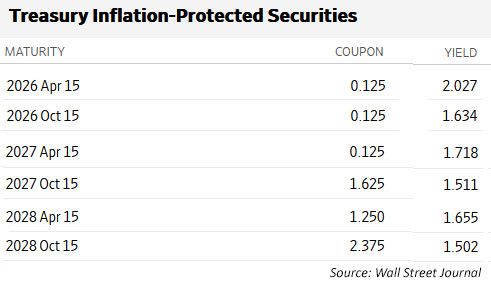
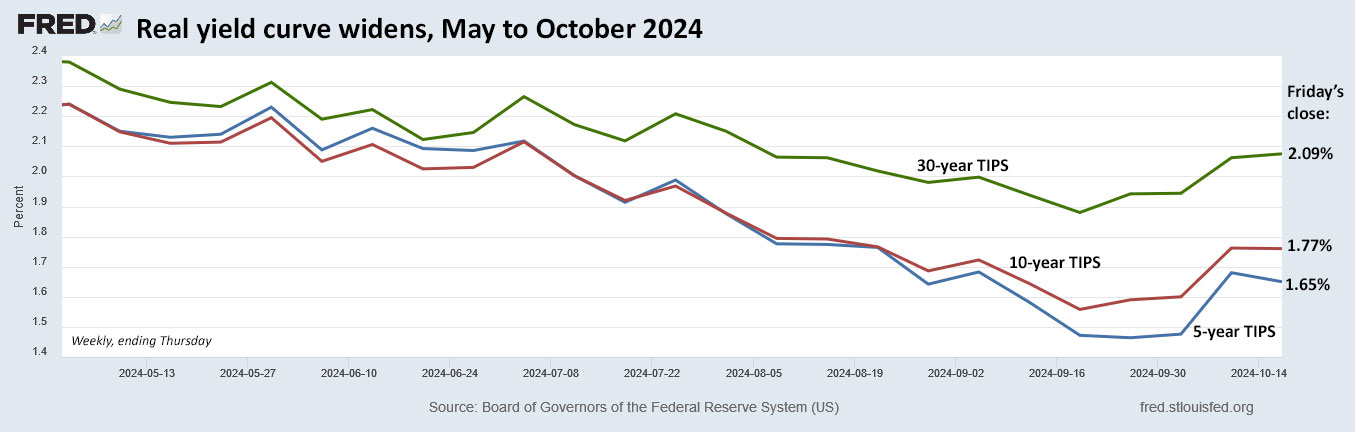
Today, the I Bond’s fixed rate is 1.3% and the 5-year TIPS has a real yield of 1.70%. That is a 40-basis-point spread, which is reasonable given the I Bond’s advantages of easy ownership, tax-deferred interest and rock-solid deflation protection.

If the 5-year TIPS yield continues to decline, the I Bond will look more and more attractive. But that is a topic for another day.

Confused by I Bonds? Read my Q&A on I Bonds

Let’s ‘try’ to clarify how an I Bond’s interest is calculated

Inflation and I Bonds: Track the variable rate changes

I Bonds: Here’s a simple way to track current value

I Bond Manifesto: How this investment can work as an emergency fund

* * *

Follow Tipswatch on X (Twitter) for updates on daily Treasury auctions and real yield trends (when I am not traveling).

Feel free to post comments or questions below. If it is your first-ever comment, it will have to wait for moderation. After that, your comments will automatically appear. Please stay on topic and avoid political tirades. NOTE: Comment threads can only be three responses deep or the display breaks on the mobile site. If you see that you cannot respond, create a new comment and reference the topic.

David Enna is a financial journalist, not a financial adviser. He is not selling or profiting from any investment discussed. I Bonds and TIPS are not “get rich” investments; they are best used for capital preservation and inflation protection. They can be purchased through the Treasury or other providers without fees, commissions or carrying charges. Please do your own research before investing.
Posted in Cash alternatives, I Bond, Investing in TIPS, Savings Bond, TreasuryDirect | Tagged , , | 29 Comments

Have we seen the end of 2.0%+ real yields?

Shorter-term rates will fall. The future of longer-term rates is uncertain.

By David Enna, Tipswatch.com

Just a few days ago, on Aug. 22, the U.S. Treasury auctioned a reopened 30-year Treasury Inflation-Protected Security with a real yield to maturity of 2.055%. And then, a day later, a lot changed. Did we just see — for the time being — the last TIPS auction with a real yield higher than 2.0%?

It could be. Bond markets shifted mightily in the aftermath of Federal Reserve Chairman Jay Powell’s short, but very direct, speech Friday to the Jackson Hole Symposium on monetary policy. Watch it here:

Some key quotes:

Inflation has declined significantly. The labor market is no longer overheated, and conditions are now less tight than those that prevailed before the pandemic. Supply constraints have normalized. And the balance of the risks to our two mandates has changed. …

The upside risks to inflation have diminished. And the downside risks to employment have increased. …

The time has come for policy to adjust. The direction of travel is clear, and the timing and pace of rate cuts will depend on incoming data, the evolving outlook, and the balance of risks. … With an appropriate dialing back of policy restraint, there is good reason to think that the economy will get back to 2 percent inflation while maintaining a strong labor market ….

The limits of our knowledge—so clearly evident during the pandemic—demand humility and a questioning spirit focused on learning lessons from the past and applying them flexibly to our current challenges.

My reaction: “Hell of a speech.” Why? Because Powell clearly laid out the Fed’s plan to begin lowering interest rates (probably 25 basis points next month) and also implying that the decade-long period of aggressive monetary stimulus was a “lesson in consequences.” Now that the U.S. is recovering from a 40-year high in inflation, Powell’s reference to humility was appropriate.

Powell’s speech set off a strong rally in both U.S. stocks and bonds, with Treasury yields falling across all maturities. The 30-year TIPS that auctioned Thursday with a real yield of 2.055% closed Friday at 1.97%. Not a huge move, but the fall in shorter-term maturities was more dramatic, with the 5-year TIPS real yield falling 12 basis points in a single day.

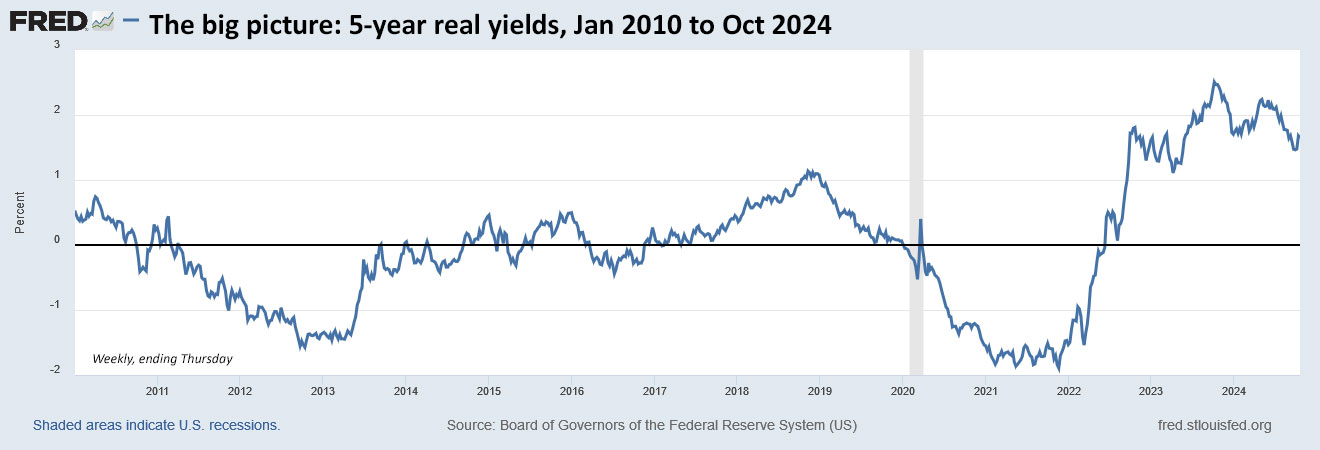
At Friday’s market close, the full spectrum of medium- to long-term TIPS closed with real yields below 2.0%. I think that is significant because 2.0% is an attractive historic target for TIPS purchases. Take a look at the trend in 10-year real yields over the last 21 years, showing how rarely investors could hit that 2.0% mark over the last 14 years:

Click on image for larger version.

On the above chart, I have noted the years of the Fed’s moderate to aggressive policy of quantitative easing, which was openly forcing Treasury yields lower. That policy could continue while inflation remained under control, as it did for years. But then came the 2020 pandemic and severe economic distress. The Fed and Congress acted together to flood money into the U.S. economy at a time of severe supply disruptions, creating the rather obvious potential for high inflation.

Click on image for larger version.

A new era of the new era

Because of the humbling lessons learned, I believe the Fed isn’t going to shut down its focus on controlling inflation even if the U.S. economy slips into a sight decline. So that means medium- to longer-term interest rates could continue near today’s fairly high — but normal — levels for some time. But shorter-term rates will decline as the Fed moves to lower its federal funds rate by 150 to 200 basis points over the next 18 months.

One predictable effect of declining U.S. interest rates is a matching decline in the value of the U.S. dollar, as foreign investors shift some bets to other currencies. The U.S. dollar has fallen more than 5% since late June. The end result of that should be –eventually — somewhat higher U.S. inflation, which in turn should stabilize longer-term Treasury yields.

One potential effect of a weaker dollar would be higher oil prices, but so far we haven’t seen much of an effect, possibly because of the potential of weaker international economies.

Real yields have been volatile throughout 2024, and I would expect that trend to continue, while potentially sinking lower.

So, in my opinion, we could see 20- to 30-year real yields at times again rise above 2.0% even as the 5-year real yield sinks lower. The yield curve is steepening and that should continue. Keep in mind that the U.S. Treasury needs to continue to issue debt to cover massive U.S. deficits. If the Fed isn’t buying that debt, market forces should result in stable or higher longer-term interest rates.

Back in February 2010, when the Treasury resumed issuing 30-year TIPS, the yield curve was quite steep, with the 5-year TIPS yielding 0.55%, the 10-year at 1.55%, and and the 30-year at 2.22%. Was that normal? It seemed like it at the time.

In summary, I think we are entering a time of almost certainly lower short-term interest rates and murkily uncertain medium- to longer-term yields. A lot will depend on the fate of the U.S. economy and what actions the Fed would take if things again hit “crisis mode.”

As Powell said Friday, “That is my assessment of events. Your mileage may differ.”

* * *

Follow Tipswatch on X (Twitter) for updates on daily Treasury auctions and real yield trends (when I am not traveling).

Feel free to post comments or questions below. If it is your first-ever comment, it will have to wait for moderation. After that, your comments will automatically appear. Please stay on topic and avoid political tirades. NOTE: Comment threads can only be three responses deep or the display breaks on the mobile site. If you see that you cannot respond, create a new comment and reference the topic.

David Enna is a financial journalist, not a financial adviser. He is not selling or profiting from any investment discussed. I Bonds and TIPS are not “get rich” investments; they are best used for capital preservation and inflation protection. They can be purchased through the Treasury or other providers without fees, commissions or carrying charges. Please do your own research before investing.
Posted in Federal Reserve, Inflation, Investing in TIPS | Tagged , , | 16 Comments

30-year TIPS reopening auction gets real yield of 2.055%

Only the 2nd auction of this term since 2011 to get a real yield above 2.0%.

By David Enna, Tipswatch.com

Real yields were ticking a bit higher Thursday morning and that trend gave investors in today’s 30-year TIPS reopening auction a nice result: A real yield to maturity of 2.055%, only the second auction of this term since 2011 to top the 2.0% mark.

This is CUSIP 912810TY4 and the auction created a 29-year, 6-month Treasury Inflation-Protected Security. Its coupon rate of 2.125% was established by the originating auction on Feb. 23, 2024, when investors got a real yield to maturity of 2.20%, the highest in 14 years.

Definition: The “real yield” of a TIPS is its yield above official future U.S. inflation, over the term of the TIPS. So a real yield of 2.055% means an investment in this TIPS will provide a return that exceeds U.S. inflation by 2.055% for 29 years, 6 months.

CUSIP 912810TY4 trades on the secondary market, and through the morning its real yield climbed from about 2.02% to 2.04%, remaining below the auction’s result. The “when-issued” prediction, issued just before the auction’s close, was 2.045%. The higher yield would indicate lukewarm demand, but the bid-to-cover ratio was 2.61, the highest for this term since an auction in August 2022.

So the auction looked like a success, especially for investors who nabbed a real yield of 2.055% for the next 29 years, 6 months.

Here is the trend in the 30-year real yield over the last 10 years, showing that yields have dipped from peaks in October 2023 and May 2024, but remain historically high:

Click on image for larger version.

Pricing

The auctioned real yield of 2.055% came in below the coupon rate of 2.125%, so investors paid a premium price at this auction — an unadjusted price of 101.540384. In addition, this TIPS will carry an inflation index ratio of 1.02367 on the settlement date of August 30. Using that information, here is the result of a $10,000 par purchase of this TIPS:

  • Par value: $10,000
  • Principal purchased: $10,000 x 1.02367 = $10,236.70
  • Cost of investment: $10,236.70 x 1.01540384 = $10,394.38
  • + Accrued interest of $8.87

In summary, an investor buying $10,000 par value of this TIPS will receive $10,236.70 principal on Aug. 30 at a cost of $10,394.38. From then on, the investor will earn inflation accruals plus an annual coupon rate of 2.125% for the next 29 years, 6 months.

Inflation breakeven rate

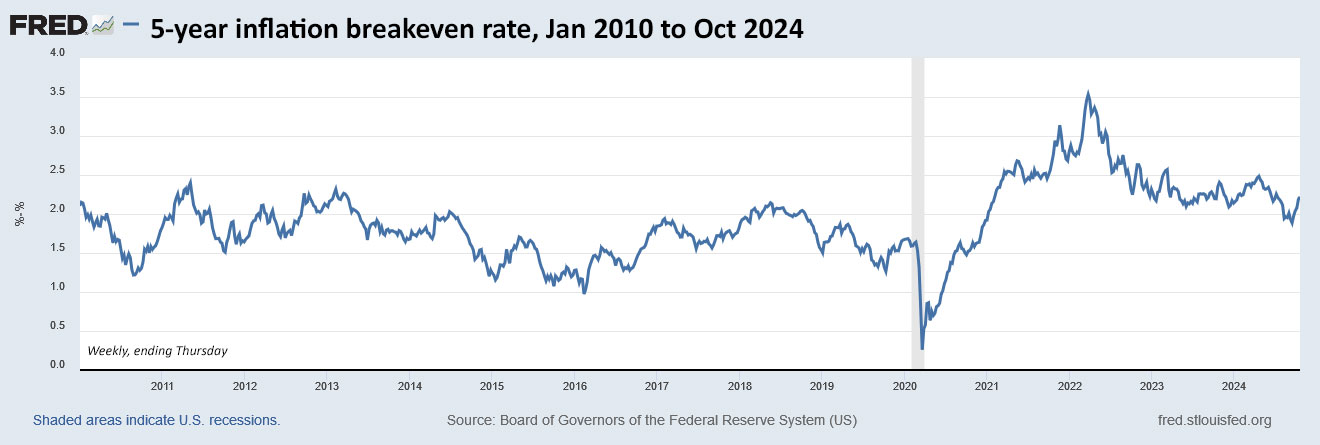
With a 30-year nominal Treasury bond yielding 4.14% at the auction’s close, this TIPS gets an breakeven rate of 2.09%. It will outperform the nominal Treasury if annual inflation averages higher than 2.09% over the next 29 years, 6 months.

As I noted in my preview article, the market appears to be underestimating potential inflation over the next three decades, which makes a TIPS purchase attractive versus a nominal Treasury. This was the lowest inflation breakeven rate for this term at auction since August 2020.

Here is the trend in the 30-year inflation breakeven rate over the last 10 years, showing the recent slide lower:

Click on image for larger version.

Reaction to the auction

Nothing was groundbreaking here. Real yields had been rising a bit through Thursday morning, and the auction fell into line with that trend. The TIP ETF, which was trading lower through the morning, edged slightly higher after the auction’s close at 1 p.m. EDT.

This was a good result for investors, locking in the 2.0% real yield over the long term of this TIPS. My opinion: Both ladder-builders who plan to hold to maturity and TIPS traders who are looking for a short-term profit should be pleased with the result. But of course, nothing is certain.

This is the last 30-year TIPS auction of the year. The Treasury will issue a new 30-year TIPS in February 2025. In a response to a reader’s request in the comments, here is a list of all 29- to 30-year TIPS auctions in history. (I have not tracked the inflation breakeven rate all the way back.):

—————————-

Now is an ideal time to build a TIPS ladder

Confused by TIPS? Read my Q&A on TIPS

TIPS in depth: Understand the language

TIPS on the secondary market: Things to consider

TIPS investor: Don’t over-think the threat of deflation

Upcoming schedule of TIPS auctions

* * *

Follow Tipswatch on X (Twitter) for updates on daily Treasury auctions and real yield trends (when I am not traveling).

Feel free to post comments or questions below. If it is your first-ever comment, it will have to wait for moderation. After that, your comments will automatically appear. Please stay on topic and avoid political tirades.

David Enna is a financial journalist, not a financial adviser. He is not selling or profiting from any investment discussed. I Bonds and TIPS are not “get rich” investments; they are best used for capital preservation and inflation protection. They can be purchased through the Treasury or other providers without fees, commissions or carrying charges. Please do your own research before investing.
Posted in Inflation, Investing in TIPS, TreasuryDirect | Tagged , , , | 9 Comments