
December all-items inflation increased 0.5%, slightly higher than expectations.
By David Enna, Tipswatch.com
This seemed impossible just 12 months ago, when U.S. inflation ran at 1.4% for 2020. But December’s price increases continued an ominous trend in 2021, with annual inflation ending the year at 7.0%, the highest rate in 40 years.

For December, the Consumer Price Index for All Urban Consumers increased 0.5% on a seasonally adjusted basis, the Bureau of Labor Statistics reported. That was slightly higher than the consensus estimate of 0.4%. Year-over-year inflation ran at 7.0%, the BLS said, slightly below the consensus.
This is the final inflation report of 2021, and the 7.0% increase for the year is the largest since 1981, when inflation ran at 8.9%. In the 40 years following 1981, end-of-the-year annual inflation has never exceeded 6.1%, until 2021.
Core inflation, which removes food and energy, rose 0.6% for December, following a 0.5% increase in November. Year-over-year core inflation was 5.5%, the highest annual increase since 1991. Inflation for both the month and the year were higher than expected.
Gasoline prices, usually a trigger for higher U.S. inflation, actually fell 0.5% in December, but are up 48.9% for the year. (Before seasonal adjustment, gasoline prices fell 2.2% in December.) When inflation rises without a boost from energy prices, you know it is surging across the economy. For example:
- Food prices were up 0.5% for the month, and increased 6.3% for the year.
- The index for fruits and vegetables increased rose 0.9% over the month.
- On the other hand, the index for meats, poultry, fish, and eggs declined in December, falling 0.4% after rising at least 0.7% in each of the last seven months.
- Shelter costs increased 0.4% for the month and 4.1% for the year.
- Costs of used cars and trucks continued surging, rising 3.5% for the month and 37.3% for the year.
- New vehicle prices rose 1.0% for the month and were up 11.8% for the year.
- The apparel index rose 1.7% for the month, following a 1.3% increase in November.
To sum things up for 2021, The BLS stated:
“Major contributors to this increase include shelter (+4.1 percent) and used cars and trucks (+37.3 percent). However, the increase is broad-based, with virtually all component indexes showing increases over the past 12 months.”
Here is the U.S. inflation trend over the last year, showing the strong move higher for both all-items and core inflation since September:

What this means for TIPS and I Bonds
Investors in Treasury Inflation-Protected Securities and U.S. Series I Savings Bonds are also interested in non-seasonally adjusted inflation, which is used to adjust principal balances for TIPS and set future interest rates for I Bonds. For December, the BLS set the inflation index at 278.802, an increase of 0.31% over the November number.
Note that the non-seasonally adjusted increase of 0.31% lagged behind the adjusted inflation number of 0.5% for the month, most likely caused by the dip in gasoline prices, a decline of 2.1% before adjustment, but 0.5% after. These types of variations will balance out over a year.
For TIPS. The December inflation report means that principal balances for all TIPS will increase 0.31% in February, following a 0.49% increase in January. In February, balances for the year will be up 7.0%. Here are the new February Inflation Index Ratios for all TIPS.
For I Bonds. The December report is the third in a six-month series that will determine the I Bond’s new inflation-adjusted variable rate, which will be reset May 2 based on inflation from September 2021 to March 2022. After three months, inflation has been running at 1.64%, which translates to an I Bond variable rate of 3.28%. Keep in mind that three months remain, and also that lagging non-seasonally adjusted inflation in November and December should reverse in coming months.
Here are the relevant numbers:

What this means for future interest rates
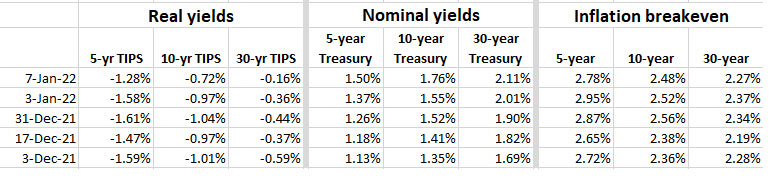
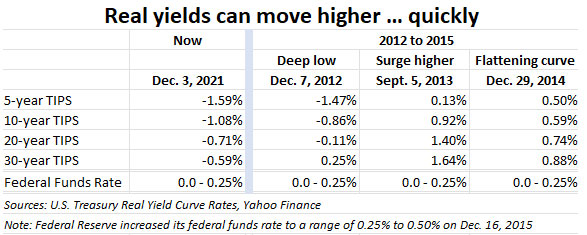
In congressional testimony this week, Federal Reserve Board Chairman Jerome Powell signaled strongly that the Fed is prepared to raise short-term interest rates in 2022, beginning as soon as March. It looks like three rate increases in 2022 are a sure thing, and if inflation continues at a high rate into the summer, four increases are likely. That would bring the Federal Funds Rate up to a range of 1.00% to 1.25% by the end of the year.
Today’s inflation report reinforces the need for Fed action. There were few surprises in this report, but it is clear that the inflationary surge is continuing. That could be a hard trend to break. The stock market is opening higher this morning, indicating that this report was “digestible,” at least.
Inflation is likely to continue at a very high rate at least through March, which more or less ensures that the Fed will need to make that initial rate hike. The markets seem prepared for it. It needs to happen.
Inflation guru Michael Ashton posted this today on his E-piphany site, which includes a ton of analysis of today’s report:
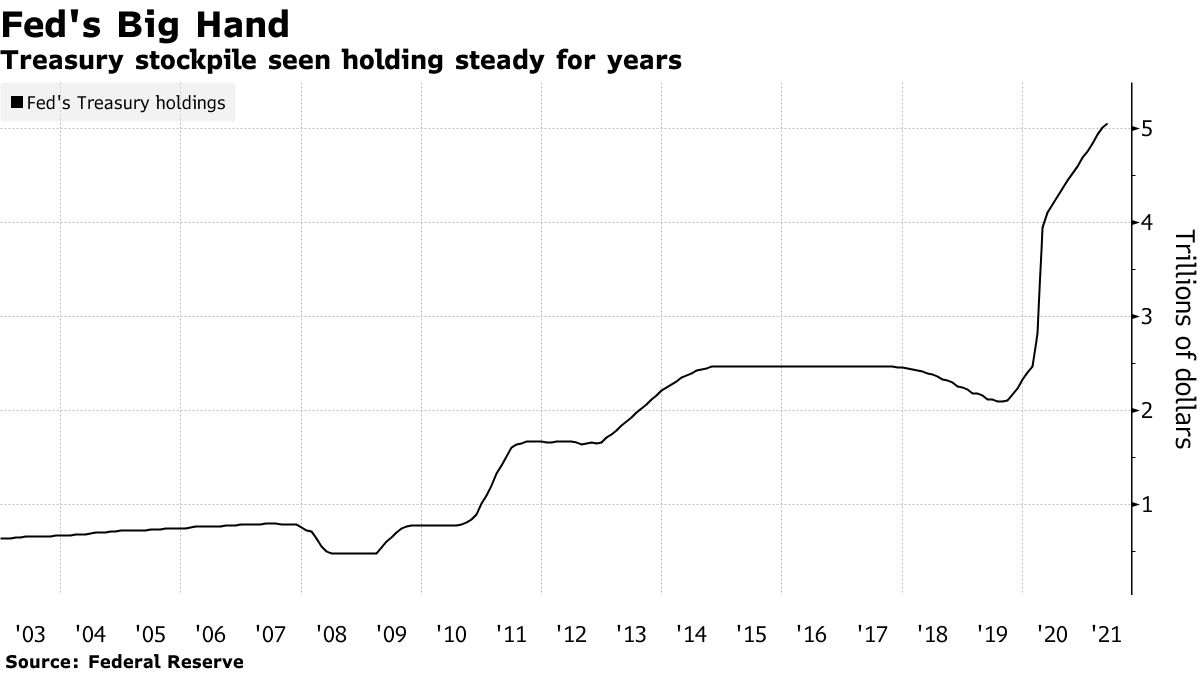
“The Fed is talking tough, but talk is cheap. They’re still easing at this hour! Eventually they’ll stop digging the hole. When will they start filling it in – not by raising rates which has small effect if any on inflation, but by selling bonds? Don’t hold your breath. …
“This was, sadly, not a very surprising report. Inflationary pressures remain broad and deep, and the Fed today is still purchasing bonds and adding more reserves to the system. … So now, they’re behind the curve and really need to catch up and get ahead of this process.”
* * *
Feel free to post comments or questions below. If it is your first-ever comment, it will have to wait for moderation. After that, your comments will automatically appear.
David Enna is a financial journalist, not a financial adviser. He is not selling or profiting from any investment discussed. The investments he discusses can purchased through the Treasury or other providers without fees, commissions or carrying charges. Please do your own research before investing.










 Treasury Inflation-Protected Securities
Thanks!