First rule of I Bonds: Don’t rush to sell your I Bonds

I Bonds have a 30-year term, but you can sell them any time after 5 years with no penalty. My suggestion: Hold them until you really need the money.

By David Enna, Tipswatch.com

The I Bond’s new inflation-adjusted variable rate — a gaudy 7.12% for six months — is bringing a lot of fresh interest to these inflation-protected Savings Bonds. With all the media coverage, some investors have questions. Such as this one from a reader:

“I purchased I Bonds in 2011. Do you think I should sell those and purchase again or leave them as it is? I don’t want to increase my bond portfolio more than where it is.”

This very common question is understandable, but it comes from a basic misunderstanding of how I Bonds work — and after all, 95% of Americans have no idea how I Bonds work.

The new variable rate everyone is talking about — 7.12% for six months — applies to all I Bonds ever issued, not just the newly minted November 2021 version. Every I Bond is going to earn at least 7.12%, annualized, for six months, after the current variable rate of 3.54% ends its six-month term. So there is no reason to sell old I Bonds to buy this new November version, and in fact, there are good reasons not to sell I Bonds to buy the new one.

When the 7.12% variable rate kicks in will depend on when the investor bought the I Bond. Here is the schedule from TreasuryDirect:

(One confusing thing about this chart, however: I Bonds that are less than 5 years old will be listed on TreasuryDirect’s site and the Savings Bond Calculator without the latest three months of interest. TreasuryDirect notes: “When looking at changes in values for these bonds, rate changes will seem to be delayed by three months.” This confuses and frustrates a lot of investors.)

Why redeeming early can be a mistake

The reader who posed the original question purchased I Bonds in 2011. Through that entire year, I Bonds got a permanent fixed rate of 0.0%, exactly where it is now. So the value of this I Bond has grown about 20.9% over the last decade. With a $10,000 investment, the value is now about $12,090, roughly.

As I noted, there is no benefit to redeeming those 2011 I Bonds to purchase I Bonds in November 2021. The fixed rate remains at 0.0%, and all I Bonds will get the 7.12% variable rate for six months..

The big problem with redeeming early is that the interest earned will be immediately taxable as income on the investor’s federal tax return. The hit on $2,090 interest would be a tax of about $460 for someone in the 22% tax bracket.

To sum up: No benefit, with a cost of $460. Don’t redeem older I Bonds to purchase new ones in November 2021.

When does redeeming make sense?

I Bonds were first issued in September 1998 and those earliest ones won’t mature until September 2028, so maturing I Bonds are not an issue. (FYI: I Bonds issued in 1998 carry a fixed rate of 3.4% and will now be earning a composite rate of 10.64% for six months. Definitely hang on to those.)

My one premise for redeeming I Bonds is this: Don’t do it, until you really, really need the money. Because of the $10,000 per person per year purchase cap, it takes years to build up a sizable cache of inflation-protected I Bonds. If you redeem $10,000 in I Bonds, the purchase cap still applies, so your holdings can’t grow in that year.

Obviously, it doesn’t make sense to redeem I Bonds right now — for any reason — with a very generous interest rate taking effect for six months. And inflation could continue at a high rate well into 2022. Now is a great time to own I Bonds, not to sell them.

In the future, if you do need the money and decide to redeem:

  1. Redeem I Bonds you have held 5 years or longer, to avoid losing three months of interest.
  2. If the current variable rate is high — like it is now — let that rate run its six-month course before redeeming.
  3. Redeem I Bonds with a 0.0% fixed rate before any others. A higher fixed rate is always preferable. If you have been buying I Bonds for many years, you certainly have issues with 0.0% fixed rates. Redeem those first.

However, figuring out which I Bonds have a 0.0% fixed rate can be confusing, because the TreasuryDirect site will show you the issue date and the current interest rate, but not the fixed rate. The current interest rate can be confusing, because of the month-by-month rolling dates for interest rate changes. For example, your holdings right now might show interest rates of 3.54%, 3.64%, 4.05%, 3.74%, 7.12%, 7.22%, 7.43%, and so on. The ones with interest rates of 3.54% and 7.12% definitely have a fixed rate of 0.0%.

To sum up: Don’t be redeeming any I Bonds right now. Eventually, when you do redeem, carefully examine your holdings and redeem those with fixed rates of 0.0%.

Does it ever make sense to redeem I Bonds to buy new I Bonds?

Yes, I think so, under these circumstances:

  1. The new I Bonds have a substantially higher fixed rate than the I Bonds you will be redeeming. And then, even if that is true, only redeem if ..
  2. You need to raise the cash to buy the new, higher-rate I Bonds. Redeeming 0.0% I Bonds to purchase 0.5% I Bonds (which was possible from November 2018 through October 2019) makes sense if you have no other tax-efficient way to raise the cash.

I did this sort of rollover during that 2018 to 2019 stretch, unloading I Bonds with a 0.0% fixed rate to grab the new 0.5% fixed rate. That meant 1) my overall holdings did not increase in those years, and 2) I owed some taxes on the redeemed interest. Now, with that 7.12% interest pouring in, I guess I should have just held on and found the cash elsewhere.

Oh well, lessons learned.

* * *

Feel free to post comments or questions below. If it is your first-ever comment, it will have to wait for moderation. After that, your comments will automatically appear.

David Enna is a financial journalist, not a financial adviser. He is not selling or profiting from any investment discussed. The investments he discusses can purchased through the Treasury or other providers without fees, commissions or carrying charges. Please do your own research before investing.

Posted in I Bond, Savings Bond | 34 Comments

I Bond’s fixed rate holds at 0.0%; composite rate soars to 7.12%

Treasury also maintains EE Bond’s doubling period at 20 years

By David Enna, Tipswatch.com

The U.S. Treasury just announced the November 2021 to April 2022 terms for U.S. Series I Bonds and EE Bonds, and there were no surprises. Both of these Savings Bonds remain exceptional investments in our current low-interest-rate market.

I Bonds

Here are details from the Treasury’s announcement:

“The composite rate for Series I Savings Bonds is a combination of a fixed rate, which applies for the 30-year life of the bond, and the semiannual inflation rate. The 7.12% composite rate for I bonds bought from November 2021 through April 2022 applies for the first six months after the issue date. The composite rate combines a 0.00% fixed rate of return with the 7.12% annualized rate of inflation as measured by the Consumer Price Index for all Urban Consumers (CPI-U). The CPI-U increased from 264.877 in March 2021 to 274.310 in September 2021, a six-month change of 3.56%.”

Here is my translation:

  • An I Bond earns interest based on combining a fixed rate and a semi-annual inflation rate. The fixed rate – which will continue at 0.0% – will never change. So I Bonds purchased from Nov, 1, 2021, to April 30, 2022, will carry a fixed rate of 0.0% through the 30-year potential life of the bond.
  • The inflation-adjusted rate (also called the variable rate) changes every six months to reflect the running rate of non-seasonally adjusted inflation. That rate is now set at 7.12% annualized. It will update again on May 1, 2022, based on U.S. inflation from September 2021 to March 2022.
  • The combination of the fixed rate and inflation-adjusted rate creates the I Bonds’ composite interest rate, which was 3.54% but now rises to 7.12%. An I Bond bought today will earn 7.12% (annualized) for six months and then get a new composite rate every six months for its 30-year term.

It’s important to note, however, that all I Bonds — no matter when they were issued — will get that 7.12% inflation-adjusted rate for six months, on top of any existing fixed rate. So an I Bond purchased in October will receive 3.54% for six months, and then 7.12% for six months. I Bonds purchased back in September 1998 (with a fixed rate of 3.4%), will receive a composite rate of 10.64% for six months.

Here is the formula the Treasury used to determine the I Bond’s new composite rate:

The composite rate for I bonds issued from November 2021 through April 2022 is 7.12%
Here’s how the Treasury set that composite rate:
Fixed rate0.00%
Semiannual inflation rate3.56%
Composite rate = [fixed rate + (2 x semiannual inflation rate) + (fixed rate x semiannual inflation rate)][0.0000 + (2 x 0.0356) + (0.0000 x 0.0356)]
Composite rate  [0.0000 + 0.0712 + 0.0000000]
Composite rate0.0712000
Composite rate0.0712
Composite rate  7.12%

None of this was a surprise, but the new terms do mean I Bonds remain a very attractive investment, earning at least 3.56% over the next year, and probably much higher. That compares to 0.15% for a 1-year Treasury and maybe 0.60% for a best-in-nation 1-year bank CD. In other words, in a worst-case scenario I Bonds will return close to six times the earnings of the next-best very safe investment. The actual return will likely be higher than 5% over the next 12 months.

(An I Bond has to be held one year before it can be redeemed, but an investor can purchase the I Bond near the end of a month and get full credit for the month. That means an I Bond can be, effectively, an 11-month investment. I Bonds redeemed from 1 to 5 years face a penalty of three months interest; after 5 years there is no penalty.)

The fixed rate of an I Bond is equivalent to the “real yield” of a Treasury Inflation-Protected Security. It tells you how much the I Bond will yield above the official U.S. inflation rate. Right now, an I Bond will exactly match U.S. inflation. Because the Treasury held the I Bond’s fixed rate at 0.0%, it will track official U.S. inflation, but not exceed it, except after a period of extended deflation.

I Bonds carry a purchase limit of $10,000 per person per year, and must be purchased electronically at TreasuryDirect. Investors also have the option of receiving up to $5,000 in paper I Bonds in lieu of a federal tax refund. Learn more about I Bonds in the I Bonds Manifesto.

EE Bonds

Here are the Treasury’s terms announced Monday:

“Series EE bonds issued from November 2021 through April 2022 earn today’s announced rate of 0.10%. All Series EE bonds issued since May 2005 earn a fixed rate in the first 20 years after issue. At 20 years, the bonds will be worth at least two times their purchase price. The bonds will continue to earn interest at their original fixed rate for an additional 10 years unless new terms and conditions are announced before the final 10-year period begins.”

And here is my translation:

  • The EE Bonds’ fixed rate remains at 0.1%, where it has been since November 2015. Awful, right? (Check out your current money market savings rate, somewhere around 0.05%, or less.) But the EE Bonds’ fixed rate is irrelevant because…
  • An EE Bond held for 20 years immediately doubles in value, creating an investment with a compounded return of 3.5%, tax-deferred. So, if you invest $10,000 at age 40, you can collect $20,000 at age 60, with $10,000 of that total becoming taxable.
  • After the doubling in value at 20 years, the EE Bond reverts to earning 0.1% for another 10 years.

Retaining this 20-year doubling is a big deal. The Treasury has changed this holding period several times in the past, so there was a possibility the terms could change in 2021, with the 20-year nominal Treasury currently yielding 1.98%, well below the EE Bond’s potential of 3.5%.

What this means: You should only invest in EE Bonds if you are absolutely certain you can hold them for 20 years. (And after 20 years they should be immediately redeemed.) They are an ideal “bridge” investment for someone around age 40, who can build an annual stream of income starting at age 60, potentially delaying Social Security benefits until age 70.

The EE Bond will also outperform an I Bond if inflation averages less than 3.5% a year over the next 20 years. I think that is a reasonable possibility (but who knows, given current inflation trends). For anyone with a secure 20-year timeline for investment, an EE Bond remains very attractive.

I Bonds vs. EE Bonds

I Bonds are the talk of the financial world right how, sporting a gaudy 7.12% annual return for six months. No one is talking about EE Bonds, which the financial media typically report as returning 0.1% without ever mentioning the doubling in value over 20 years.

EE Bonds remain a solid, very safe investment for someone who can hold them for 20 years. Their effective yield of 3.5% over 20 years is 157 basis points higher than the yield of a 20-year nominal Treasury. That is huge, and equivalent to about 30% of extra value over a 20-year Treasury bond.

I Bonds are the most attractive, very safe inflation-protected investment in the world. The real yield of an I Bond is 171 basis points better than the real yield of a 5-year TIPS. When it comes to inflation protection, there is no contest.

A combination of I Bonds and EE Bonds also makes sense, providing both inflation protection and strong deflation protection. But EE Bonds only make sense for an investor committed to holding them for 20 years.

* * *

Feel free to post comments or questions below. If it is your first-ever comment, it will have to wait for moderation. After that, your comments will automatically appear.

David Enna is a financial journalist, not a financial adviser. He is not selling or profiting from any investment discussed. The investments he discusses can purchased through the Treasury or other providers without fees, commissions or carrying charges. Please do your own research before investing.

Posted in Cash alternatives, I Bond, Inflation, Savings Bond | 22 Comments

5-year TIPS auction gets a record-low real yield of -1.685%

By David Enna, Tipswatch.com

The U.S. Treasury’s auction of $19 billion in a new 5-year Treasury Inflation-Protected Security generated a real yield to maturity of -1.685%, the lowest ever recorded for any TIPS auction of any term.

This is CUSIP 91282CDC2. Its coupon rate was set at 0.125%, the lowest the Treasury will go for any TIPS. That means investors had a pay a lofty premium at this auction, paying about $109.51 for about $100.14 of value, after accrued inflation and interest are added in. The settlement date is Oct. 29.

A TIPS is an investment that pays a coupon rate well below that of other Treasury investments of the same term. But with a TIPS, the principal balance adjusts each month (usually up, but sometimes down) to match the current U.S. inflation rate. So the “real yield to maturity” of a TIPS indicates how much an investor will earn above (or in this case, below) inflation.

The auction result doesn’t mean that investors were accepting a negative nominal return, but they were willing to pay a 9% premium to par value to collect a 0.125% coupon rate plus five years of inflation accruals. To put this another way, official U.S. inflation will have to increase about 9% before investors reach a breakeven point on this investment.

The previous record low real yield for any TIPS auction was set on April 22, 2021, when a new 5-year TIPS got a real yield of -1.631%. The 5-year term seems especially sensitive to investor fears of near-term inflation, but oddly, this auction’s bid-to-cover ratio was a rather lukewarm 2.45.

Here is the year-to-date trend in 5-year real yields, which are up only about 8 basis points since January but have followed a volatile trend. The market seems to be struggling to adjust to the Federal Reserve’s intention to scale back its monthly purchases of $80 billion in U.S. Treasurys, including TIPS:

Inflation breakeven rate

With a 5-year Treasury note trading at 1.20% at the auction’s close, this TIPS gets a 5-year inflation breakeven rate of 2.89%, by far the highest rate for any 5-year TIPS auction in more than a decade. The 5-year breakeven rate was last at this level in March 2005.

Investors are pricing in higher inflation in the near-term future, which seems logical with U.S. inflation currently running at 5.4% and looking likely to continue at a high rate for many months ahead. A high inflation breakeven rate makes a TIPS a pricey investment versus a nominal Treasury, but it comes with the comforting insurance of protection against runaway inflation.

Here is the year-to-date trend in the 5-year inflation breakeven rate, showing that inflation expectations have been peaking in the last month, up from about 2.4% in mid-September:

Reaction to the auction

The lukewarm bid-to-cover ratio has me stumped, because the real yield to maturity of -1.685% seemed to be a bit lower than market expectations, which indicates decent investor demand. At the market close Wednesday, the U.S. Treasury had estimated the 5-year real yield at -1.61%, about 7 basis points higher.

The TIP ETF, which had been trading slightly higher all morning, took a tiny bounce higher after the auction close, again indicating that auction met expectations.

My conclusion is that demand was good and the auction was a success, at least for the Treasury, which gets to pay back investors 1.685% less than the rate of inflation over the next five years.

This TIPS will get a reopening auction on December 23. Here’s a history of 4- to 5-year TIPS auctions over the last three years:

* * *

Feel free to post comments or questions below. If it is your first-ever comment, it will have to wait for moderation. After that, your comments will automatically appear.

David Enna is a financial journalist, not a financial adviser. He is not selling or profiting from any investment discussed. The investments he discusses can purchased through the Treasury or other providers without fees, commissions or carrying charges. Please do your own research before investing.

Posted in Investing in TIPS | 4 Comments

I Bond podcast: U.S. Savings Bonds for a risk-free, stellar return over the next year …

By David Enna, Tipswatch.com

Jeremy Keil, a certified financial planner based in Milwaukee, reached out to me this month to help educate his clients on U.S. Series I Savings Bonds, a very hot topic in October 2021. We tried to give a a simple breakdown of how U.S. Series I Savings Bonds work, their benefits, and potential pitfalls.

Listen to the podcast here

(also available on the Apple and Google podcast platforms; search for “Retirement Revealed” podcast).

It’s great to see I Bonds being promoted in the financial planning community, which doesn’t happen often. I enjoyed this process and being able to spread the word about I Bonds.

Referenced in the podcast:

September inflation report sets new I Bond variable rate at 7.12%, annualized.

I Bond Manifesto: Why inflation-linked savings bonds can work as part of your emergency fund

I Bond dilemma: Buy in October? Or wait until November?

Inflation and I Bonds, where I track upcoming rate changes.

Social Security COLA tracking page

* * *

Feel free to post comments or questions below. If it is your first-ever comment, it will have to wait for moderation. After that, your comments will automatically appear.

David Enna is a financial journalist, not a financial adviser. He is not selling or profiting from any investment discussed. The investments he discusses can purchased through the Treasury or other providers without fees, commissions or carrying charges. Please do your own research before investing.
Posted in I Bond, Savings Bond | 2 Comments

A new 5-year TIPS goes to auction Thursday. Here’s what to expect.

By David Enna, Tipswatch.com

With all the attention being drawn to U.S. Series I Savings Bonds these days, the Treasury’s other inflation-protected investment, the Treasury Inflation-Protected Security, seems to be flying under the radar. And that’s probably right. For a small-scale investor, in October 2021, an I Bond makes a heck of a lot more sense than a comparable TIPS.

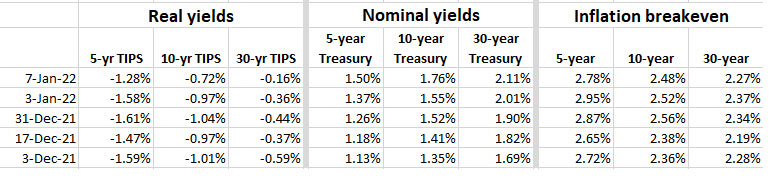
Because an I Bond can be redeemed after five years with no penalty, it is directly comparable to a 5-year TIPS. An I Bond offers a real return that will match official U.S. inflation over five years. A 5-year TIPS currently has a real yield of about -1.58%, meaning it will under-perform official inflation (and the I Bond) by 158 basis points. The clear winner is the I Bond.

At auction this Thursday, the Treasury will offer $19 billion in a new 5-year TIPS, CUSIP 91282CDC2. It can’t compare with its little brother — the I Bond — but is it an attractive option for investors seeking inflation protection after reaching the I Bond’s $10,000 per person per year purchase cap? Let’s take a look.

A 5-year TIPS has two advantages over an I Bond: 1) there isn’t a purchase cap, and 2) a TIPS can be purchased in a tax-deferred account, allowing an investor to use tax-deferred money to make the purchase. (Although an I Bond is a tax-deferred investment, it can’t be purchased inside a tax-deferred account.) Keeping the transaction inside a tax-deferred account means no immediate tax liability caused by raising money for the purchase.

As I noted above, the U.S. Treasury on Friday estimated a full-term 5-year TIPS would have a real yield of -1.58%. While that sounds miserable, it is in line with other high-safety nominal investments, for example the 5-year Treasury note or an insured 5-year bank CD. Here’s a comparison, showing how a 5-year TIPS will under-perform a nominal Treasury under low inflation scenarios, but easily out-perform the Treasury note if inflation averages 3.0% to 4.0% or higher in the next five years:

This chart shows the clear superiority of the Series I Savings Bond, which will out-perform the other safe investments under any inflation scenario higher than 1%. The I Bond is the only truly attractive investment on the chart. But once inflation rises above 2.5%, the 5-year TIPS begins to out-perform the nominal investments. If you believe inflation is likely to run higher than 3.0% over the next five years, the TIPS is the better investment — versus a nominal Treasury or bank CD.

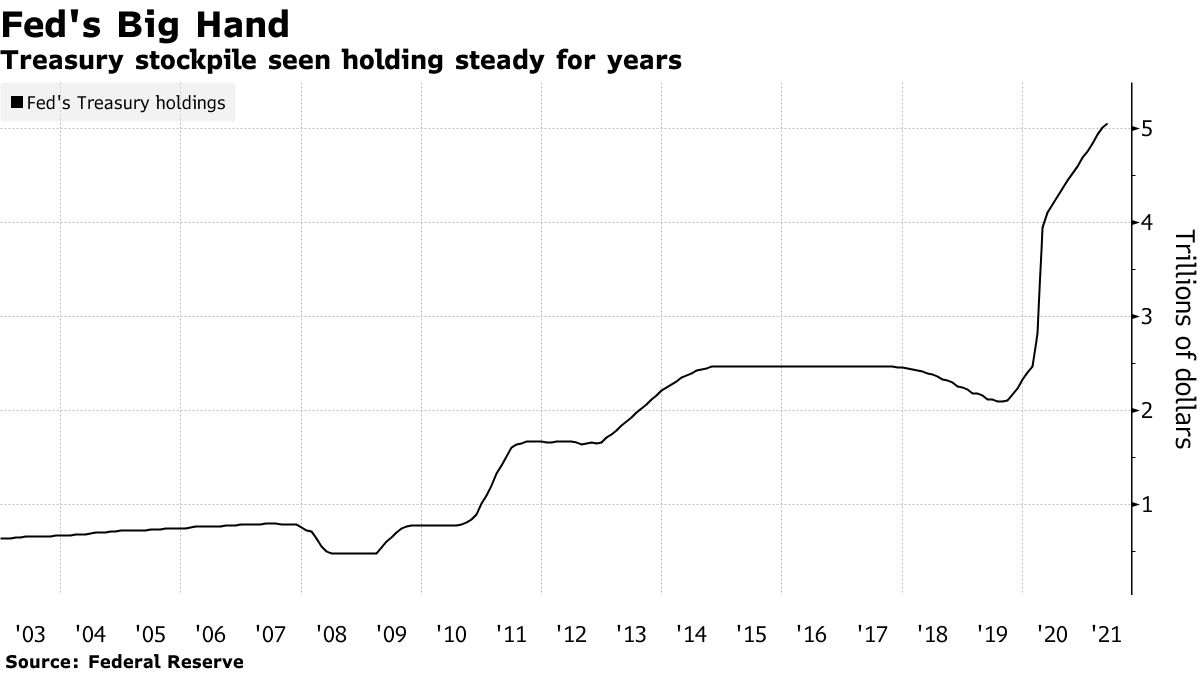
Here is the trend in 5-year real yields over the last three years, showing the deep dive into negative yields after the Federal Reserve began aggressive bond-buying in March 2020. Next month, in November, the Fed intends to begin tapering away from that bond buying, a many-months process that should cause real yields to climb. But so far, the 5-year real yield has stabilized in a range of about -1.50% to -1.60%.

Thursday’s auction results will set the real yield to maturity for CUSIP 91282CDC2, and its coupon rate will be set at 0.125%, the lowest the Treasury will go for a TIPS. That means investors will be paying a hefty premium for the coupon rate, probably somewhere around $108.25 for $100 of par value, assuming the auctioned real yield comes in at about -1.58%.

In addition, this TIPS will have an inflation index of 1.00093 on the settlement date of Oct. 29, which will push the adjusted price up slightly, but investors will receive a matching amount of accrued principal.

Inflation breakeven rate

With a nominal 5-year Treasury note trading at 1.13%, this new TIPS would have a 5-year inflation breakeven rate of 2.71%, which seems like a reasonable estimate of U.S. inflation in the near-term future. Inflation is currently running at an annual rate of 5.4%, but inflation over the last 5 years has averaged only 1.9%. Investors see inflation trending higher than recent trends, and that looks like a reasonable assumption.

However, a caution: 2.71% is exceptionally high by historic standards. The Treasury provides 5-year inflation breakeven data back to 2003, and you have to go back to May 2006 to see inflation expectations that high. A high inflation breakeven rate makes a TIPS “pricey” versus a nominal Treasury. But will investors care when U.S. inflation is running at a decades-high level of 5.4%?

Here is that big-picture trend in the 5-year inflation breakeven rate, dating back to 2003. During much of the time since the 2008 recession, this rate has lingered at or below 2.0%:

Inflation is currently running at the highest level in 31 years, with 5.4% annual inflation recorded in September, the highest September-to-September rate since 6.2% in 1990. After that peak in 1990, inflation continue to run at or above 2.5% for the next six years. Conclusion: An inflation breakeven rate of 2.7% looks reasonable.

Thoughts on this auction

It’s not attractive, but the real yield doesn’t look likely to set a record low, which was -1.631% for a new 5-year TIPS auctioned on April 15, 2021. With the Fed launching its tapering efforts in a month (or so they say) real yields should begin inching higher. Are more attractive auctions ahead?

One risk-reduction strategy I have been considering: If you own a broad-based TIPS fund (such as TIP or SCHP) in a tax-deferred account, you could sell a small portion and invest it gradually into 5-year TIPS auctions. That way you will be lowering your duration risk and know that in 5 years (or less for reopenings) you will get your money back. But remember that any premium price over par is not guaranteed to be returned at maturity. This strategy retains inflation protection with a little less risk. Just a thought. Let me know if you see flaws.

CUSIP 91282CDC2 will get a reopening auction on Dec. 16. Will the Fed’s actions in the next two months make that future auction more attractive? Could be.

I will be reporting the auction results soon after the close at 1 p.m. Thursday. Non-competitive bids have to be placed by noon. Here’s a listing of recent TIPS auctions of this term, showing the six consecutive auctions with negative real yields, starting in April 2020, as the Fed began aggressively buying Treasurys.

* * *

Feel free to post comments or questions below. If it is your first-ever comment, it will have to wait for moderation. After that, your comments will automatically appear.

David Enna is a financial journalist, not a financial adviser. He is not selling or profiting from any investment discussed. The investments he discusses can purchased through the Treasury or other providers without fees, commissions or carrying charges. Please do your own research before investing.
Posted in Investing in TIPS | 5 Comments