
A weak bid-to-cover ratio of 2.18 indicates lousy demand from big-money investors.
By David Enna, Tipswatch.com
The Treasury’s offering of $17 billion in a new 10-year Treasury Inflation-Protected Security — CUSIP 91282CEZ0 — generated a real yield to maturity of 0.630% at auction Thursday, the highest yield at auction for this term in two years.
The coupon rate was set at 0.625%, the highest coupon for a new TIPS in three years. In fact, this auction broke a string of 15 consecutive auctions of 9- to 10-year TIPS with a coupon rate of 0.125%, the lowest the Treasury will go for a TIPS.
Definition: The “real yield” of a TIPS is its yield above or below official future U.S. inflation, over the term of the TIPS. So a real yield of 0.630% means an investment in this TIPS will exceed U.S. inflation by 0.630% for 10 years.
Investors in today’s auction should be pleased, because a surprise rate hike this morning by the European Central Bank had set both nominal and real yields sliding lower. Nothing drastic, but for much of the morning it looked like this auction’s real yield might dip below 0.60%. The bid-to-cover ratio was 2.18, a very low number and an indication that weak demand forced the real yield higher.
Because the Treasury set the coupon rate at 0.625%, slightly below the auctioned yield, investors paid an unadjusted price of about $99.95 for $100 of par value. However, because this TIPS will have an inflation index of 1.00495 on the settlement date of July 29, the adjusted price was about $100.45 for $100.49 of value, after the inflation accrual is added in.
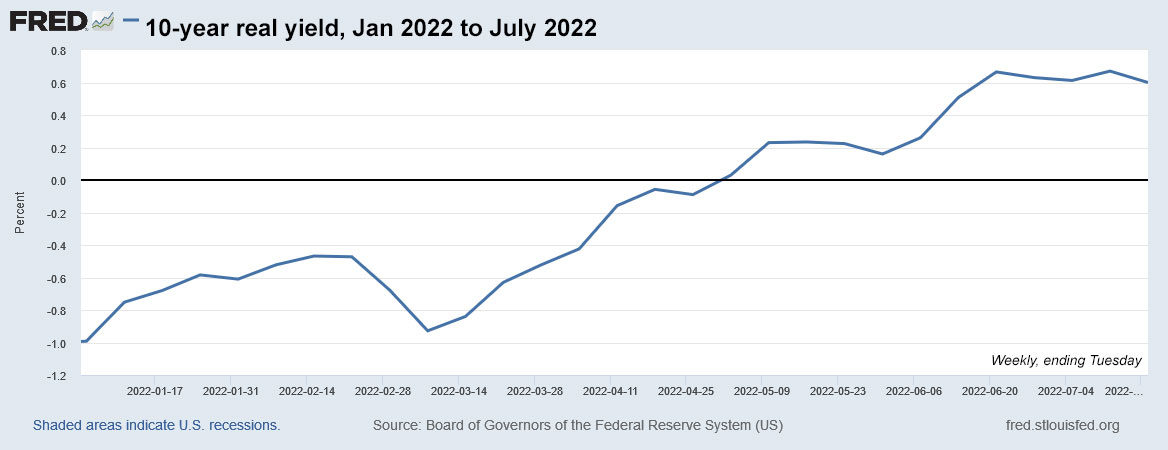
Here is the trend in 10-year real yields in 2022, showing the strong surge higher since the Federal Reserve committed to future rate hikes in March, in an effort to slow soaring U.S. inflation:
Inflation breakeven rate
With a 10-year nominal Treasury trading today with a yield of 2.96%, this TIPS gets an inflation breakeven rate of 2.33%, which looks like an attractive number. It means this TIPS will out-perform a nominal Treasury if inflation averages higher than 2.33% over the next 10 years.
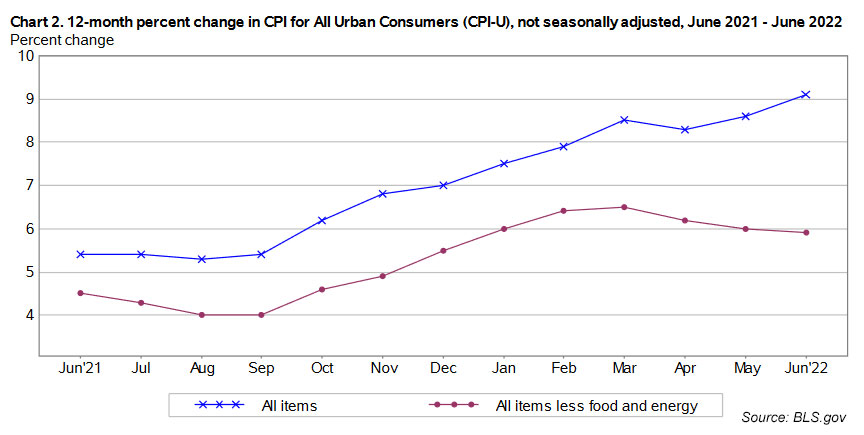
U.S. inflation is currently running at an annual rate of 9.1%. While that number is expected to begin falling in future months, most experts agree it is likely to remain in the 4% to 5% range well into 2023, maybe higher. So again, this auction looks like a positive result for investors.
Here is the trend in the 10-year inflation breakeven rate through 2022, showing how inflation expectations have been falling in reaction to the Federal Reserve’s commitment to fight inflation:

Reaction to this auction
I was a buyer at today’s auction, so I was keeping my eye on TIPS trends through the morning. The European Central Bank’s surprise rate hike (the first in more than 10 years) did appear to roil the bond market, but the moves weren’t dramatic. One effect of the rate hike could be a stronger Euro and weaker dollar, which could slightly elevate inflation in the U.S., but also boost profits of U.S. corporations doing business in Europe.
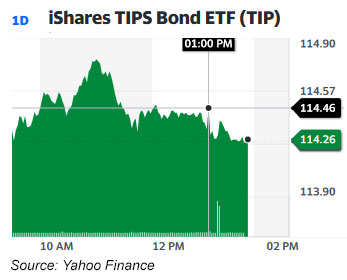
It’s possible big money investors decided to sit this auction out, especially as real yields appeared to be declining through the morning. Bloomberg’s report noted that demand was “soft” at this auction. The bid-to-cover ratio of 2.18 indicates weak demand, which forced the Treasury to accept a higher real yield. But as shown in this chart for the TIP ETF, the market reacted to the auction’s close at 1 p.m. with a yawn. Nothing to see here.
But for buyers at today’s auction, a real yield of 0.630% and a price very close to par is a welcome result. Keep in mind that principal balances for this TIPS will rise 1.37% in August, based on non-seasonally adjusted inflation in June 2022. That’s a darn good first month. (And as a side note, I will point out that the nominal 10-year German bond is currently yielding 1.22% annually, less that the upcoming one-month inflation accrual for this TIPS.)
Today’s auction of CUSIP 91282CEZ0 is the first of three for this issue. It will reopened at auctions in September and November. I think there is a reasonable chance yields will be higher at those future auctions, but a lot will depend on the state of the U.S. economy and the Federal Reserve’s commitment to fighting inflation.
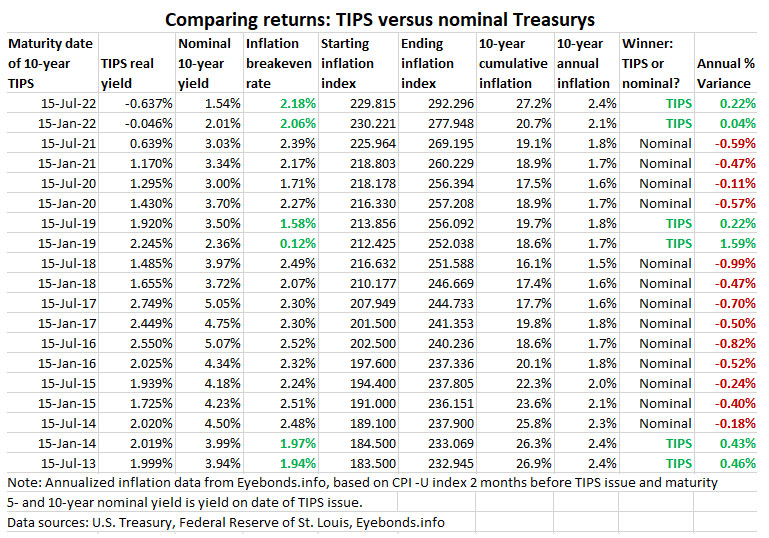
Here is a chart of all 9- to 10-year TIPS auctions going back to January 2019, the last auction before the Fed abandoned its tightening policy that began, very slowly, in 2015:

* * *
Feel free to post comments or questions below. If it is your first-ever comment, it will have to wait for moderation. After that, your comments will automatically appear.
David Enna is a financial journalist, not a financial adviser. He is not selling or profiting from any investment discussed. The investments he discusses can be purchased through the Treasury or other providers without fees, commissions or carrying charges. Please do your own research before investing.





I will be posting a preview article Sunday morning. I do that for every auction.