

By David Enna, Tipswatch.com
Although 2026 could be an exception if fuel prices resume soaring, it is likely we will see at least one month of deflation — measured by non-seasonally adjusted inflation — before the end of the year.
The inflation report for October will be issued November 10, and it seems unlikely we will see a deflationary number for that month. The Cleveland Fed’s Inflation Nowcasting site is predicting all-items CPI at 0.24% and core CPI at 0.21% for October. That forecast is sometimes off, but it is a good guide.
National gas prices, according to AAA, fell to $4.23 at the end of October, down about 5% for the month. However, crude oil prices rose more than 13% for the month, and that is an indication gas prices could be moving higher — although prices eased last week.
This chart shows monthly non-seasonally-adjusted inflation numbers. It demonstrates just how common deflation is in the closing months of the year, a time of aggressive Black Friday discounting and end-of-year car deals:
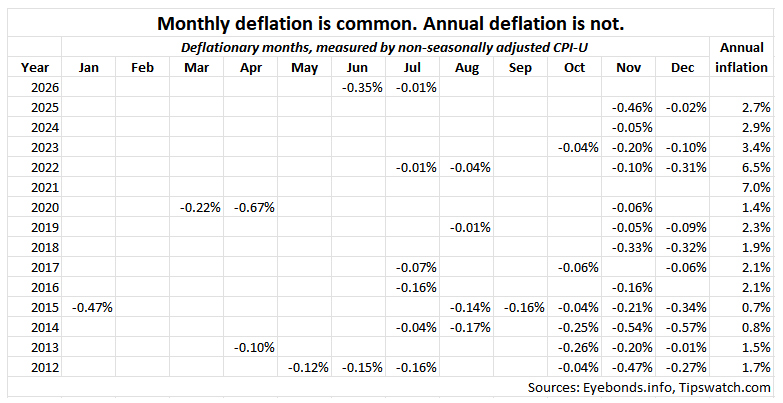
Note in the chart that in 14 years, not a single year ended in deflation, and deflation certainly won’t happen for the year 2026. And yet, we have already had two months of deflation — June and July — which resulted from “peace talks” that cooled energy prices. I noted in my article on June inflation that the 0.35% decline was a “big surprise,” triggered by a 9.7% drop in gasoline prices.
Anything could happen in the months of November and December. If gas and energy prices simply stabilize, deflation is a possibility.
This is NSA — non-seasonally adjusted inflation. The headline number you hear reported each month is seasonally adjusted and is far less likely to dip into deflation in November and December, because the seasonal adjustments account for the expected discounting. For annual inflation, non-seasonal and seasonal differences balance out and the end result will always match.
NSA inflation is important because it is used to adjust principal balances for Treasury Inflation-Protected Securities and set future interest rates for Series I Savings Bonds.
One effect of this predictable end-of-year trend is that the I Bond’s next variable rate — based on inflation for the months of October through March — will start to look pretty awful. That picture almost always turns around in January and February, when non-seasonal inflation is likely to “surprise” to the high side.
Do I lose sleep at night worrying about late-year deflation eating away at I Bond interest rates or accrued inflation on TIPS? No. “Tis the season.”
Also see: Don’t over-think the potential threat of deflation
—————————

Donate? This site is free and I hope to keep it that way. Some readers have suggested having a way to contribute. I welcome donations, any amount. And FYI, ads on this site pay for about one visit to Costco.
—————————
Follow Tipswatch on X for updates on daily Treasury auctions and real yield trends (when I am not traveling).
Feel free to post comments or questions below. If it is your first-ever comment, it will have to wait for moderation. After that, your comments will automatically appear. Please stay on topic and avoid political tirades. NOTE: Comment threads can only be three responses deep. If you see that you cannot respond, create a new comment and reference the topic.
David Enna is a financial journalist, not a financial adviser. He is not selling or profiting from any investment discussed. I Bonds and TIPS are not “get rich” investments; they are best used for capital preservation and inflation protection. They can be purchased through the Treasury or other providers without fees, commissions or carrying charges. Please do your own research before investing.


Respectfully, aren’t you misusing the meaning of deflation (inflation less than zero) and disinflation ( decreasing rate of inflation) ?