
The 9.62% annualized rate for six months is a huge advantage.
By David Enna, Tipswatch.com

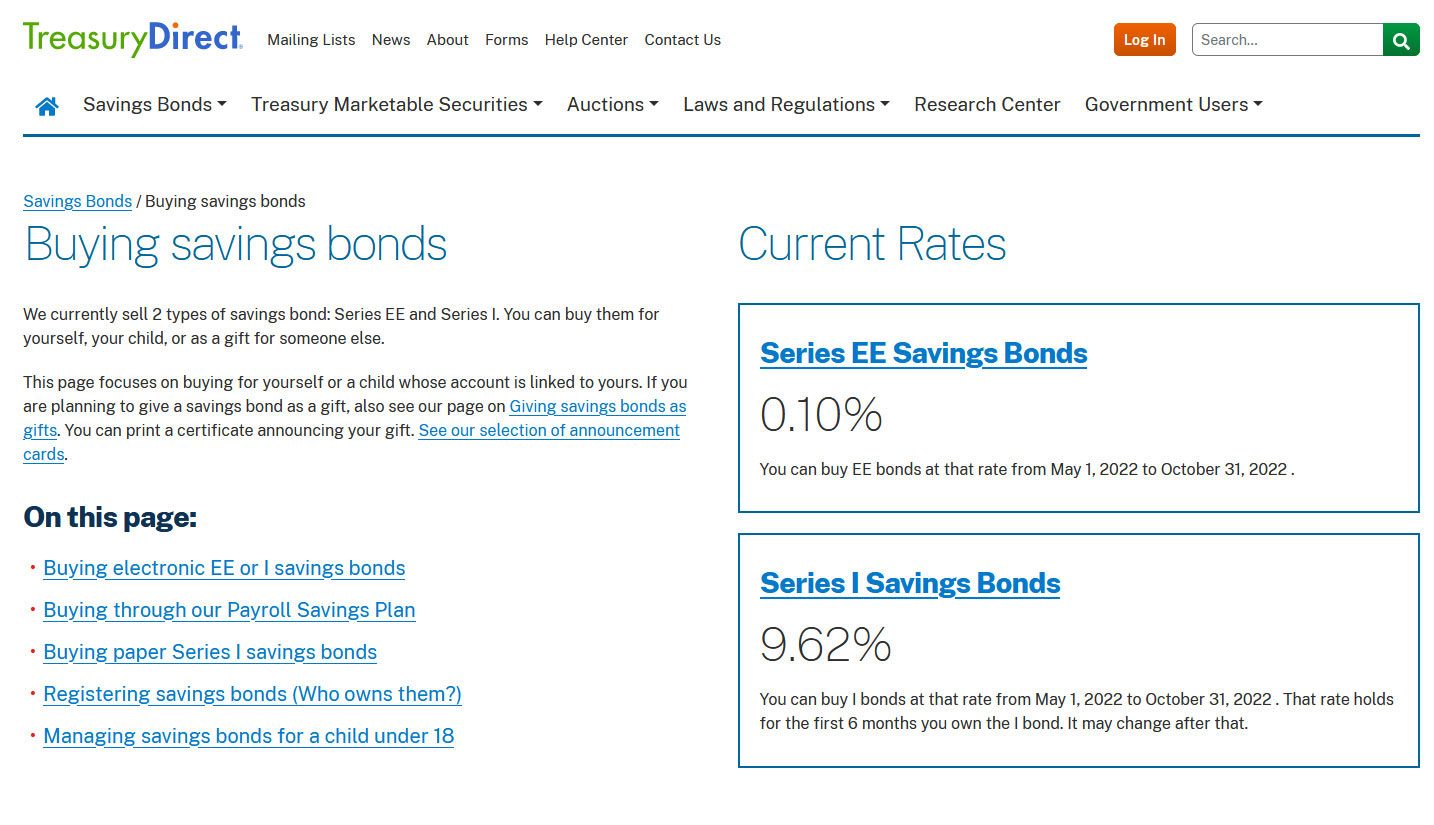
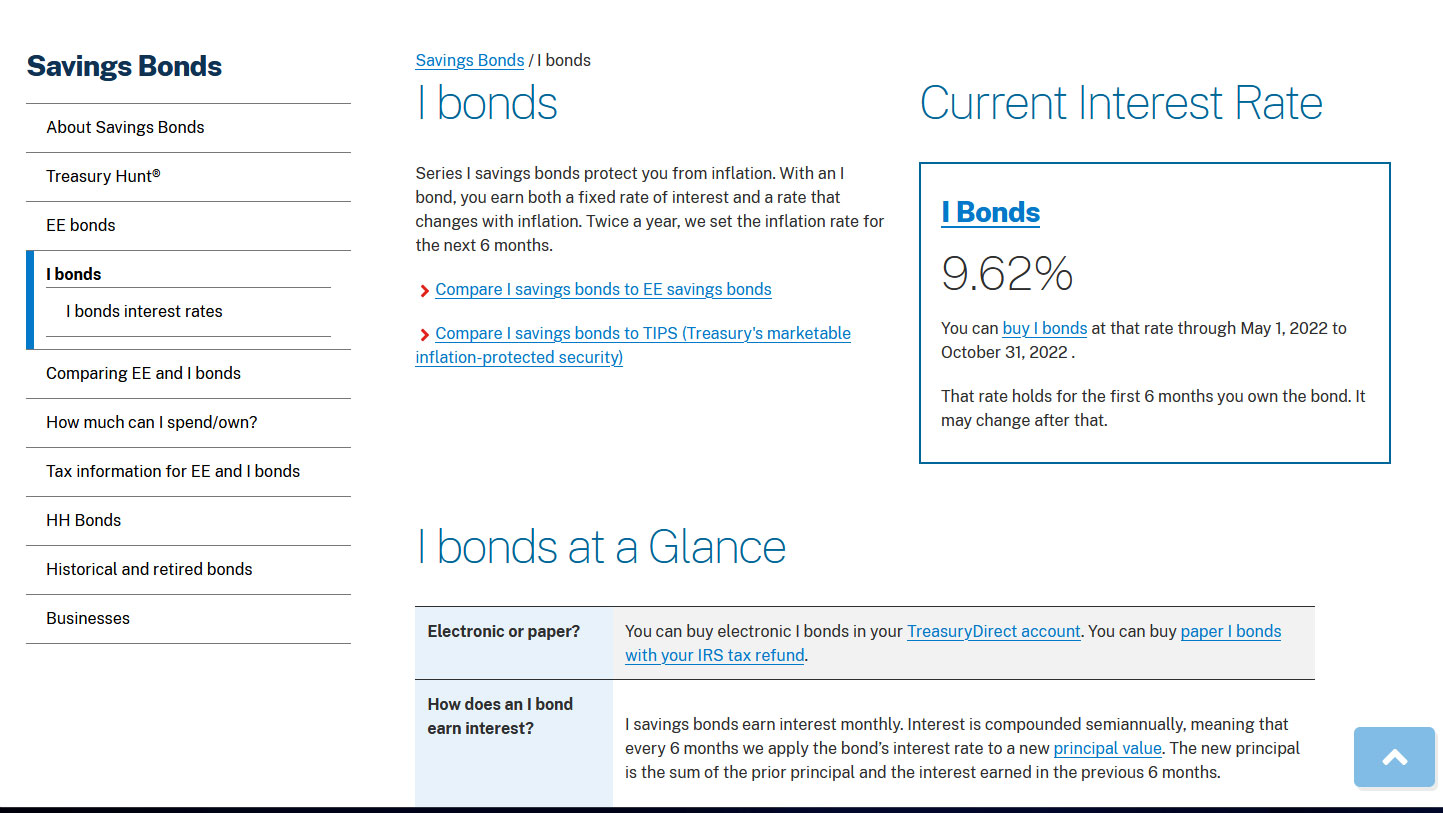
Here we are, in the U.S. Series I Savings Bond’s “limbo fortnight,” a period when we know the current composite rate (9.62% annualized, good for six months for purchases through the end of October) and also the upcoming variable rate (6.48% annualized, good for purchases in November through April 2023).
What we don’t know: Will the Treasury raise the I Bond’s fixed rate on November 1? And does holding out for a higher fixed rate makes sense? Let’s try to figure this out. But first, some details about the I Bond, a security that earns interest based on combining a fixed rate and an inflation rate.
- The fixed rate will never change. Purchases through October 31, 2022, will have a fixed rate of 0.0%. The fixed rate is essentially the “real yield” of an I Bond, the amount its return will exceed future inflation.
- The inflation-adjusted rate (often called the variable rate) changes each six months to reflect the running rate of inflation. That rate is currently set at 9.62% annualized. It will adjust to 6.48% annualized on November 1, 2022, for all I Bonds, no matter when they were purchased. The starting month of the new rate depends on the month you purchased an I Bond.
Will the fixed rate rise?
I have been arguing that the I Bond’s fixed rate should rise, since real yields of 5-year and 10-year Treasury Inflation Protected Securities are now highly positive, 1.83% for the 5 year and 1.63% for the 10 year. In fact, the 5-year real yield is now higher than at any point since the financial crisis of 2008. That’s a 14-year high. The I Bond’s fixed rate should be reset higher. I’ve suggested a range of 0.3% to 0.5% … not unusual. The I Bond’s fixed rate was 0.5% during the Fed’s last tightening cycle from November 2018 to November 2019, when TIPS yields were much lower.
However, most people in the I Bond community believe the Treasury will hold the fixed rate at 0.0% because of the unprecedented demand for I Bonds in 2022. Investors will keep buying I Bonds into 2023, drawn by that variable rate of 6.48% for six months. The Treasury doesn’t need to sweeten the pot.
So, it could go either way. I am still saying there’s a 50/50 chance we will see a higher fixed rate at the Nov. 1 reset.
Should you hold off buying I Bonds on the chance of a higher fixed rate?
If we knew for certain that the fixed rate was going to rise, I’d say “sure, this decision is a tossup.” But we don’t know anything for certain. People intending to hold the I Bond for 20 to 30 years would find a higher fixed rate very appealing, if they get it. But people intending to use the I Bond as a short-term cash holding — 2 or 3 years, for example — would clearly be better off buying in October.
And for most other people, too, I’d suggest buying in October.
Why? Buying in October gives you six months of 9.62%, the highest composite rate in the I Bond’s history. After that, you’d get 6.48% for six months. The combination of rates, when compounded, will give you an annual return of about 8.2%. If you buy in November, you are certain to get 6.48% for six months, and then a new variable rate beginning in May. You might, or might not, get the addition of a higher fixed rate.
Starting off with a rate of 9.62% gives the October buyer a huge head start over the buyer in November, especially if the fixed rate stays at 0.0%. That’s interest of $481 in the first six months, which will continue to compound higher as long as you hold the I Bond. Keep in mind that a fixed rate of 0.5% equates to $50 a year on a $10,000 investment, before compounding. It will take 8 years to catch up with the October buyer, even if the fixed rate rises to 0.5%. If the fixed rate stays at 0.0%, the buyer in October is the eternal winner, because the November buyer can never catch up.
Here are the numbers I am using, based on gradually declining inflation rates over the next 12 years. I addition, I am using a simpler form of compounding than the I Bond’s actual “pseudo-compounding,” so these numbers are a bit lower than reality.

The key takeaway from this chart is that after 5 years, when you can sell the I Bond with zero penalty, the October buyer would have built up $12,370 versus $12,277 for the buyer in November with a 0.5% fixed rate, and $11,979 for the buyer in November with a 0.0% fixed rate.
Even after 7 years, the buyer in October is slightly ahead of the buyer with the 0.5% fixed rate. In year 8, however, the buyer with the 0.5% fixed rate moves ahead, and would stay ahead for the remainder of the I Bond’s 30-year term. So that’s why I say if we knew for certain that the I Bond’s fixed rate was rising to 0.5%, this decision would be a tossup. But since we don’t know, I recommend buying in October.
Update: #Cruncher, a Bogleheads numbers whiz, did a more exacting analysis of this breakeven equation, and found the November purchase with a 0.5% fixed rate would overtake an October purchase in 7.5 years, not 8. Here is his explanation.
As Columbo says: “One more thing“
If the fixed rate rises in November, all I Bond investors will be able to nab it after January 1, when the purchase cap of $10,000 per person per year resets. So if the fixed rate does rise, we all win.
• Confused by I Bonds? Read my Q&A on I Bonds
* * *
Feel free to post comments or questions below. If it is your first-ever comment, it will have to wait for moderation. After that, your comments will automatically appear.
David Enna is a financial journalist, not a financial adviser. He is not selling or profiting from any investment discussed. The investments he discusses can be purchased through the Treasury or other providers without fees, commissions or carrying charges. Please do your own research before investing.











 Treasury Inflation-Protected Securities
Dr Matt....Sell and buy options