Good news: Medicare costs are going down for 2023

Why? The Medicare system is making amends for an ill-advised increase of 14.6% in 2022.

By David Enna, Tipswatch.com

One year after Medicare costs jumped 14.6% because of uncertainty over an Alzheimer’s drug, the Centers for Medicare & Medicaid Services has announced Medicare costs will be falling in 2023 for the Part B premiums and deductible, along with declines in potential IRMAA surcharges for people with higher incomes.

The reductions are welcome news, and come at a time when U.S. inflation is running at close to a 40-year high. The CMS announcement came a month earlier than usual, which was a surprise. In about a month, if you are on Medicare, you will get a letter from CMS informing you of these new premium and deductible costs for 2023.

If you planned poorly, you may be meeting up with the Income-Related Monthly Adjusted Amount, also known as IRMAA. And you really don’t want to meet IRMAA. Even though the surcharges are going down, they can be lofty, so it’s smart to plan ahead to limit these costs.

Let’s dive into the key Medicare changes for 2023.

Part A: Hospital insurance

Most people who reach age 65 go on Medicare Part A, even if they are still working. Medicare Part A covers inpatient hospital, skilled nursing facility and some home health care services. About 99% of Medicare beneficiaries do not have a Part A premium since they have at least 40 quarters of Medicare-covered employment.

Although coverage is generally free, Part A has some sizable deductibles and coinsurance costs, and those will be rising 2.8% in 2023, making this area an exception to Medicare’s price reductions:

Keep in mind that most people on Medicare have a Medigap or Medicare Advantage plan that will cover all or most of the Part A deductible and coinsurance amounts. For example, all standardized Medicare Supplement (Medigap) plans, A through N, provide coverage for Part A coinsurance, and most also cover all or most of the Part A deductible costs.

Part B: Medical insurance

Medicare Part B can be described as covering “outpatient services,” things like doctor visits, some lab tests, an annual wellness exam, flu shots, diabetes screenings, etc. Medicare Part B generally pays 80% of approved costs of covered services, and you pay the other 20%. Some services, like flu shots and a wellness visit, may cost you nothing.

Part B deductible. Before Medicare pays anything, you have to meet your Part B deductible each year. For 2023, that deductible is falling to $226, a decrease of $7 (3%) from the annual deductible of $233 in 2022. All currently-offered Medigap plans do not cover this deductible. But once the deductible is met, Medicare and Medigap plans will cover some or all of your Part B costs.

Part B premium. The Part B monthly premium, paid by all people on Medicare, will be $164.90 for 2023, a decrease of $5.20 (3%) from $170.10 in 2022. CMS provided this explanation for the cost reduction for the Part B deductible and premium:

The 2022 premium included a contingency margin to cover projected Part B spending for a new drug, Aduhelm. Lower-than-projected spending on both Aduhelm and other Part B items and services resulted in much larger reserves in the Part B account of the Supplementary Medical Insurance (SMI) Trust Fund, which can be used to limit future Part B premium increases.

In addition, CMS announced a change in Medicare policy for people who are immunosuppressive and no longer eligible for full Medicare coverage:

Beginning in 2023, certain Medicare enrollees who are 36 months post kidney transplant, and therefore are no longer eligible for full Medicare coverage, can elect to continue Part B coverage of immunosuppressive drugs by paying a premium. For 2023, the immunosuppressive drug premium is $97.10.

Summary. For most people in 2023, Medicare Part B is going to cost $164.90 a month for the premium, plus the cost of the $226 deductible. That’s a total cost of $2,205 a year, down from $2,274 for 2022, a reduction of about 3%.

But beware … IRMAA is lurking

Since 2007, a beneficiary’s Part B monthly premium is based on reported income, known as MAGI, or modified adjusted gross income. According to the Social Security Administration handbook, for Medicare’s purposes MAGI is adjusted gross income (line 11 of the 2021 federal income tax form) plus tax-exempt interest.

Here are the 2023 Part B total premiums for high-income beneficiaries, which apply to income reported on your 2021 tax return:

These income-related monthly adjustment amounts affect about 7% of people with Medicare Part B. And it’s important to note that people on Medicare Advantage plans continue to pay the Part B premium, and are also subject to the IRMAA surcharges.

CMS just recently announced these 2023 IRMAA levels, but they are triggered by income you reported on your 2021 federal tax return. These charges are universally misunderstood. They are called 2023 IRMAA levels, but apply to the 2021 tax return. In other words, when you filed your 2021 return earlier this year, you could not know the income levels that would trigger the surcharges. And a tiny mistake can be very expensive.

When you file your 2022 return next year, realize that you won’t know the relevant IRMAA levels until October or November 2023, many months after you have filed. It’s a crazy system.

Part D: Drug coverage

IRMAA surcharges also apply to Medicare’s Part D premiums for drug coverage. There is no “standard” Part D premium — the cost you pay depends on the Part D insurer and plan you choose. The IRMAA cost, if any, is added on top of your base premium. People in Medicare Advantage plans don’t pay a separate Part D premium, since those plans include Medicare Advantage Prescription Drug (MAPD) coverage. But Part D is built into Medicare Advantage, and the IRMAA surcharge still applies.

Here are the Part D IRMAA levels for 2023, based on reported income for 2021:

IRMAA can pack a wallop

The IRMAA penalty isn’t a “progressive tax” that ramps up as you go over an income level. Instead, going $1 over the limit is the same as going thousands of dollars over the limit, and incurs the same surcharge. For 2023, the IRMAA surcharges are falling about 3.1% across the board, while the income triggers are increasing about 7.7% (except for the two highest levels, which stayed the same). That’s good news, but you still need to watch out for IRMAA.

Here is a look at the annual costs of Parts B and D, plus IRMAA, for 2023, based on income reported for 2021:

In all cases, the IRMAA cost levels will be a bit lower in 2023 — assuming the income level stayed the same — because of the Part B premium reductions. Part D surcharges remained about the same. For example:

  • A single filer with income of $122,000 would pay about $3,321 annually, versus $3,402 last year. That’s a reduction of about 2.4%.
  • Joint filers with income of $245,000 would pay $6,624 for two people on Medicare, versus $6,804 last year. That’s a reduction of about 2.7%.
  • Even a couple with income of $800,000 would pay a bit less — $16,078 for two people on Medicare, versus $16,541 last year, a reduction of of about 2.8%.

My advice: Recognize IRMAA and plan for it

It’s worth noting that the first IRMAA tier for both singles and couples is not too daunting. It adds just $937 to the annual costs for a single filer, and $1,874 to the annual costs for a couple. But the next tier up starts to get pricey, increasing annual costs by $2,356 for a single filer and $4,711 for joint filers.

So I think people looking to take capital gains, buy a boat, make Roth conversions, etc., could feel comfortable in hitting that first IRMAA tier. In fact, anyone planning on doing major Roth conversions over a period of time should probably shoot for that level, but not higher, if possible.

Anyone reaching age 63 this year, and everyone already on Medicare, should be paying careful attention to income levels each year. That means tracking capital gains distributions, dividends, pension payments, annuity income, Roth conversions, IRA withdrawals, Social Security income, etc. It’s a lot of work, but can avoid financial pain.

Another key consideration is that Required Minimum Distributions are required from traditional tax-deferred accounts beginning at age 72. If you have sizable holdings in these accounts, you could be facing years of higher Medicare premiums triggered by RMDs. And if one spouse dies, and the surviving spouse inherits tax-deferred holdings, the problem magnifies. The surviving spouse now will file a single tax return, pushing IRMAA costs much higher.

So making some Roth conversions, within reason, before reaching age 72 makes good financial sense. Plus, it’s wise to use tax-deferred accounts for charitable giving, beginning at age 70 1/2, when qualified charitable distributions are allowed.

You can appeal an IRMAA ruling

The Social Security Administration has very specific rules that will allow you to get a waiver of the IRMAA surcharge, if you meet certain criteria for a “life-changing event,” which include:

  • Work stoppage
  • Work reduction
  • Employer settlement payment
  • Death of spouse
  • Divorce
  • Loss of pension income

You’ll need to fill out IRS Form SSA-44 to request the waiver.

Conclusion

The decline in Part B costs was anticipated because of last year’s aggressive increase based on an Alzheimer’s drug that ended up costing less, and being used less, than expected. The result: A typical person on Medicare will be paying about $63 a year less for Part B coverage. Overall costs could end up rising, however, if premiums for Part D and Medigap plans increase in the coming year.

* * *

Feel free to post comments or questions below. If it is your first-ever comment, it will have to wait for moderation. After that, your comments will automatically appear.

David Enna is a financial journalist, not a financial adviser. He is not selling or profiting from any investment discussed. The investments he discusses can be purchased through the Treasury or other providers without fees, commissions or carrying charges. Please do your own research before investing.

Posted in Medicare, Retirement, Social Security | 14 Comments

A nostalgic look back at TreasuryDirect’s ‘decoder ring’ login system

By David Enna, Tipswatch.com

After I posted an article on TreasuryDirect’s new look, I got comments from several readers reminiscing about the site’s “decoder ring” login system, which launched in 2007. Well, it wasn’t actually a decoder ring — it was a decoder card — but it it had all the appeal of spy-vs.-spy, cloak-and-dagger, back-of-cereal-box secrecy.

I just happen to still have one of those decoder cards. Here it is:

OK, so how did it work? This is from the TreasuryDirect’s mailing that included the card:

How to use your TreasuryDirect Access Card

You will need to use your TreasuryDirect Access Card every time you log into your account. The Access Card helps protect your identity and personal information. It also provides you with additional assurance you are using the authentic TreasuryDirect website. Here is how it works:

Step 1: Enter your account number and password on the Access Your TreasuryDirect Account page and click the enter button as you would today.

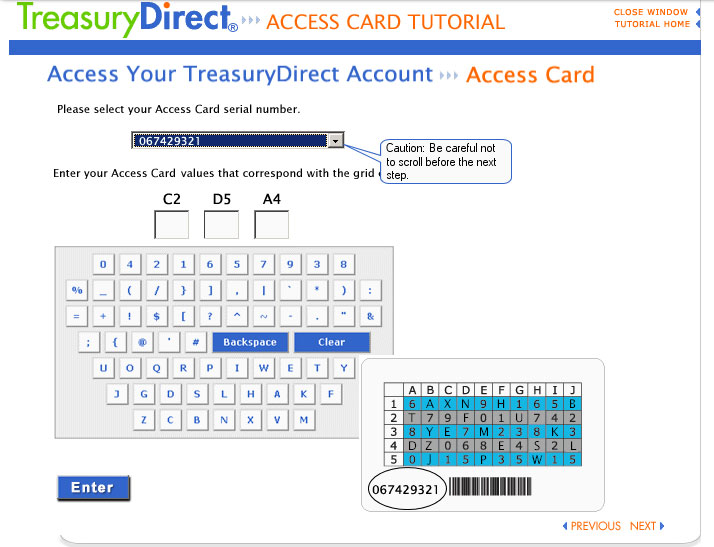
Step 2: Using your Access Card, select your serial number (0000XXXXX on this card) and enter the information we request in the corresponding boxes on the web page, then click Enter to access your account.

As I recall, the site would give you a prompt to enter the corresponding number or letter for certain combinations: C1 would be R. G4 would be 4. H3 would be 2. I suppose every card was different and the serial number determined the code. I guess.

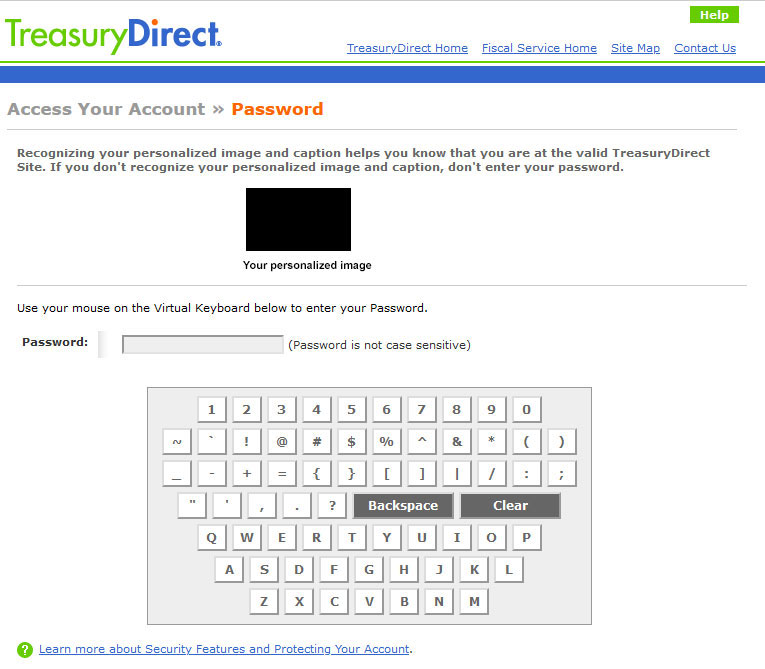
Before you got to the decoder challenges, you had to enter your password using the virtual keyboard that is still in use today. The Wayback Machine Internet Archive has a saved version of the tutorial, from November 2007. Here is the key image:

When you completed the process you reached your account summary page, which looks REMARKABLY like the one still used today, 15 years later:

You can read through a Bogleheads comment string posted in late 2007 complaining about — or at times praising — the decoder card. Some of the choice comments:

The new access card reminds me of the Little Orphan Annie Secret Decoder Ring in the movie A Christmas Story. And I’m as disappointed with the Access Card as Ralphie was with the Decoder Ring! Drink your Ovaltine!

I hope TD never sends me one, and if they do, I hope I’m not forced to use it.

The access card is a big pain in the butt. … Yes, the Internet is fraught with security risk, but this is ridiculously cumbersome.

I had a good laugh. It’s really secure though. First type your password on a scrambled keyboard. Then look up the decoder ring for the challenges. Then another scrambled keyboard. If all financial institutions implement this, we will solve the problem with panic selling. People will log in to their accounts less often.

Once I got the card in the mail I was logged in, purchased an I Bond, and was logged out in about 2 to 3 minutes. Not brain surgery, just followed simple directions.

I have never had any problems logging into my account and I appreciate the security.

Using the Treasury Direct Access Card and security system for Treasury Direct has been an exercise in frustration, but I tolerate the frustration since I typically make only one transaction a year.

It’s way more secure than the traditional username and password scheme used by most other places. Sure, it’s a little more work but I like the extra security and anyway, how often do you have to go to Treasury Direct?

TreasuryDirect abandoned used of the Access Card in November 2011, when it changed to the current login system, still using the virtual keyboard plus two-factor verification. It’s possible we will see a new login system as this redesign process rolls along.

* * *

Feel free to post comments or questions below. If it is your first-ever comment, it will have to wait for moderation. After that, your comments will automatically appear.

David Enna is a financial journalist, not a financial adviser. He is not selling or profiting from any investment discussed. The investments he discusses can be purchased through the Treasury or other providers without fees, commissions or carrying charges. Please do your own research before investing.

Posted in TreasuryDirect | 11 Comments

TreasuryDirect launches its revamped website (sort of)

The outer shell is new, information is easier to find, more clearly presented. And then … same old, same old.

By David Enna, Tipswatch.com

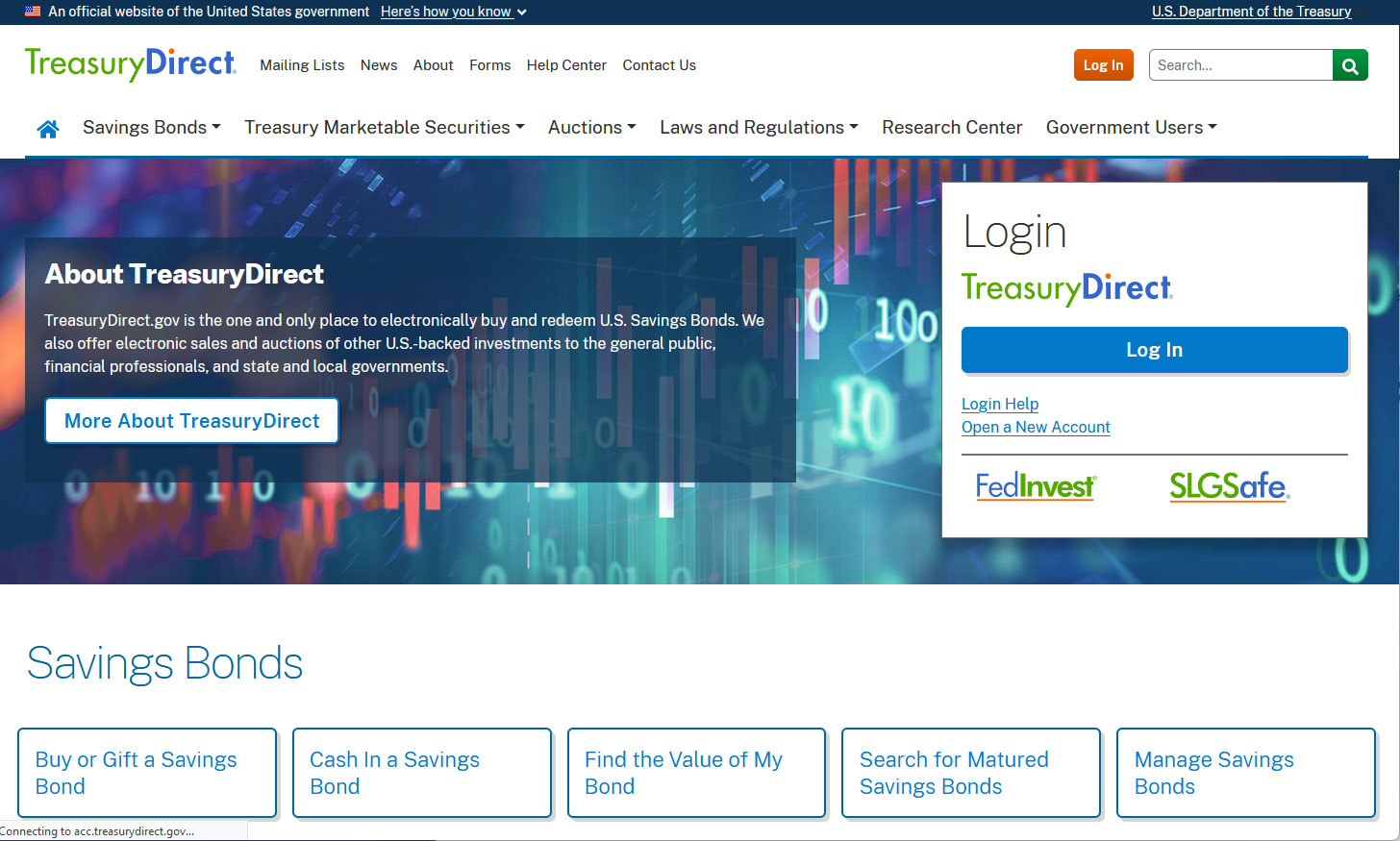
If you’ve visited everyone’s favorite financial website — TreasuryDirect.gov — in the past few days, you might have noticed an important message on the homepage: A redesign is coming! And today … it launched.

The TreasuryDirect site is almost universally ridiculed, especially by new investors who have been piling in recently to load up on U.S. Series I Savings Bonds. I’ve been using this site for about 20 years and I’m comfortable with its quirks. But I still tell people, “It will remind you of MySpace.”

To be honest, the site never bothered me much. I used it. Most of the time it worked. I knew where to go and do what I had to do. But that came from 20 years of using it.

The biggest complaints I hear from readers concern difficulties in account creation and logging in, and unfortunately, the new design does nothing to solve those issues (at this point). Is more coming? I can’t say because TreasuryDirect has not formally announced the redesign. Its news section has no items posted in October and no mention of the redesign.

“Improving the front-end informational pages on TreasuryDirect.gov enhances the user experience by helping customers more easily find the information they’re looking for and improving the website’s information quality, appearance and usability,” a Treasury spokesperson told CNBC.

CNBC also noted the Treasury said it has “more than doubled call center resources and made other technical enhancements” in response to investors struggling to get answers on the site.

Let’s take a walk through the new look … and the old look hidden inside:

The new homepage

I worked on a newspaper website for more than 20 years, and my impression of this design is that it is unfocused and needlessly busy. But on the positive side, the type is larger and I like the font. I love the very prominent presence of Savings Bonds links “above the fold.” This shows a strong commitment to the Savings Bond program.

The login page

Hey, that looks familiar! Yes, you jump back in time to the old site design’s login page, which is probably a good thing. It works exactly the same way, meaning you won’t have to reestablish credentials to log in to your account. After you enter your account number, you get this:

It’s the virtual keyboard, and TreasuryDirect is the only site I have ever seen that uses one. This login method triggers hilarity around the financial internet, but I am saying: I LIKE IT. TreasuryDirect is taking this step to keep your password safe from keystroke tracking spyware, also called “keyloggers.” I want TD to take every step possible to protect my account.

Account summary page

Again, this is a holdover from the old site. And there at the top is the “important message”: Do not use your browser’s back button on TreasuryDirect. If you do, you will be bumped out and have to log in again. Instead, use the “return” button at the bottom left of each page. Not sure why this is necessary, but it is what it is.

The back button issue only applies when you are logged into TreasuryDirect and looking at your account information. The back button works fine everywhere else on the site.

The BuyDirect page

Again, this is exactly as it was on the old site. No changes.

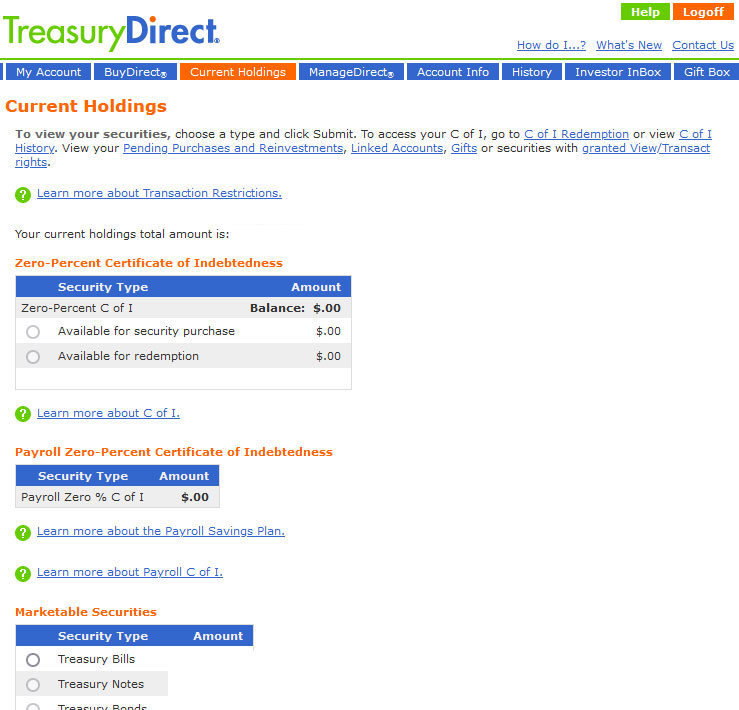
Current Holdings page

Nothing new here. Same as always.

So what’s new?

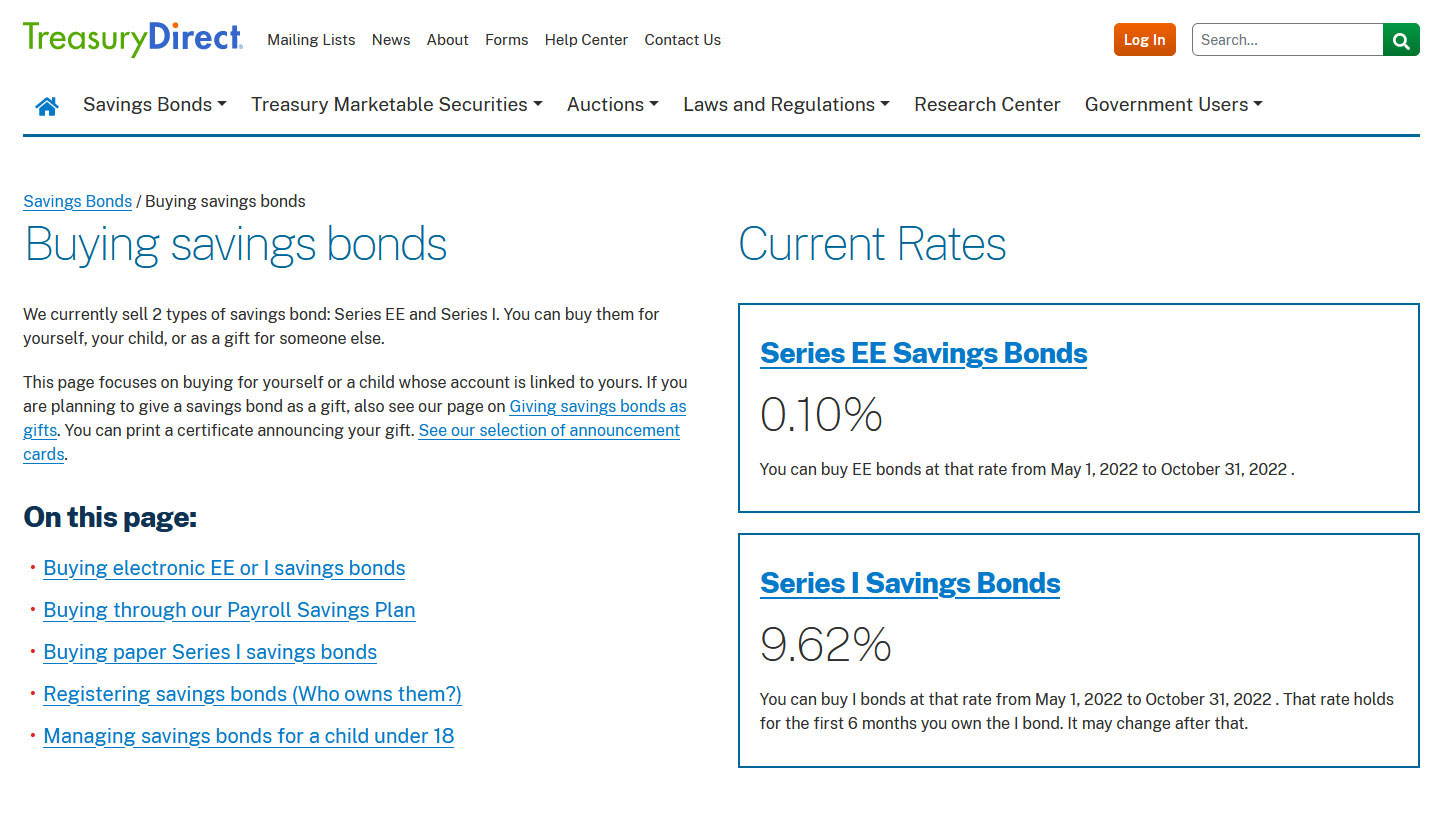
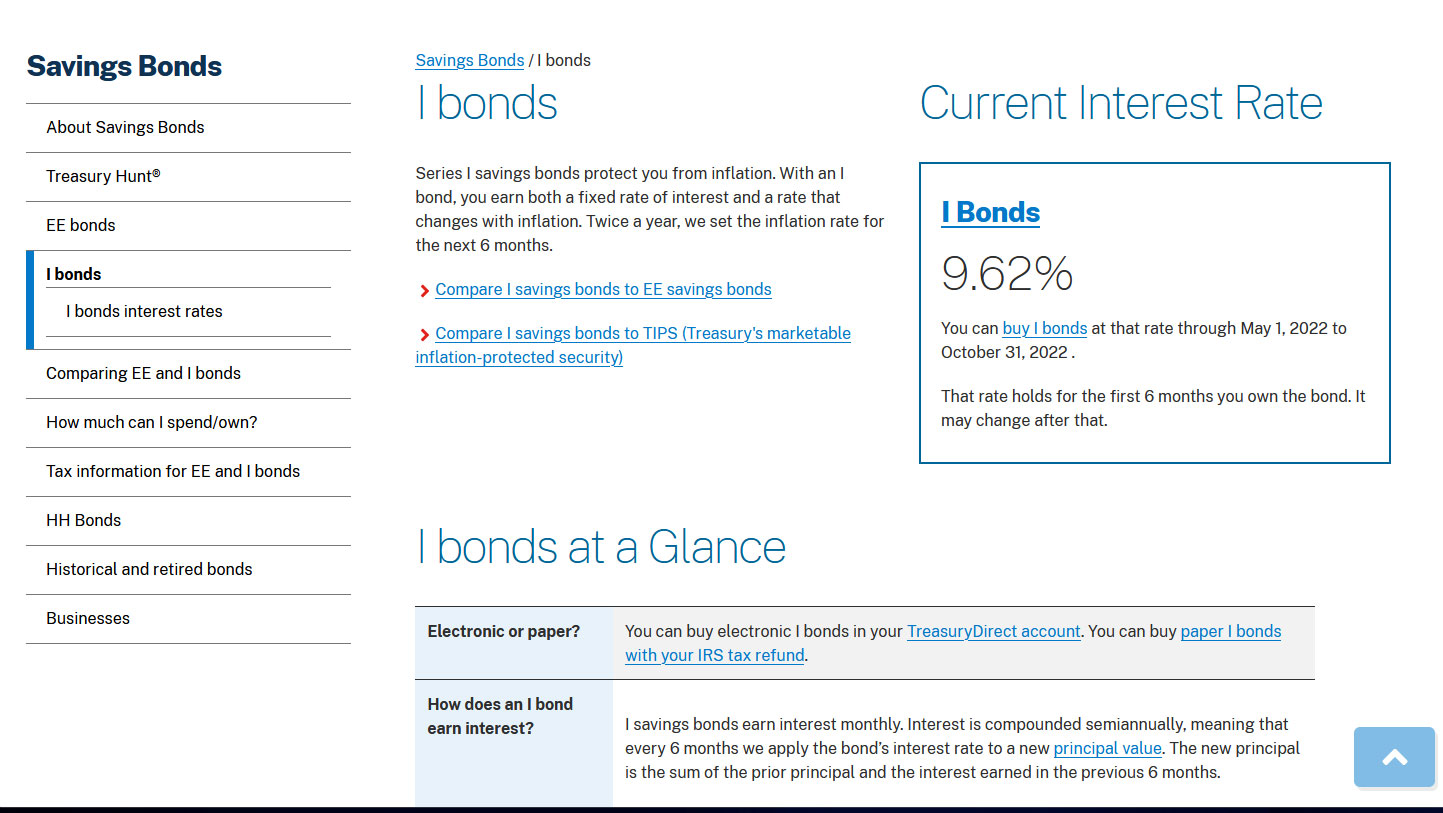
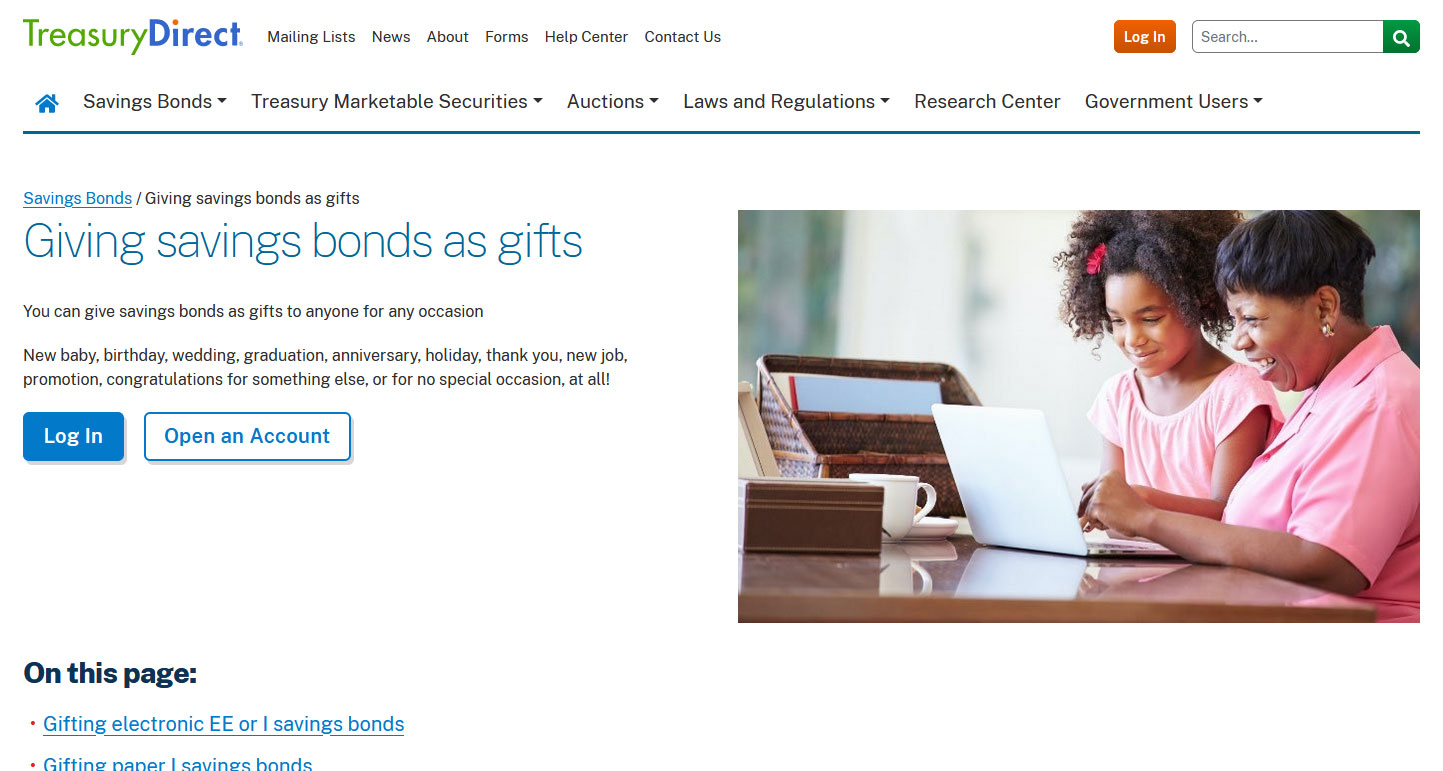
The folks at TreasuryDirect have been working hard to improve the site as an “informational” resource, creating new, more scannable guides to buying Savings Bonds, for example. Some screenshots:

—————————————–


Auction results

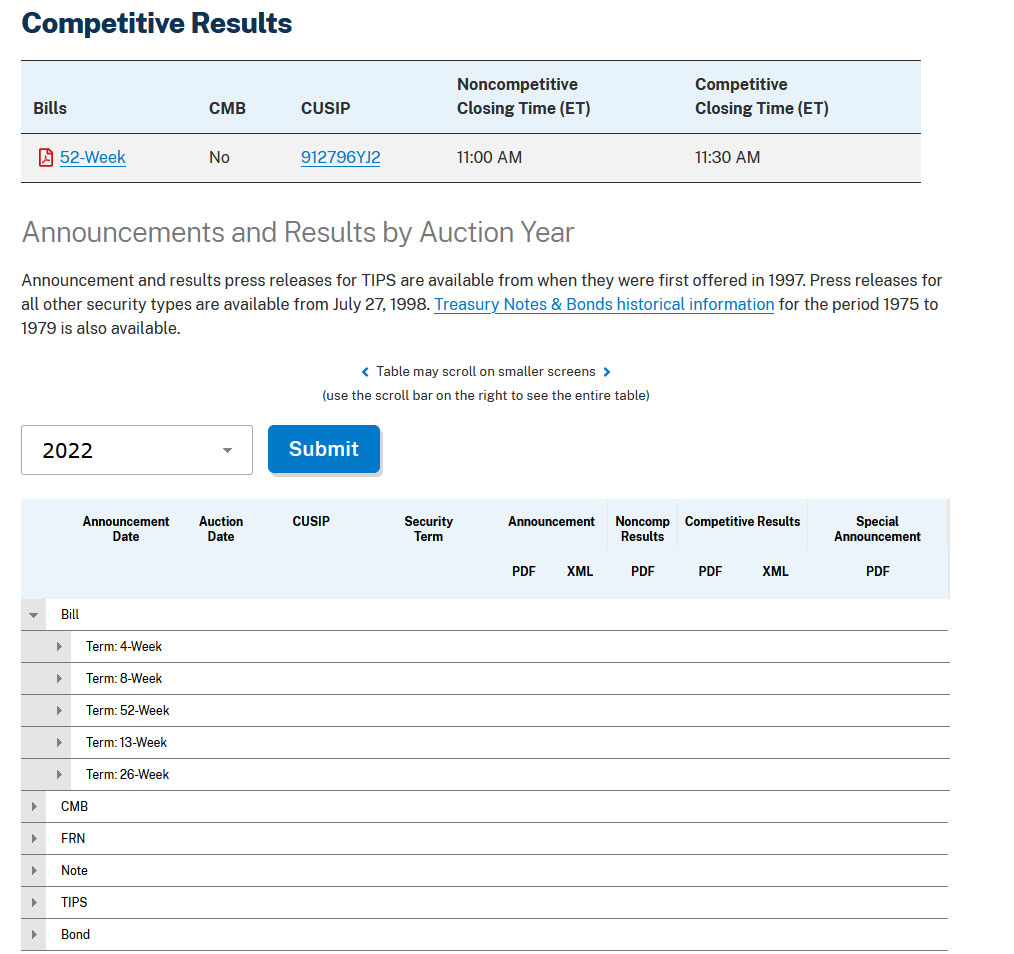
I use TreasuryDirect several times a week to check on auction results for TIPS and T-bills. The same functionality is on the new site, but the look is updated. This morning, when I tried to see the 1-year T-bill auction result, I got nothing. The page never finished loading the results portion, which also happened often on the old site. Later, it worked. I would really like this to work, every time. This is the opening page.

Click on Today’s Auction Results, and you get this, when it is working:

Inside the auction results section there is a nice guide to TIPS/CPI Data, which was probably on the old site — I must have used it — but I couldn’t have found it easily. (TreasuryDirect emails me the new TIPS inflation indexes a few minutes after the release of each monthly inflation report, so that was my reliable source.)

A revamped mobile site

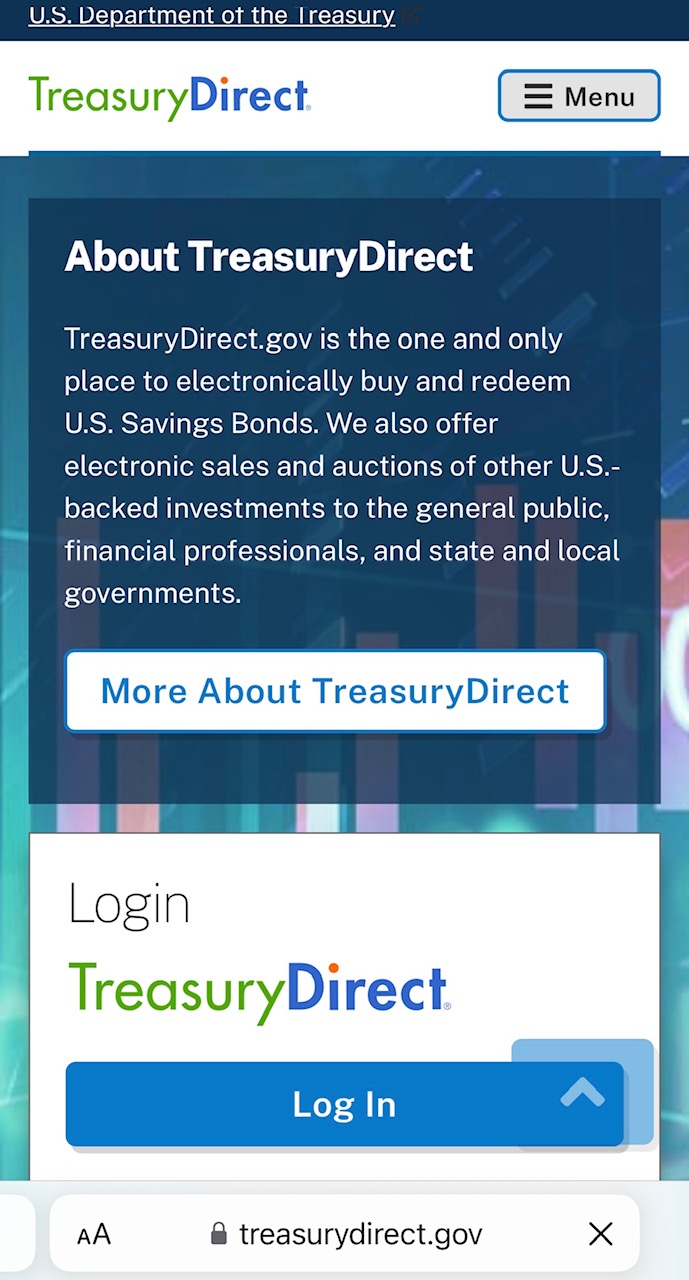
I have to admit that I have never — not once — tried to view TreasuryDirect on my iPhone. I guess I figured it would be hopeless. But now the site’s opening and informational pages have been revamped to be more mobile-friendly. I guess. I still won’t be using the mobile site. Here’s the opening page:

It’s probably worth a look for any of you who use TreasuryDirect on you phones.

What do you think?

Take a look around the new TreasuryDirect.gov and post your impressions in the comments section. If you find anything really new, interesting or helpful, let us know!

* * *

Feel free to post comments or questions below. If it is your first-ever comment, it will have to wait for moderation. After that, your comments will automatically appear.

David Enna is a financial journalist, not a financial adviser. He is not selling or profiting from any investment discussed. The investments he discusses can be purchased through the Treasury or other providers without fees, commissions or carrying charges. Please do your own research before investing.

Posted in Investing in TIPS, Savings Bond, Treasury Bills, TreasuryDirect | 56 Comments

Opinion: Treasury should raise the I Bond’s fixed rate

But will it? The odds are better now. The data clearly support a higher fixed rate.

By David Enna, Tipswatch.com

How the U.S. Treasury sets the fixed rate on the Series I Savings Bond is wrapped in mystery. No one knows how or why. There is no formula. The Treasury says nothing except to announce the new fixed rate every May and November.

Right now, the common thinking in the I Bond community is this: “Demand for I Bonds is unusually strong and the Treasury doesn’t need to raise the fixed rate.” And, yes, this is true. But as a matter of fairness, the Treasury should raise the fixed rate, to reinforce the idea that an I Bond is a quality long-term holding for small-scale investors.

There is no question that demand for I Bonds is strong, triggered by the current annualized variable rate of 9.62%. This demand will probably continue into 2023 with a new variable rate somewhere around 6.2% to 6.4%. This is from a Barron’s article on the boom in demand in I Bonds:

“The average monthly issuance of $2.7 billion so far in 2022 compares with monthly sales of just $30 million in early 2021 when the rate was just 1.7%.”

The fairness issue

For short-term investors looking to swoop into very attractive I Bond rates for 12 to 15 months, a higher fixed rate doesn’t make much of a difference. But for investors looking to hold I Bonds for many years, a fixed rate above 0.0% is hugely attractive. Why? Because the fixed rate is permanent, staying with an I Bond for a full 30 years, or until it is redeemed.

That is why I say raising the fixed rate is an issue of fairness. While in the short-term a return of 9.62% is extremely attractive, the return on that I Bond is going to — eventually — track down with falling inflation. An I Bond with a 0.0% fixed rate has a “real yield” of 0.0% — meaning it will only track future inflation but not exceed it. That was fine over the last 2 1/2 years, when real yields on a similar investment — Treasury Inflation-Protected Securities — went deeply negative. But right now, 0.0% is a lousy real yield for a longer-term investor seeking inflation protection.

Here is the current real yield curve for TIPS, as estimated Friday by the U.S. Treasury:

Under “normal” circumstances — which admittedly have been rare over the last 12 years — the I Bond’s fixed rate tends to track 50 to 75 basis points below the real yield of a 10-year TIPS. I think that is fair, because I Bonds have several advantages: Tax-deferred interest, better deflation protection, ease of ownership and more efficient compounding.

Right now, however, the I Bond’s fixed rate of 0.0% is a stunning 168 basis points below the real yield of a 10-year TIPS. That makes TIPS — a more complicated investment — more attractive. The Treasury should recognize this and raise the I Bond’s fixed rate. I am going to suggest 0.3% to 0.5%. A 0.5% rate would put the fixed rate where it was in Fed’s last tightening cycle from November 2018 through November 2019. At that time, in November 2018, the 10-year TIPS had a real yield of 1.1%, much lower than it is today.

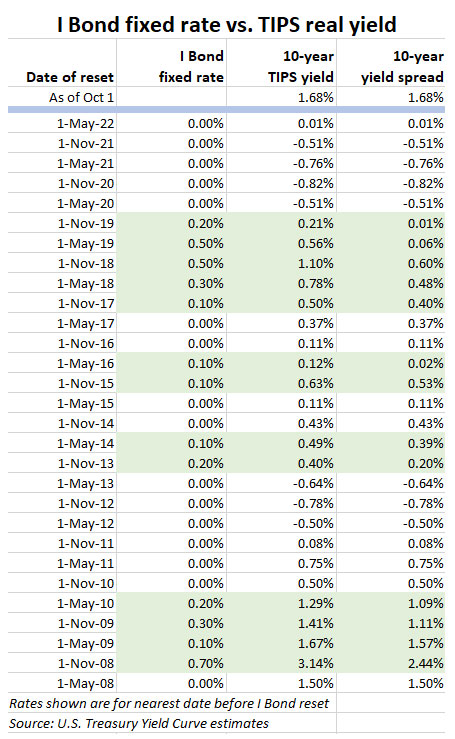
Here are the data I track on the spread in yield between the I Bond’s fixed rate and the 10-year TIPS real yield. (I used to also track the 5-year spread, but I found it wasn’t a reliable predictor.) In this chart I have highlighted in green the times when the Treasury raised the I Bond’s fixed rate above 0.0%.

There are some fairly large variations on this chart, but you have to go back to May 2009 to find a yield spread that approaches 168 basis points. Look at November 2019, when the Treasury set a fixed rate of 0.2% when the 10-year TIPS was yielding only 0.21%, a spread of just 1 basis point.

OK, I admit the variations could indicate the Treasury doesn’t even look at the 10-year real yield, and sets the I Bond’s fixed rate on demand alone. If that is true, then the fixed rate will continue at 0.0% from November 2022 to April 2023. But if the Treasury does look at the I Bond/TIPS yield spread — and it should — it will recognize the need to raise the I Bond’s fixed rate on November 1.

Why? Raising the fixed rate reinforces the idea that an I Bond is best used as a longer-term investment. The new crop of short-term investors will still be heading to the exits, most likely later in 2023. But I Bonds are a smart, sensible investment for capital preservation, ideal for the small-scale investor. The Treasury should reinforce that idea with a higher fixed rate that matches market trends.

Of course, this all depends on real yields holding at these high levels through October. Nothing is certain in today’s wild bond market.

• Confused by I Bonds? Read my Q&A on I Bonds

Hold off on buying I Bonds?

The obvious question will be … and here it comes … “Should I hold off on buying I Bonds until November to see if the fixed rate increases?” I believe that most of my readers have already bought I Bonds up to the $10,000 per person cap for 2022, so the question is moot. For others, it’s probably a toss up. If the fixed rate rises, you will be happy. If it stays at 0.0%, you miss out on 9.62% for six months.

And remember, if the fixed rate rises in November, it will be available for new purchases in January 2023, up to the $10,000 per person cap. So everyone wins.

I’d put the odds of a higher fixed rate at 50/50 at this point. Most people in the I Bond community believe the odds are much lower, but definitely above zero. We can’t ignore that TreasuryDirect has been overwhelmed this year by demand for I Bonds. Wouldn’t it be adding fuel to the fire by raising the fixed rate? Yeah, I see the dilemma.

But realistically, the fixed rate should be higher. So Treasury … do it.

An addendum, for the nerds …

In the comments I mentioned the Federal Register’s current regulations for I Bonds. Here is the link, which is often useful for understanding how I Bonds work.

Some quotes:

§ 359.10 What is the fixed rate of return?

The (Treasury) Secretary, or the Secretary’s designee, determines the fixed rate of return. The fixed rate is established for the life of the bond. The fixed rate will always be greater than or equal to 0.00% [1] . The most recently announced fixed rate is only for bonds purchased during the six months following the announcement, or for any other period of time announced by the Secretary.

Footnote: [1] However, the fixed rate is not a guaranteed minimum rate. The composite rate is composed of both the fixed rate and a semiannual inflation rate, which could possibly be less than the fixed rate or negative in deflationary situations. In all cases, however, the composite rate will always be greater than or equal to 0.00%.

§ 359.12 What happens in deflationary conditions?

In certain deflationary situations, the semiannual inflation rate may be negative. Negative semiannual inflation rates will be used in the same way as positive semiannual inflation rates. However, if the semiannual inflation rate is negative to the extent that it completely offsets the fixed rate of return, the redemption value of a Series I bond for any particular month will not be less than the value for the preceding month.

* * *

Feel free to post comments or questions below. If it is your first-ever comment, it will have to wait for moderation. After that, your comments will automatically appear.

David Enna is a financial journalist, not a financial adviser. He is not selling or profiting from any investment discussed. The investments he discusses can be purchased through the Treasury or other providers without fees, commissions or carrying charges. Please do your own research before investing.
Posted in I Bond, Investing in TIPS, Savings Bond, TreasuryDirect | 41 Comments

Another milestone: The yield advantage for EE Savings Bonds has disappeared

By David Enna, Tipswatch.com

I’ve been pondering recently whether the Treasury will raise the I Bond’s fixed rate above 0.0% at the November 1 reset, and one side of my brain says, “Well, it should” while the other side says, “No, it won’t.” But that is a topic for another day; I need more time to ponder.

What has caught my eye this week is the fact that the Series EE Savings Bond has suddenly lost its long-held yield advantage over a 20-year Treasury bond. While I Bonds are now the sexy starlet of the financial scene, EE Bonds are the aging actor making a cameo role — pretty much ignored.

But … throughout the last 11 years of interest-rate repression, EE Bonds have maintained an attractive yield advantage over other long-term, very safe investments. EE Bonds currently offer a permanent fixed rate of 0.1%, ridiculous and irrelevant. What makes EE Bonds interesting are these terms:

All Series EE bonds issued since May 2005 earn a fixed rate in the first 20 years after issue. At 20 years, the bonds will be worth at least two times their purchase price. The bonds will continue to earn interest at their original fixed rate for an additional 10 years unless new terms and conditions are announced before the final 10-year period begins.

What this means is that an investment in EE Bonds held 20 years immediately doubles in value, creating an effective annual rate of return of 3.53%. That rate has surpassed the yield on a 20-year Treasury for more than eight consecutive years. Here is the comparison going back to 2011, the year the Federal Reserve began aggressive manipulation of the bond market:

Click on the image for a larger version.

What this means

As long as the 20-year Treasury yield remains higher than 3.53% (it closed yesterday at 4.01%) EE Bonds are no longer so attractive. If you are looking for a very safe 20-year nominal investment, buy the 20-year Treasury bond instead, either on the secondary market or at auction. There is a reopening auction coming up Oct. 19.

EE Bonds do have the advantage of earning tax-deferred interest and proceeds may be able to be used tax-free for education purposes. If this education goal applies to you, EE Bonds are still attractive.

What if you are holding EE Bonds?

Terms for EE Bonds have changed many times over the years, so it is important to consider when you purchased them and their actual terms. This page on TreasuryDirect links to the main categories. Some older EE Bonds might be worth retaining.

But if you bought them anytime after November 2015, they are paying a permanent fixed rate of 0.1%. Since the 20-year doubling is still years away, you could consider redeeming those EE Bonds and investing the money elsewhere. EE Bonds can’t be sold until you hold them 12 months, and if redeemed within 5 years, you lose three months of interest. Since the fixed rate is 0.1%, that is essentially zero. I’d feel comfortable redeeming any EE Bond held less than five years, if there is an attractive alternative (for example, I Bonds purchased now or in January 2023).

If you’ve already held the EE Bond five or more years, you may want to keep it until maturity. Here is how that math works out, ignoring the 0.1% fixed rate, which becomes irrelevant when the bond doubles:

  • After 5 years, the EE Bond would double in 15 years, creating an effective annual return of about 4.8% for the final 15 years..
  • After 10 years, the EE Bond would double in 10 years, creating an effective annual return of about 7.18% for the final 10 years.
  • After 15 years, the EE Bond would double in 5 years, creating an effective annual return of about 14.9% for the final 5 years.

So I’d recommend holding on to any EE Bond that is approaching its doubling term, which has changed several times over the years. After it doubles, redeem it.

  • Back in 1992, EE bonds paid 6% a year and were guaranteed to double in 12 years. After 12 years, they reverted to paying 4% a year to maturity.
  • In March 1993, the doubling term was adjusted to 18 years.
  • In May 1995, it was adjusted tp 17 years.
  • In June 2003, it was brought to 20 years, where it has remained.

What the Treasury needs to do

Obviously, that ridiculous fixed rate of 0.1% needs to go higher — much higher — at the November 1 reset. Here are some examples of higher fixed rate resets in the last 12 years, showing that the Treasury was willing to set the fixed rate above 1% when longer-term Treasury yields were about as high as they are today:

Realistically, to make EE Bonds a stellar investment, the Treasury would need to reduce the doubling period, as it did in 1995, when it dropped from 18 years to 17 years. That would bring EE Bonds back to a favorable status versus a nominal 20-year Treasury. But I don’t think that will happen … this year. Maybe next year if rates continue at high levels.

The Treasury will probably make a cautious move in the November reset, knowing that interest rates are in a volatile phase. But I would expect the EE Bond’s fixed rate to rise above the current 0.1%.

* * *

Feel free to post comments or questions below. If it is your first-ever comment, it will have to wait for moderation. After that, your comments will automatically appear.

David Enna is a financial journalist, not a financial adviser. He is not selling or profiting from any investment discussed. The investments he discusses can be purchased through the Treasury or other providers without fees, commissions or carrying charges. Please do your own research before investing.

Posted in EE Bonds, Savings Bond, TreasuryDirect | 28 Comments