Want to exit your I Bond investment? You’d better have a plan.

Aug. 6, 2023, update: The I Bond exit ramp is now open; proceed with caution

By David Enna, Tipswatch.com

For years, my constant advice about redeeming I Bonds has been this: “Don’t do it until you really need the money.” I advocate investing in I Bonds every year, no matter the fixed and/or variable rates, and holding that investment for the long term.

I Bonds are a U.S. Treasury investment.

Because of the purchase limit of $10,000 per person per year, buying every year and holding is the only way to build a large stockpile of super-safe, tax-deferred, inflation-protected cash. After five years, you can begin withdrawing with no penalty. It’s reassuring to have an inflation-protected, tax-deferred savings account. And this can be very useful in retirement years when you begin to need the money.

But … investors who jumped aboard I Bonds in the last couple years had a different priority: To maximize interest earned at a time when other safe investments were paying near 0.0%. Inflation protection wasn’t the goal. It was a logical and perfectly sensible investment: Nab 3.54% for six months, then 7.12%, then 9.62%. Wonderful.

No I Bonds have ever reached their 30-year maturity, so that means every I Bond in existence will be paying at least 6.48% annualized for six months after the 9.62% rate runs its course. And after that …. probably a lot less. The I Bond’s variable rate is likely to fall to about 3.2% to 3.5% at the May 1 reset. That is lower than the current nominal yield on the entire spectrum of Treasury bills, notes and bonds.

After May 1, people investing in I Bonds for the short term will be looking to exit this investment and move into a higher nominal interest rate. But this is a tricky transaction, because of the three-month interest penalty on I Bonds held less than 5 years. Get this wrong and you could lose 3 months of 6.48% interest, or more.

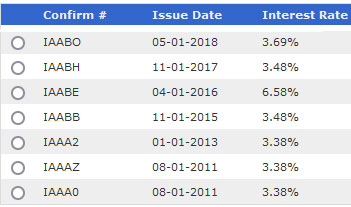
Here’s a walkthrough on ideal redemption months for I Bond investments in April, May, October and November for 2020 through 2022. These are high-volume months for I Bond purchases because they bracket the rate resets on May 1 and November 1.

All the data in this presentation is drawn from EyeBonds.info, a helpful and reliable site that presents detailed information on I Bonds. Click on any image to see a larger version.

If you bought in April 2020

These I Bonds have a fixed rate of 0.2%. Don’t redeem them if you have others with a fixed rate of 0.0%. Always hold your I Bonds with higher fixed rates until you really need the money.

A $10,000 investment in April 2020 is still be earning a composite rate of 9.83% through the end of this month, and then on April 1 will transition to a composite rate of 6.69% for six months. It will be worth $11,760 on October 1, 2023.

Ideally, the earliest time to redeem will be Jan. 1, 2024. (But don’t redeem these if you have other options with a 0.0% fixed rate.)

If you bought in May 2020

These I Bonds have a fixed rate of 0.0%, so they are a potential target for redemption. They are currently earning a composite rate of 6.48% through the end of April. On May 1 a $10,000 investment will be worth $11,560.

Ideally, the earliest time to redeem will be Aug. 1, 2023.

If you bought in October 2020

These I Bonds have a fixed rate of 0.0%, but are still earning a composite rate of 9.62% through the end of March. Then they will earn 6.48% annualized through the end of September. On Oct. 1, a $10,000 investment will be worth $11,560.

Ideally, the earliest time to redeem will be Jan. 1, 2024.

If you bought in November 2020

These I Bonds have a fixed rate of 0.0% and will continue earning an annualized interest rate of 6.48% through the end of April. On May 1, a $10,000 investment will be worth $11,500.

Ideally, the earliest time to redeem will be Aug. 1, 2023.

If you bought in April 2021

These I Bonds have a fixed rate of 0.0%, so they could be a target for redemption. But through the end of March 2023, they are still earning an annualized yield of 9.62%, then will transition to 6.48% for six months. On Oct. 1, 2023, a $10,000 investment will be worth $10,500.

Ideally, the earliest time to redeem will be Jan. 1, 2024.

If you bought in May 2021

These I Bonds have a fixed rate of 0.0% and will continue earning an annualized yield of 6.48% through the end of April. On May 1, a $10,000 investment will be worth $11,404.

Ideally, the earliest time to redeem will be Aug. 1, 2023.

If you bought in October 2021

These I Bonds have a fixed rate of 0.0% and are currently earning an annualized rate of 9.62% through the end of March. They will then transition to six months of 6.48%. On Oct. 1, a $10,000 investment will be worth $11,404.

Ideally, the earliest time to redeem will be Jan 1, 2024.

If you bought in November 2021

By November 2021, investor passion for I Bonds was starting to ignite. These I Bonds started with an annualized rate of 7.12% for six months and then 9.62% for six months. Now they are earning 6.48% through the end of April.

Ideally, the earliest time to redeem will be Aug. 1, 2023.

If you bought in April 2022

These I Bonds can’t be redeemed until April 1, when the one-year holding period ends. They have a fixed rate of 0.0% but are still earning 9.62% annualized through the end of March and then will transition to 6.48% for six months. A $10,000 investment will be worth $11,208 at the end of October.

Ideally, the earliest time to redeem will be Jan. 1, 2024.

If you bought in May 2022

These I Bonds cannot be redeemed until May 1, when the one-year holding period ends. They have a fixed rate of 0.0% and are currently earning 6.48% through the end of April. A $10,000 investment will be worth $10,820 at the end of April.

Ideally, the earliest time to redeem will be Aug. 1, 2023.

If you bought in October 2022

By October 2022, interest in I Bonds had escalated to the point of crashing the TreasuryDirect website, because of the extremely attractive annualized rate of 9.62%. These I Bonds cannot be redeemed until Oct. 1, 2023, when the one-year holding period ends. They have a fixed rate of 0.0% and are currently earning 6.48% through the end of September.

Ideally, the earliest time to redeem will by Jan. 1. 2024.

If you bought in November 2022

Because these I Bonds have a fixed rate of 0.4%, they should not be your first option for redemption. If you need the money, look at redeeming I Bonds with a 0.0% fixed rate first. These I Bonds are earning a composite rate of 6.89% through the end of April, and then will transition to six months of a new, unknown composite rate based on the fixed rate of 0.4% plus a new variable rate to be set on May 1.

The earliest time to redeem will be Nov. 1, 2023, but as I noted, the fixed rate of 0.4% makes these a poor choice for redeeming if you have other options.

If you bought in other months

The pattern is consistent for all I Bonds, no matter the year they were purchased. If you bought an I Bond any time in recent years, here are the ideal times to consider redemptions to minimize the three-month interest penalty:

  • January: After Oct. 1, 2023.
  • February: After Nov 1, 2023
  • March: After Dec. 1, 2023
  • April: After Jan. 1, 2024
  • May: After Aug. 1, 2023
  • June: After Sept. 1, 2023
  • July: After Oct. 1, 2023
  • August: After Nov. 1, 2023
  • September: After Dec. 1, 2023
  • October: After Jan. 1, 2024.
  • November: After Aug. 1, 2023
  • December: After Sept. 1 2023.

Does this really matter?

A Twitter follower pointed out today that the cost of the three-month interest penalty on $10,000 earning 6.48% annualized “is only $162, so who cares?” It’s a good point, but I know many of my penny-pinching readers really do care. That’s why I love you guys.

So it becomes a math question. Anytime you redeem I Bonds before five years, figure out the amount of the three-month penalty and ask yourself: Will my alternative investment earn enough to make up the difference?

Final thoughts

A few readers have chided me for helping people manage short-term investments in I Bonds. “These are supposed to be long-term investments!” But the reality of near-zero interest rates sent people flooding into I Bonds in the last two years, and the new reality of 4%+ interest rates on safe Treasurys will cause some investors to shift to something new. It’s all good. I like the idea of mixing inflation protection (I Bonds and TIPS) with nominal investments (Treasury bills and notes), which provide deflation protection.

But every investor, I think, should devote some asset allocation to inflation protection. We definitely aren’t out of the haunted forest yet, for now or the future.

Let’s handicap the I Bond’s May fixed-rate reset

I Bonds: A not-so-simple buying guide for 2023

Confused by I Bonds? Read my Q&A on I Bonds

Let’s ‘try’ to clarify how an I Bond’s interest is calculated

Inflation and I Bonds: Track the variable rate changes

I Bonds: Here’s a simple way to track current value

I Bond Manifesto: How this investment can work as an emergency fund

* * *

Feel free to post comments or questions below. If it is your first-ever comment, it will have to wait for moderation. After that, your comments will automatically appear.Please stay on topic and avoid political tirades.

David Enna is a financial journalist, not a financial adviser. He is not selling or profiting from any investment discussed. I Bonds and TIPS are not “get rich” investments; they are best used for capital preservation and inflation protection. They can be purchased through the Treasury or other providers without fees, commissions or carrying charges. Please do your own research before investing.
Posted in Cash alternatives, I Bond, Savings Bond, Treasury Bills | 73 Comments

10-year TIPS reopening auction gets real yield of 1.182%

By David Enna, Tipswatch.com

The U.S. Treasury just reported that its offering of $15 billion in a reopened 10-year TIPS — CUSIP 91282CGK1 — generated a real yield to maturity of 1.182%, a bit higher than expected.

This TIPS has a coupon rate of 1.125%, and it was trading on the secondary market with a real yield of 1.15% in the hour before the auction closed. So it looks like demand was weak for this offering. The bid-t0-cover ratio was 2.28, well below the originating auction’s 2.79 on Jan. 19, 2023. That January auction drew high demand; but demand for this reopening looks pretty weak.

Here is a chart of the 10-year real yield over the last 13 years, showing that today’s yields remain high based on historical trends:

Pricing

This TIPS will have an inflation index of 1.00409 on the settlement date of March 31. Investors paid an unadjusted price of about 99.473545 for $100 of par value. The adjusted price, which includes the inflation accrual, was 99.880392.

This means an $10,000 par investment in this TIPS was actually purchasing $10,040.90 of principal, at a cost of $9,988.04. One positive point is that investors paid below par value for a higher amount of principal. The value of a TIPS investment can never fall below par value at maturity, even in a time of severe deflation.

Plus, this TIPS will pay a coupon rate of 1.125% for the next 10 years.

Inflation breakeven rate

At the auction’s close, a 10-year nominal Treasury note was yielding 3.44%, creating an inflation breakeven rate of 2.26% for this reopened TIPS. This looks like a reasonable number, a bit below most recent auctions of this term.

Here is the trend in the 10-year inflation breakeven rate over the last 13 years, showing the recent decline in inflation expectations as the Federal Reserve continues increasing short-term interest rates:

Final thoughts

I arrived at a hotel in Athens, Greece, about 10 minutes before this auction closed. I am pleased I was able to post this abbreviated version of my usual auction report. Now I am off to dinner (it is 7 p.m. Athens time.) If you invested in this TIPS, please post your reactions and thoughts in the comments section below.

From today’s Reuters report:

The Treasury Department saw slightly soft demand for a $15 billion sale of 10-year Treasury Inflation-Protected Securities (TIPS) on Thursday. The debt sold at a high yield of 1.182%. Demand was below its recent average at 2.28 times the amount on offer.

Here is a recent history of auctions of this term:

* * *

Feel free to post comments or questions below. If it is your first-ever comment, it will have to wait for moderation. After that, your comments will automatically appear.Please stay on topic and avoid political tirades.

David Enna is a financial journalist, not a financial adviser. He is not selling or profiting from any investment discussed. I Bonds and TIPS are not “get rich” investments; they are best used for capital preservation and inflation protection. They can be purchased through the Treasury or other providers without fees, commissions or carrying charges. Please do your own research before investing.

Posted in Investing in TIPS | 19 Comments

This week’s 10-year TIPS reopening auction still looks attractive

But be prepared for another wild week.

By David Enna, Tipswatch.com

I know how disappointing it can be to be waiting to pull the trigger on an investment in a Treasury Inflation-Protected Security, only to see real yields slide lower, making that TIPS less attractive.

It happens. And that’s why I think it is a sensible strategy to make investments regularly as long as real yields are historically reasonable. And that brings us to CUSIP 91282CGK1, which will be reopened at auction on March 23, creating a 9-year, 10-month TIPS. The Treasury is offering $15 billion of this reopened TIPS.

Two months ago, on Jan. 19, this TIPS had an originating auction that generated a real yield to maturity of 1.22%, a bit disappointing. But then real yields started climbing, with the 10-year real yield hitting a year-to-date high of 1.66% on March 8, making the upcoming March 23 auction look highly attractive.

And then, a day later, we got a banking crisis and a Federal Reserve bailout, sending real yields plummeting. The smoke hasn’t cleared, but as of Friday’s market close, CUSIP 91282CGK1 was trading with a real yield to maturity of 1.33%, down about 33 basis points in a week but still 11 basis points above the yield of the Jan. 19 originating auction.

So, despite the turmoil, CUSIP 91282CGK1 still looks like a perfectly acceptable investment, in my opinion. Of course, we’ll have to wait to see how the bond market roils in coming days. This is a time of high volatility.

One thing to be aware of (or … should I say beware of?) is that the Federal Reserve will make an interest rate announcement Wednesday at 2:15 p.m. ET and also announce its future rate forecasts. Odds are that the Fed will opt to continue 25 basis-point increases, but this is highly uncertain. The announcement and forecasts come less than 24 hours before the TIPS auction closes at 1 p.m Thursday. Things could get shaken up.

If you are interested in investing in CUSIP 91282CGK1, you can check its current real yield in real time on Bloomberg’s Current Yields page. This data won’t perfectly predict Thursday’s auction result, but it should end up reasonably close.

Here is the trend in the 10-year real yield from the beginning of 2019 (at the end of the Fed’s last tightening cycle) to March 2023 as the Fed continues its newest tightening cycle:

Click on the image for a larger version.

Here’s the point: As long as 10-year real yields sustain above 1%, they remain attractive as an investment. We can’t know the direction of future interest rates. But current rates are at least historically attractive.

Update on pricing

I just checked Monday morning (Montenegro time) and CUSIP 91282CGK1 was trading with a real yield of 1.24% and price of 98.99 for $100 of value. This TIPS will have an inflation index of 1.00409 on the settlement date of March 31. So an investor purchasing $10,000 in par value will be actually buying $10,040.90 of accrued principal. Apply a price of 0.9899 and you get a total cost of $9,939.48. Of course, this will change before Thursday’s auction close.

Inflation breakeven rate

With the 10-year Treasury note closing Friday with a nominal yield of 3.43%, CUSIP 91282CGK1 currently has an inflation breakeven rate of 2.1%, lower than recent trends. In fact, it seems remarkably low at a time when U.S. inflation is sustaining at 6.0%.

This breakeven rate means that the TIPS will outperform the nominal Treasury as long as inflation averages more than 2.1% over the next 9 years, 10 months. Over the last 10 years, U.S. inflation has averaged 2.6%.

Here is the trend in the 10-year inflation breakeven rate over the last three years, showing that 2.1% looks reasonable when compared with the recent trend line:

Click on the image for a larger version.

Final thoughts

I am writing this on Saturday afternoon in beautiful Dubrovnik, Croatia (a nation where annual inflation is currently running at 12%). This is another reminder that inflation is a global issue, not caused — or solved — completely by U.S. policies. Because of this trip, I decided to skip this TIPS reopening auction. Instead, 10 days ago I bought a TIPS on the secondary market, maturing in January 2032. I nabbed a real yield of 1.66%. Now it is trading at 1.29%.

That was luck, not investing skill. But the lesson was to take advantage of favorable real yields when you see them. If 10-year real yields hold around 1.3% before Thursdays auction, I think CUSIP 91282CGK1 will be an acceptable addition to your TIPS collection.

And yes, I did buy CUSIP 91282CGK1 at the originating auction with a real yield of 1.22%. That one wasn’t so lucky, but it was fine. It all balances out.

If you are considering bidding at Thursday’s auction, I urge you to keep an eye on Bloomberg’s Current Yields to track the yield trend. Non-competitive bids at TreasuryDirect must be placed by noon Thursday. If you are putting an order in through a brokerage, make sure to place your order Wednesday or very early Thursday, because brokers cut off auction orders before the noon deadline.

I’ll be posting results sometime Thursday (I hope), but because of iffy internet on this trip, it will be impossible to predict when. Here’s a history of 9- to 10-year TIPS auctions back to 2019:

* * *

Feel free to post comments or questions below. If it is your first-ever comment, it will have to wait for moderation. After that, your comments will automatically appear. Please stay on topic and avoid political tirades.

David Enna is a financial journalist, not a financial adviser. He is not selling or profiting from any investment discussed. I Bonds and TIPS are not “get rich” investments; they are best used for capital preservation and inflation protection. They can be purchased through the Treasury or other providers without fees, commissions or carrying charges. Please do your own research before investing.

Posted in Federal Reserve, Inflation, Investing in TIPS, TreasuryDirect | 21 Comments

Bond market shakeup: Where we stand today

By David Enna, Tipswatch.com

Even though I am now in beautiful but very windy Split, Croatia, this morning, I couldn’t resist the temptation to check in on Treasury Inflation-Protected Securities after an incredibly volatile week.

Over the last year, I have been recommending investing in TIPS with a sense of urgency, because we couldn’t be sure how long these attractive real yields would last. In 2019, the last time the Federal Reserve ended a tightening cycle, real yields declined quickly. And then came the Covid pandemic, leading to aggressive Fed stimulus and real yields falling deeply negative to inflation.

At this point of 2023, we are still seeing real yields at “fairly” attractive levels, but well below recent 2023 highs reached just last week. Here is the trend since March 8:

Source: U.S Treasury Yield Curves

In this amazing week we saw: First a financial crisis caused by banks taking unneeded risks on long-term Treasurys for a minimal gain in yield, and second, a Federal Reserve bailout of depositors who were taking unneeded risks by concentrating deposits in a single “friendly” bank.

Bitcoin price chart, Feb. 22 to March 12.

The moral of this story is that if you are big enough, there is apparently no risk in risk. And the markets heard this, loud and clear. The result was exactly opposite of what the Federal Reserve wants: Unfettered demand for highly risky assets like bitcoin, which has soared in the last week.

Are the Fed, Treasury and FDIC now tacitly guaranteeing all deposits at all FDIC-insured banks, above the current limit of $250,000? It appears this is true for some period of time.

Bond investors, though, are ignoring the green light to risk and have been piling into the safety of TIPS and other U.S. Treasurys, resulting in the dramatic fall in real and nominal yields. Since March 8:

  • 5-year real yields have fallen from 1.87% to 1.26%, a decline of 61 basis points.
  • 10-year real yields have fallen from 1.66% to 1.22%, a drop of 44 basis points.
  • 30-year real yields have fallen from 1.62% to 1.44%, a drop of 18 points.

The fact that 5-year real yields have fallen the most seems to indicate the market is expecting the Federal Reserve will now halt its increases in short-term interest rates, and that does look likely in the short term. But the Fed is walking a tightrope as it continues to battle U.S. inflation, which is still running at an annual rate of 6%.

There is a definite possibility that the Fed’s injection of money into the financial system could be inflationary. From a Bloomberg article today:

Market observers are on alert to find out just how much extra funding the Federal Reserve’s new bank backstop program will ultimately add into the system, with analysts at JPMorgan Chase & Co. positing that it could inject anywhere up to $2 trillion in liquidity.

Inflation analyst Michael Ashton notes that the February inflation report doesn’t leave the Fed with a lot of room for error:

A nice, soft inflation report would have allowed the Fed to gracefully turn to supporting markets and banks, and put the inflation fight on hold at least temporarily. But the water is still boiling and the pot needs to be attended. I think it would be difficult for the Fed to eschew any rate hike at all, given this context. However, I do believe they’ll stop QT – selling bonds will only make the mark-to-market of bank securities holdings worse.

Will the Fed opt to ease troubled financial conditions? Or will it opt to continue an aggressive fight against inflation? Investors at this point seem to think inflation is going to be set aside as the top priority. In this chart, note that the TIPS market, represented by the TIP ETF, has moved from under-performing the overall bond market in late February, to out-performing based on the last week’s surge.

This is good news for holders of TIP ETFs and mutual funds, which suffered severe losses in 2022. The overall TIPS market is doing well as investors see the possibility of stronger inflation ahead if the Fed changes course.

Are TIPS still attractive? I think they are. These current levels remain reasonable, in my opinion, even if they aren’t quite as attractive. It’s impossible to say if real yields will level off, continue falling, or potentially begin to rise again.

In early morning trading today, the most recent 10-year TIPS has a real yield of 1.17%, a bit below the yield of 1.22% at its originating auction on Jan. 19, 2023. That TIPS will reopen at auction on Thursday, March 23. I will be posting a preview of that auction on Sunday morning.

* * *

Feel free to post comments or questions below. If it is your first-ever comment, it will have to wait for moderation. After that, your comments will automatically appear.Please stay on topic and avoid political tirades.

David Enna is a financial journalist, not a financial adviser. He is not selling or profiting from any investment discussed. I Bonds and TIPS are not “get rich” investments; they are best used for capital preservation and inflation protection. They can be purchased through the Treasury or other providers without fees, commissions or carrying charges. Please do your own research before investing.

Posted in Federal Reserve, Inflation, Investing in TIPS | 26 Comments

U.S. inflation increased 0.4% in February; annual rate falls to 6.0%

By David Enna, Tipswatch.com

I am writing this posting after just arriving in Zadar, Croatia. My time is short, so I will need to be brief this month.

The Consumer Price Index for All Urban Consumers rose 0.4% in February on a seasonally adjusted basis, the U.S. Bureau of Labor Statistics reported today. Over the last 12 months, the all-items index increased 6.0%. Those numbers matched consensus estimates, but core inflation ran slightly higher than expected, at 0.5% for the month, versus the estimate of 0.4%.

The index for shelter was the largest contributor to the monthly all items increase, accounting for over 70% of the increase, the BLS said, with the indexes for food, recreation, and household furnishings and operations also contributing.

This report ended up close to expectations. The shelter index continues to run hot (up 8% for the month and 8.1% for the year), but this is a lagging indicator and should begin sliding lower in future months. The annual increase in the all-items index of 6.0% was the lowest 12-month increase since the period ending September 2021. The core increase of 5.5% was the smallest since December 2021.

Gasoline prices were up 1% for the month, but have fallen 2.0% over the last 12 months. Food prices were up 0.4% for the month and 9.5% for the year.

Here is a one-year look at trends for all-items and core inflation, showing the gradual decline in core inflation versus a steeper decline for all-items:

What this means for TIPS and I Bonds

Investors in Treasury Inflation-Protected Securities and U.S. Series I Savings Bonds are also interested in non-seasonally adjusted inflation, which is used to adjust principal balances on TIPS and set future interest rates for I Bonds.

For February, the BLS set the inflation index at 300.840, an increase of 0.56% over the January number and 6.0% year-over-year.

For TIPS. The February inflation report means that principal balances for TIPS will increase 0.56% in April, after rising 0.80% in March. Here are the new April Inflation Indexes for all TIPS.

For I Bonds. February is the fifth month of a six-month string that will determine the I Bond’s new inflation-adjusted variable rate. Through the five months, inflation has run at 1.36%, which would translate to a variable rate of 2.72%. One month remains, so it looks like the new variable rate should fall into a range of about 3.2% to 3.5%, down substantially from the current 6.48%. The I Bond’s fixed rate will also be reset May 1, but the outlook for that reset is highly uncertain, given the volatility of real yields over the last week.

Here are the relevant numbers:

View historical data on my Inflation and I Bonds page.

Sorry, but this is all I have time for on this busy travel day. I hope to post more later this week.

* * *

Feel free to post comments or questions below. If it is your first-ever comment, it will have to wait for moderation. After that, your comments will automatically appear.Please stay on topic and avoid political tirades.

David Enna is a financial journalist, not a financial adviser. He is not selling or profiting from any investment discussed. I Bonds and TIPS are not “get rich” investments; they are best used for capital preservation and inflation protection. They can be purchased through the Treasury or other providers without fees, commissions or carrying charges. Please do your own research before investing.
Posted in I Bond, Inflation, Investing in TIPS, Savings Bond | 8 Comments