
September inflation numbers should nail down the Social Security COLA at 5.8%+ and set the I Bond’s inflation adjusted rate at 6.5%+, annualized.
By David Enna, Tipswatch.com
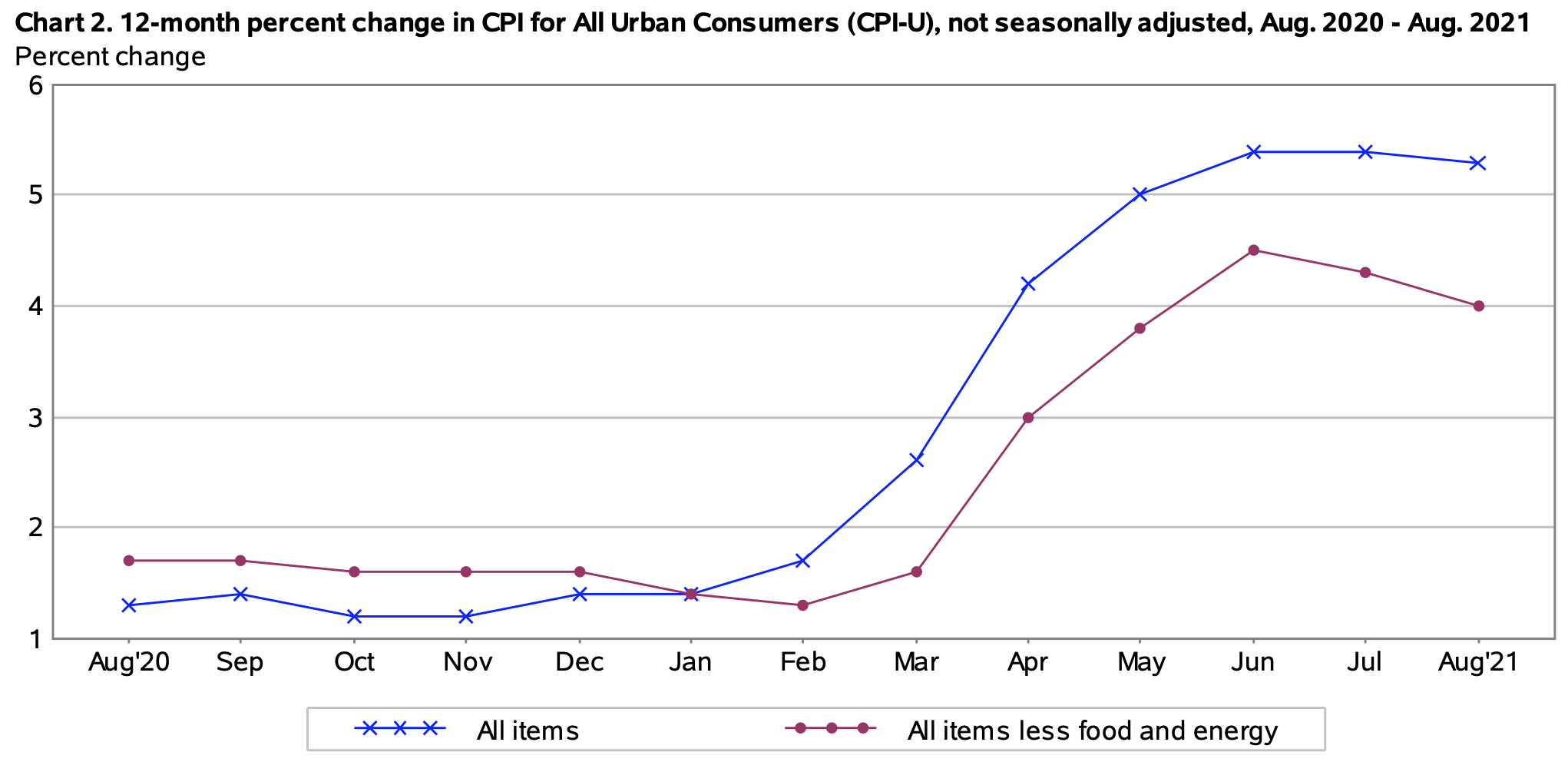
Next Wednesday, at 8:30 a.m. EDT, we’re going to get a whopper of an inflation report. That is when the U.S. Bureau of Labor Statistics will release the official U.S. inflation numbers for September, setting in stone next year’s Social Security COLA and the next 6-month inflation-adjusted interest rate for U.S. Series I Savings Bonds.
Both Social Security and I Bonds will be getting historically high numbers: The Social Security COLA should be increasing 5.8% or more for payments beginning in January (the highest increase since 2008), and the next I Bond inflation-adjusted rate should soar to somewhere near 6.9%, annualized That would be the highest six-month variable rate in history. The next highest was 5.7% set in November 2005.
Let’s take a look at what’s coming up in next week’s inflation report.
Social Security COLA
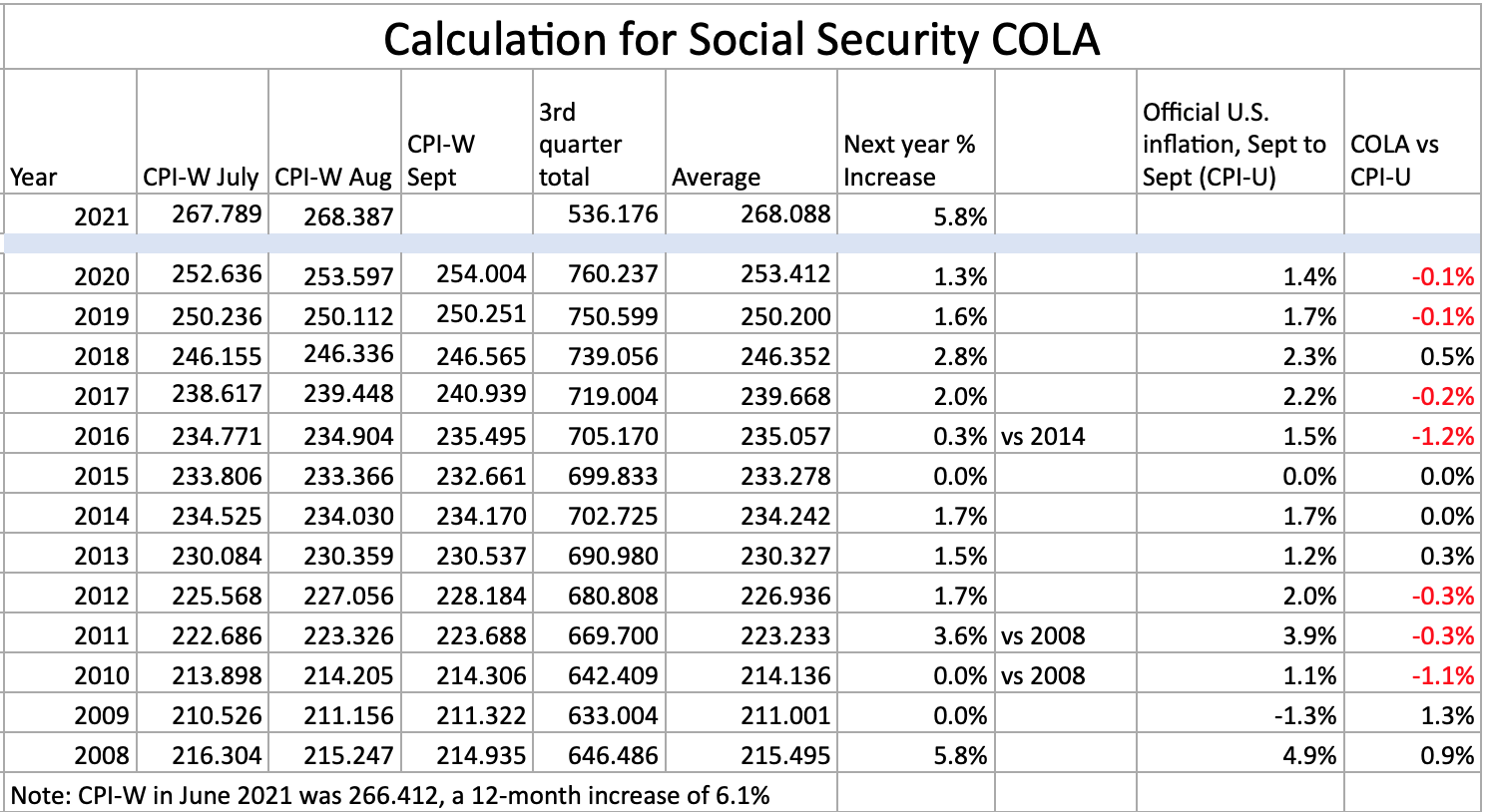
The Social Security COLA is based on an unusual inflation index – CPI-W – and is determined by averaging the indexes for July, August and September and comparing that number with the same average for the year before. For 2021, the COLA was set at 1.3% with the release of the September inflation report on Oct. 13, 2020.
I have been projecting that the 2022 COLA looks likely to fall into a range of 5.8% to 6.2%. The July and August inflation reports have been in line with that projection. At this point, the data seem to point to a 5.8% increase in the Social Security COLA, but that will rise if inflation continues to surge in September’s inflation report.
We won’t know the actual COLA number until the September inflation report is released, completing the data needed for the 3rd quarter average of CPI-W. Here are the numbers so far:
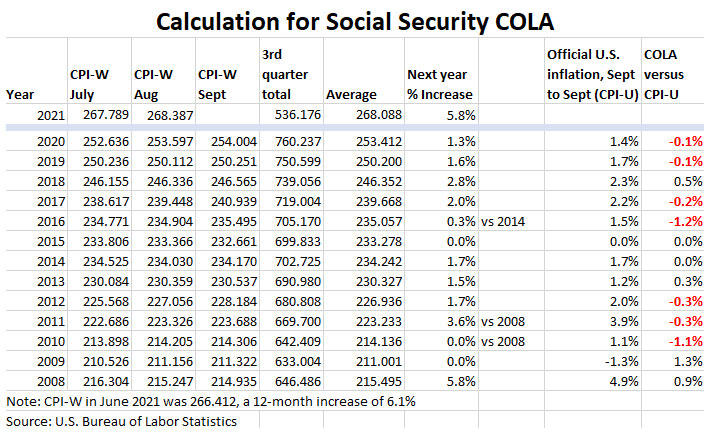
So let’s be conservative and say that CPI-W (technically, the Consumer Price Index for Urban Wage Earners and Clerical Workers) increased by 0.2% in September. That would make the average for the indexes from July to September 268.366, an increase of 5.9% over the average for the same months of 2020. The Social Security COLA then would be set at 5.9% for payments in 2022.
The Social Security Administration currently estimates that the average retired beneficiary receives $1,555.25 a month, so a 5.9% increase would boost that monthly payment to about $1,647, an increase of $91.75 a month. If you are in the Social Security “limbo” period — older than 62 but not yet taking benefits — your future benefits would also climb by this percentage.
However, recipients can also expect that Medicare Part B costs will rise in 2022, which will subtract — at least partly — from the higher benefits. The base premium is now $148.50 a month. I could see that rising to $158 a month, cutting the effect of the COLA increase by $9.50 a month. But this is just speculation.
Also, read this: More details on the complex Social Security COLA formula
Series I Savings Bonds
I Bonds have two components that make up their composite rate (total yield): a fixed rate and an inflation rate.
- The fixed rate is fixed for the entire life of any given I Bond. The fixed rate for newly-issued I Bonds is announced on May 1 and November 1 of each year, and applies to all I Bonds issued during that six-month period. The fixed rate is equivalent to the “real” yield of an I Bond, meaning the yield above inflation. It is currently set at 0.0% and is highly likely to remain at 0.0% at the November reset.
- The inflation rate is based on the Consumer Price Index and is also announced every six months, on May 1 and November 1. The May rate is based on the change in the CPI-U from the previous September to March and the November rate on the change from March to September. This inflation adjustment applies to both existing I Bonds and newly-issued ones, but the timing of that adjustment depends on the original issue date of the I Bond.
An I Bond purchased before Oct. 31 will have a fixed rate of 0.0% and an inflation-adjusted rate of 3.54%, creating a composite annualized rate of 3.54% for six months.
We have completed five months of the six-month string to determine the next inflation-adjusted rate, which is currently running at 6.56% annualized. If inflation comes in at 0.2% for September (it could be higher), the annualized rate will jump to 6.96% for six months.
The formula used to set the inflation-adjusted variable rate for I Bonds doubles the six-month inflation number, creating an annualized rate of return, which investors get for six months. Here are the numbers so far, five months into the rate-setting period:
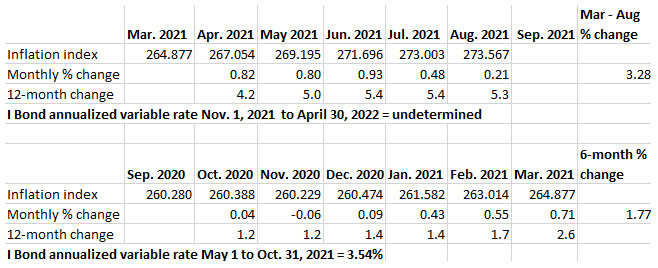
If the inflation-adjusted rate comes in around 6.9% it will be, by far, the highest six-month variable rate in the I Bond’s history, dating back to September 1998. There has never been a variable rate above 6.0%.
Purchases of I Bonds are limited to $10,000 per person, per year (plus an opportunity to get $5,000 in paper I Bonds in lieu of a federal income tax refund). So, should you buy before November 1, or after November 1?
I recommend buying before Oct. 31 to lock in the 3.54% rate for six months, and then you will get that close-to-7% rate for the next six months. Starting off with six months at 3.54% and then getting 6 months at 6.9% is super attractive in today’s market.
You have to hold an I Bond for 12 months before you can redeem. The combined rate over the year is going to top 5.2%, about 10 times what you can earn on a 1-year CD. But either way — before or after Nov. 1 — the investment is attractive. Also, keep in mind that the purchase cap resets on January 1, so you’ll be able to make another purchase getting the full six months of near-7% rate.
Also, read this: I Bond Manifesto: Why inflation-linked savings bonds can work as part of your emergency fund
* * *
Feel free to post comments or questions below. If it is your first-ever comment, it will have to wait for moderation. After that, your comments will automatically appear.
David Enna is a financial journalist, not a financial adviser. He is not selling or profiting from any investment discussed. The investments he discusses can purchased through the Treasury or other providers without fees, commissions or carrying charges. Please do your own research before investing.




 Treasury Inflation-Protected Securities
Thank you Fred Bloggs for this coherent analysis, without undertones of personal agendas... a rarity on the modern www. It…